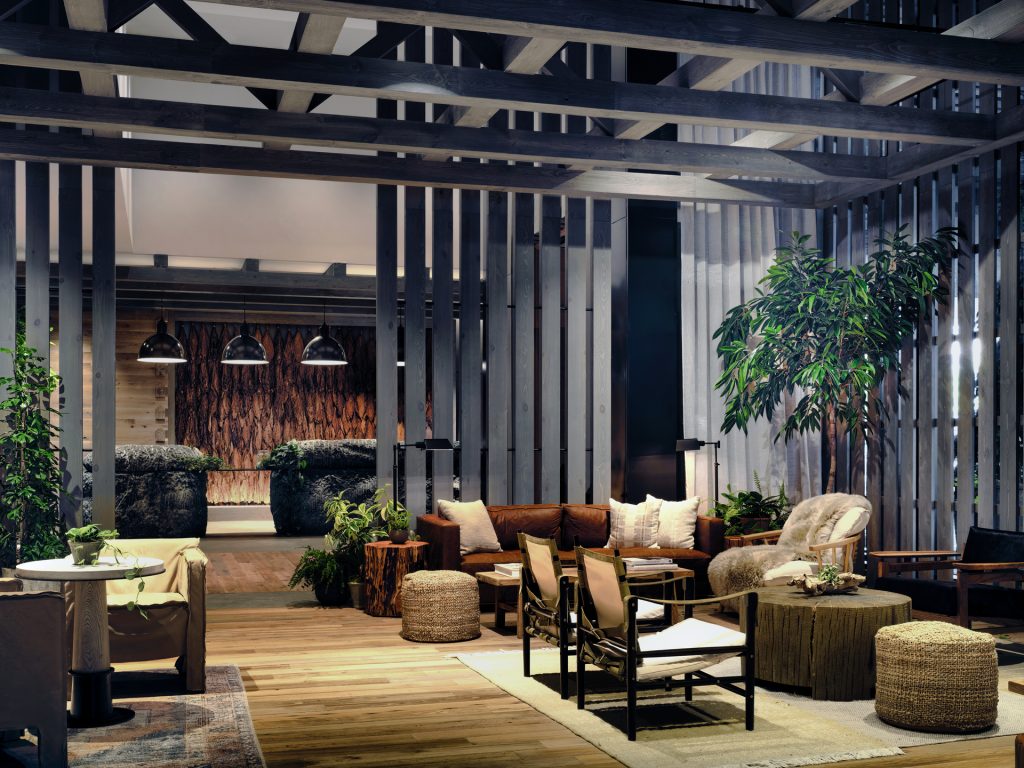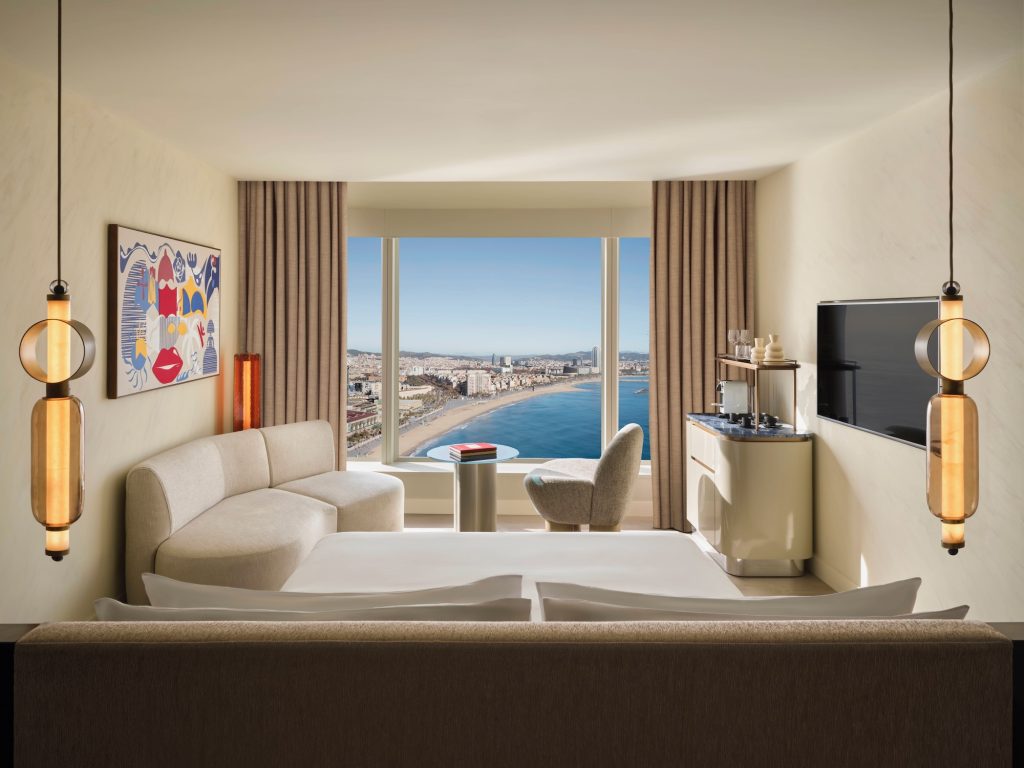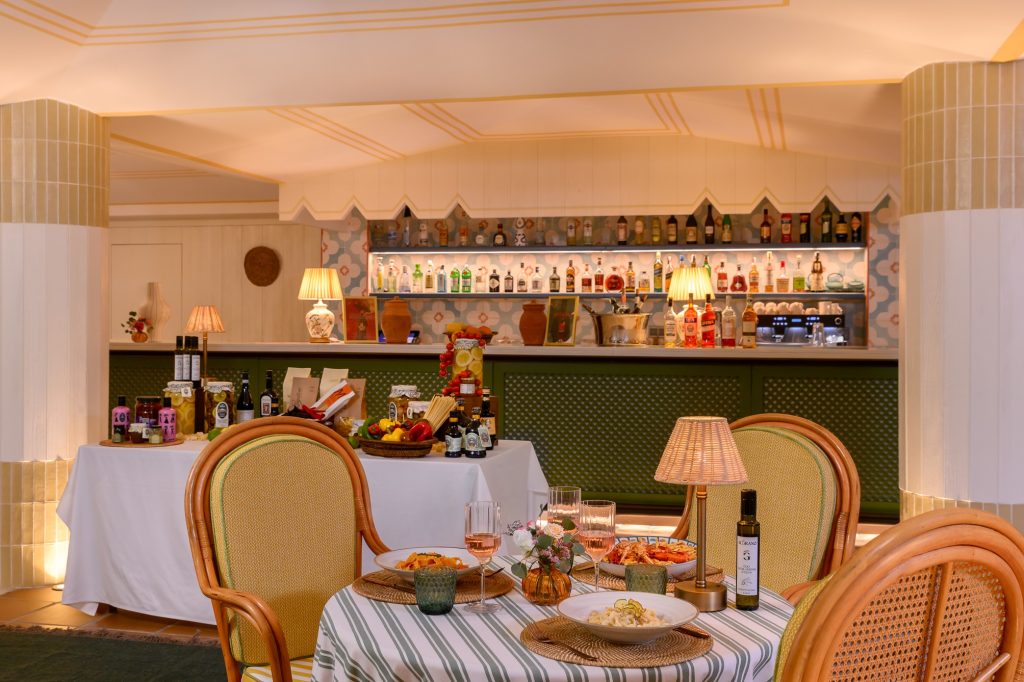
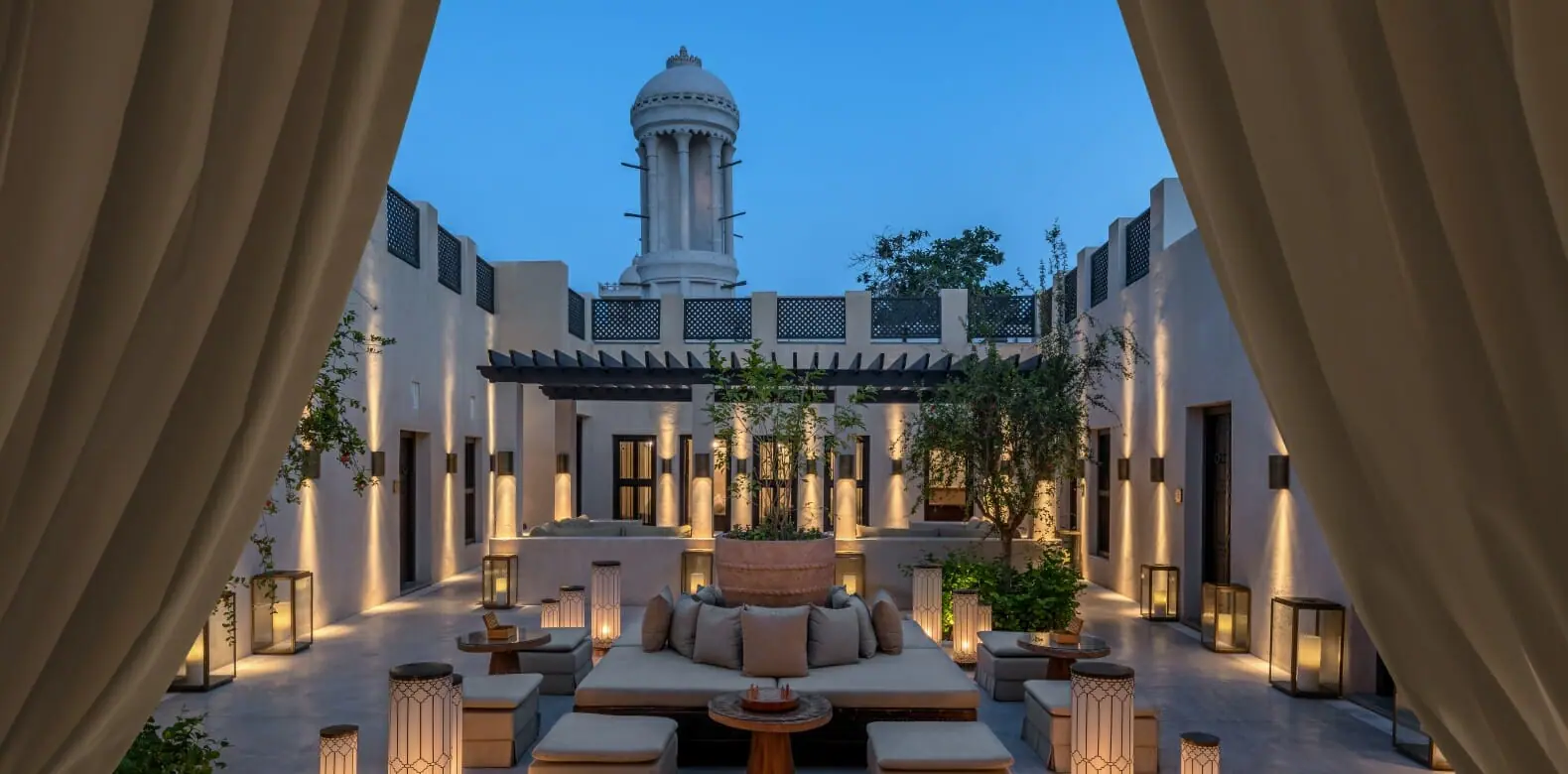
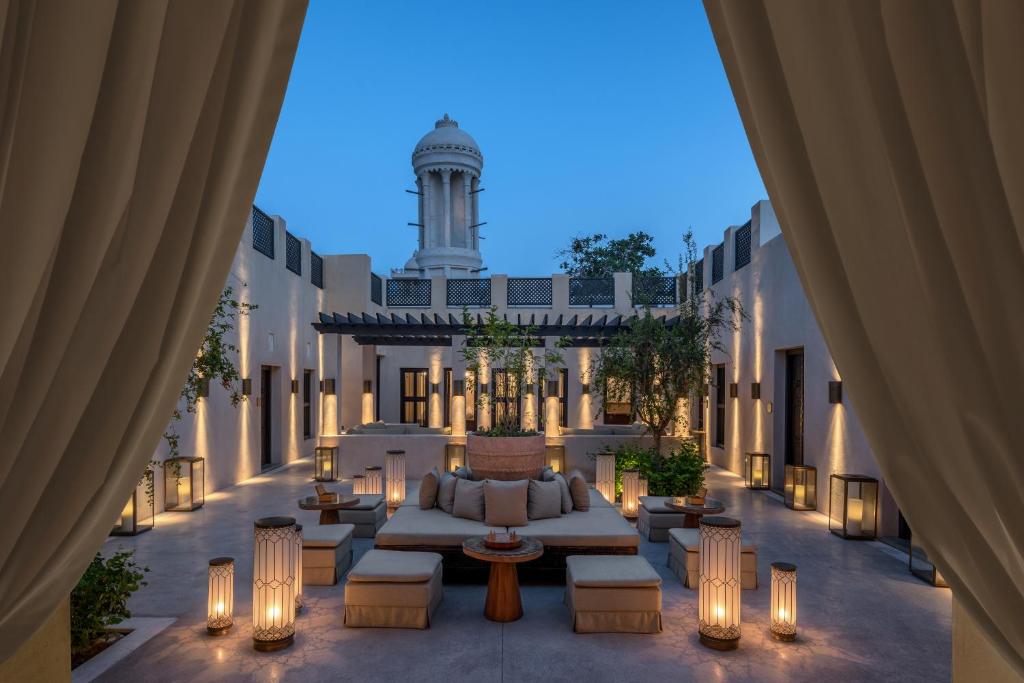
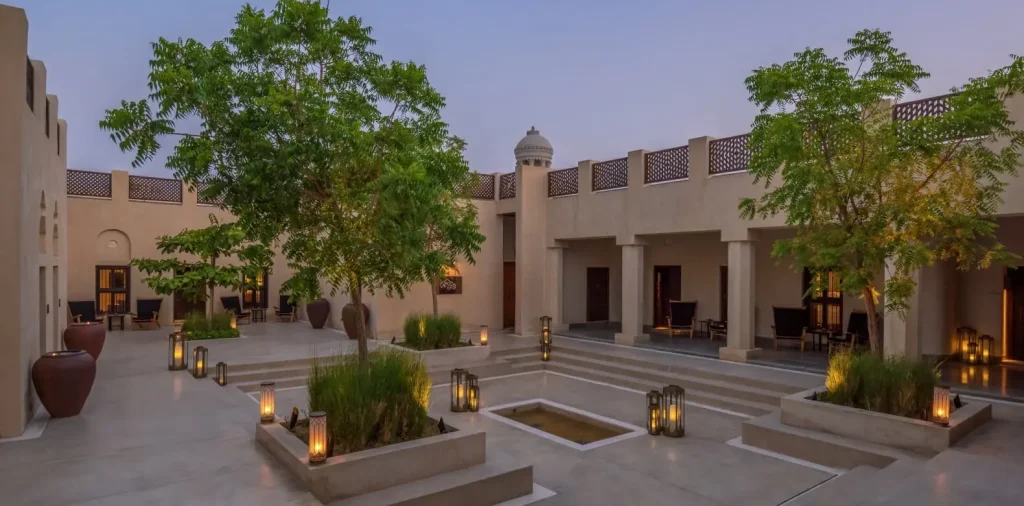
Think the United Arab Emirates and the glittery bling of Dubai or the powerful glamour of Abu Dhabi immediately come to mind. However, the lesser-known emirate of Sharjah – located north of its more famous, flamboyant ‘siblings’ is the cultural capital and historic heartbeat of the UAE. How fitting then, that the Chedi Al Bait Sharjah – located deep within the old town – is composed of seven adjoining Emirati heritage houses, lovingly restored over a number of years and opened in 2018 as an intimate, boutique hotel. Known as the ‘Al Bait’ until it was acquired and rebranded by the luxury Chedi group in 2020, the property offers 65 bedrooms and suites arranged across a low-rise arrangement of interconnecting buildings and organised around a series of internal courtyards. Facilities include a spa, outdoor swimming pool, gym, a variety of dining venues and a dedicated library. Public areas are set among shaded walkways, ornamental gardens and open-air quadrangles which pay homage to the hotel’s heritage while imbuing it with a secluded, sanctuary-like feel. To experience Chedi Al Bait first-hand, The Luxury Editor checked in.
Sharjah Emirate, Ajman, Sharjah
The Chedi Al Bait, Sharjah
 (5 stars)
History
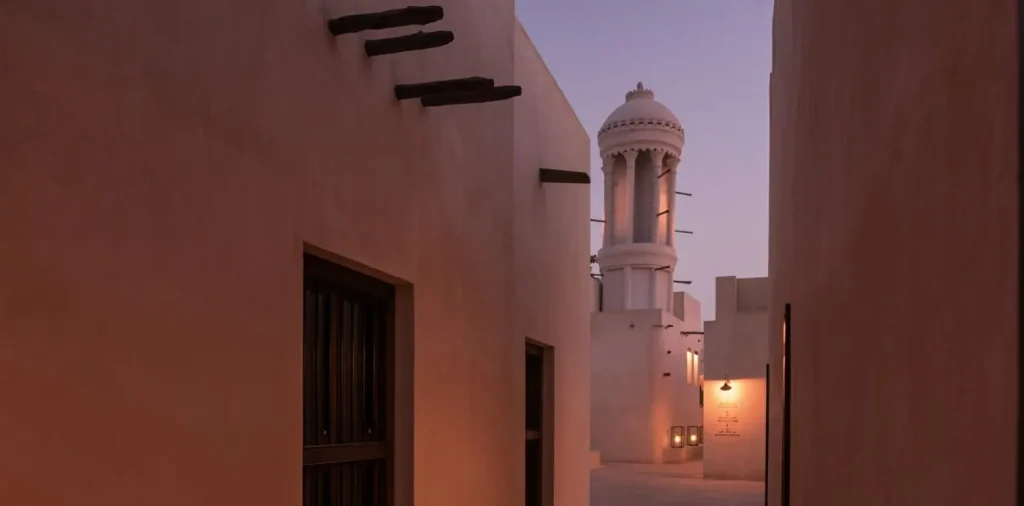
The story of The Chedi Al Bait is inseparable from the story of Sharjah itself. ‘Al Bait’ literally means ‘the home’ in Arabic, and the restored historic houses, which date back over 100 years, were once home to prominent local families – merchants, scholars and community leaders whose lives shaped Sharjah’s role as a trading and cultural centre along the Gulf. Rather than erasing the properties to create something new, the restoration focused on preservation – thick coral-stone walls, wooden beams, wind towers (barjeel) and internal courtyards carefully conserved and repaired using traditional methods and techniques. History is alive in the layout, yet contemporary standards of comfort have been subtly incorporated.
Location
The property is positioned within Sharjah’s heritage district, occupying a discreet, low-rise enclave spread across several thousand square metres and multiple adjoining plots rather than a single, consolidated site. This gives the hotel an unusual sense of scale for such a historic setting. Guests are within easy walking distance of many of Sharjah’s museums, cultural institutions and restored souks, making the location particularly appealing for those keen to explore on foot. Although at the very heart of Old Sharjah, the streets closest to the hotel are relatively quiet, giving it a sense of privacy despite its central location. Once inside, it feels completely removed from city life and like stepping into an oasis of calm. This juxtaposition is one of the property’s greatest strengths. On a more practical note, on-site parking and valet parking are available. The Corniche, beaches and Sharjah’s modern commercial areas are all a short drive away, while Dubai International Airport can be reached in approximately 20 minutes by car. From March 2026, Air Arabia will launch direct flights to Sharjah from Gatwick.
Check-in
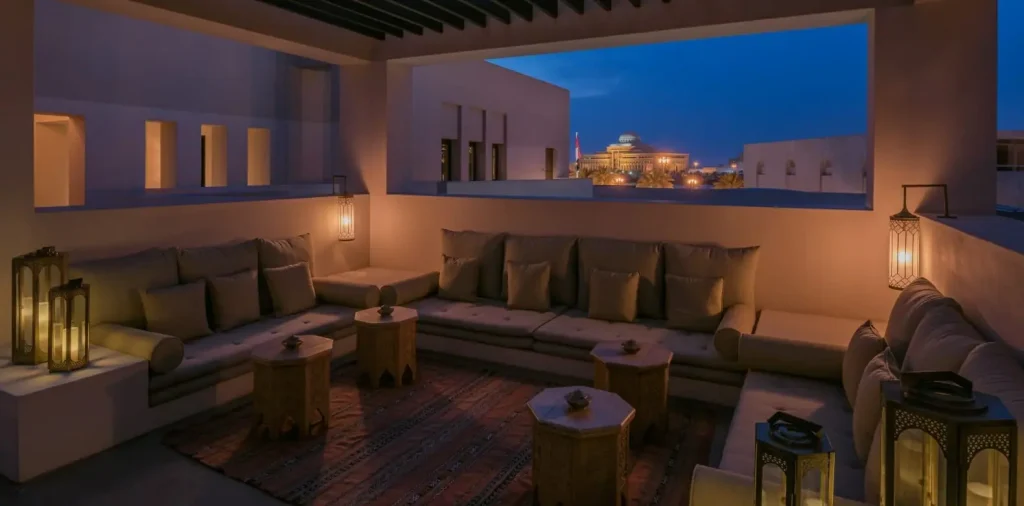
It was nighttime when I arrived at the hotel from Dubai International Airport and while the surrounding streets were hushed in the darkness, arriving at The Chedi Al Bait felt like chancing upon a kind of magical fairyland. Softly illuminated pathways, warm pools of light washing over stone walls, courtyards glowing beneath a myriad fairy lights. . . this interplay of shadow and illumination created a dreamlike calm that was intimate, enchanting and romantic in equal measure. This feeling was enhanced by the discreet presence of staff – clad in traditional flowing Emirati robes – who greeted me with hot flannels to wash off the journey and a deliciously refreshing, welcome drink flavoured with lavender. I was led not to an anonymous lobby to check in but to one of the reception rooms – a secluded, quietly atmospheric space with subtle lighting casting soft shadows across textured walls and architectural details, and tastefully furnished with locally-sourced antiques. It was more sophisticated, exotic salon than hotel reception and, I reflected, quite possibly one of the most pleasurable check-ins I’ve ever experienced. I was then shown to my room – a swift lift ride up to the second floor before a fascinating amble along narrow, lantern-lit passages and mysterious, maze-like landings before locating my accommodation. My luggage was already in-situ. Of course.
Rooms and Suites
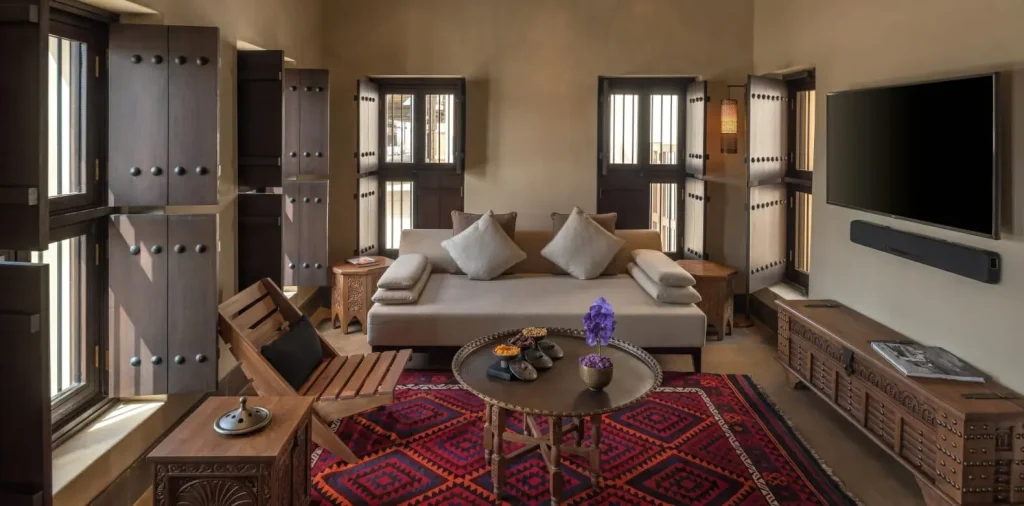
The 60-plus rooms and suites at The Chedi Al Bait are defined as much by atmosphere as by size or category. The restored house aesthetic is reflected in a tranquil sense of calm that is noticeable as soon as you step inside. Quietly luxurious rather than showy, the Deluxe Rooms provide generous space, king-size beds and elegant bathrooms with walk-in showers. Deluxe Patio Rooms extend this experience outdoors, with private courtyards that enhance the feeling of seclusion. Grand Rooms and Grand Patio Rooms offer additional seating areas, making them particularly well suited to longer stays. The Al Bait Heritage Rooms incorporate original architectural details such as high ceilings, original wooden beams and roof timbers, and deep-set windows – characteristics which accentuate the connection of the property to Sharjah’s history. The Chedi Suites, Heritage Suites and Grand Suites introduce separate living areas, larger bathrooms with bathtubs and a more spacious lay-out. Select suites within the Khalid Ibrahim House include private patios or plunge pools, enhancing privacy further. Across all categories, sound, light and layout are carefully considered. Thick walls, inward-facing courtyard and restrained interiors create a consistent sense of peace and quiet, allowing each room to feel like a private retreat rather than hotel accommodation.
My Room
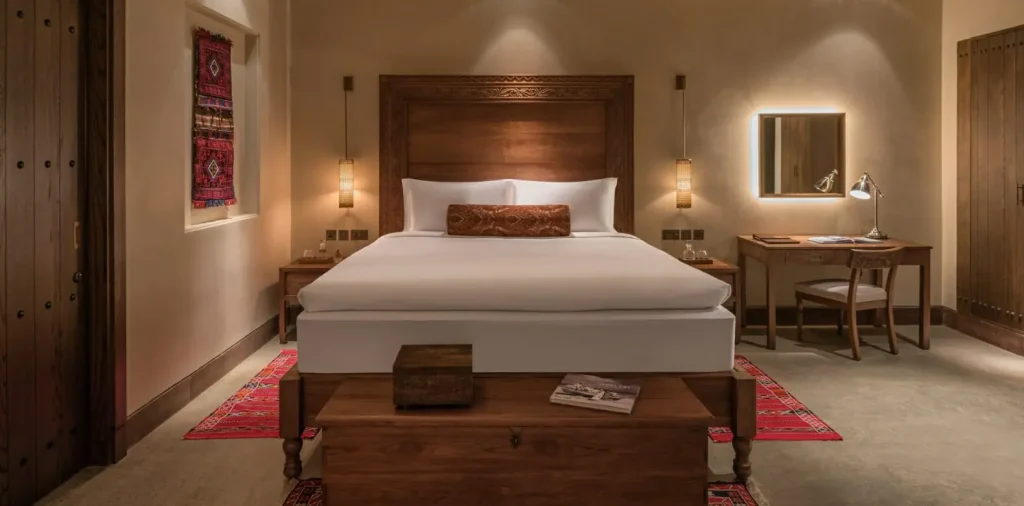
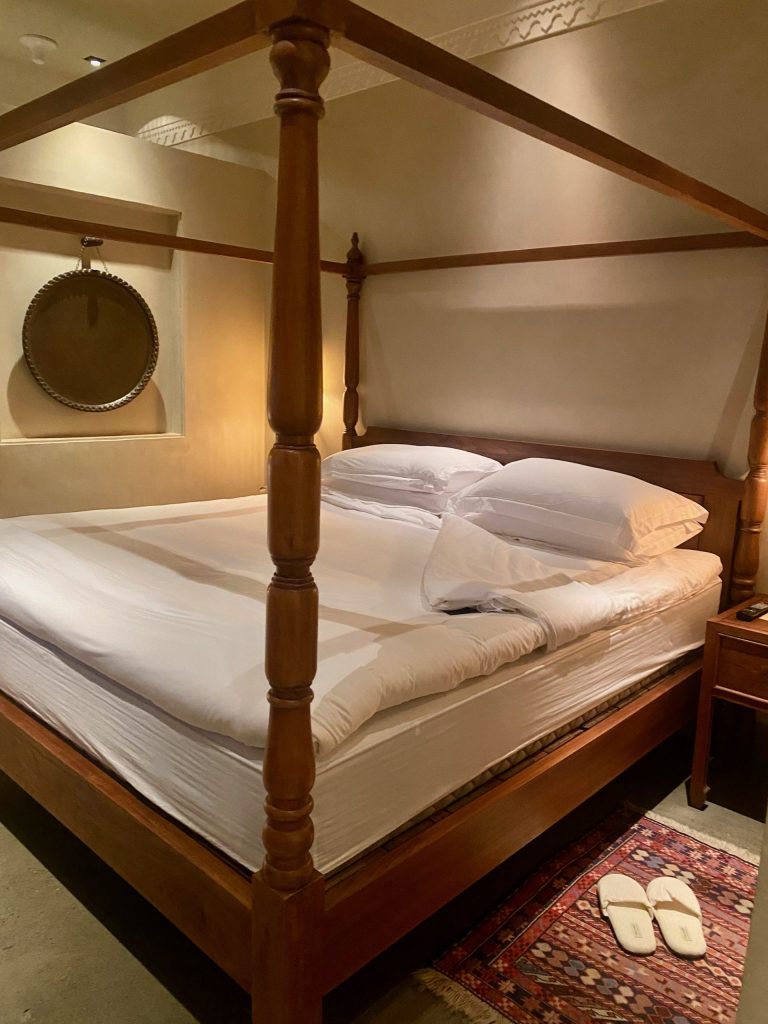
I stayed in one of the Al Bait Heritage Rooms. A sense of space struck me from the moment I stepped inside. High ceilings with wooden beams, thick heritage walls and generous proportions gave the room an immediate feeling of openness, avoiding the enclosed atmosphere that historic buildings can sometimes impose. It felt like a room designed to be properly lived in rather than simply slept in. Dark wood furnishings brought a sense of warmth and balance. Solid, beautifully crafted and understated, they gave the room a certain structure which felt neither overwhelming nor in any way dominant. This contrasted perfectly with a palette drawn from natural tones – sand, stone, soft browns and muted creams. A separate dressing area provided generous storage, with wardrobes and drawers hewn from the same dark wood, ensuring that everything had its place with the result that the main bedroom remained a serene, uncluttered space.
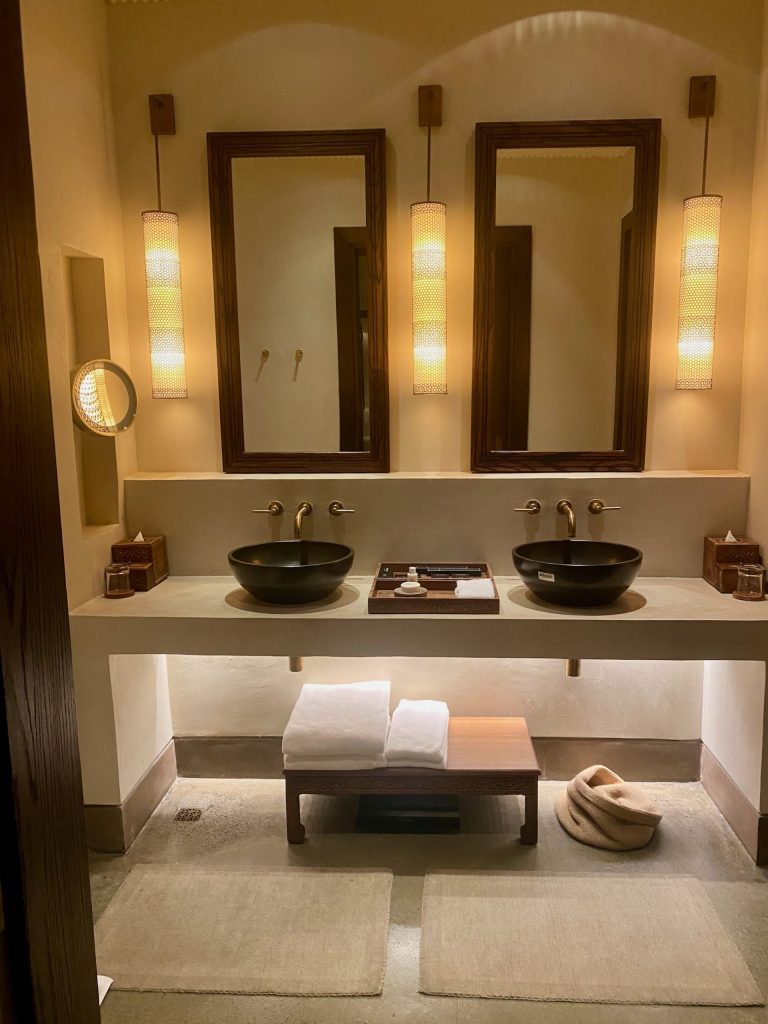
A dish of complimentary dates and nuts awaited me on arrival – a lovely, locally-rooted touch which quickly became part of my morning routine. I’d nibble on them as I sipped freshly-brewed coffee from the in-room Nespresso machine while sitting in the seating area on a sofa which was as is comfortable as it was decorative. But back to bed. . . the Super King was perfectly positioned and an absolute pleasure in which to slumber. Enveloping myself in exquisite, high-quality linen while reclining on exceptionally soft yet supportive pillows felt like I was being cocooned in a cloud. I slept deeply throughout my stay – aided by the quiet, the insulation of the heritage walls and an overall sense of stillness. The bathroom mirrored the bedroom in both scale and refinement. Smooth stone finishes, a dual vanity, elegant brass details and softly calibrated lighting created a calm, inviting atmosphere that I appreciated immediately. The spacious rainfall shower was stocked with luxury-branded complimentary shower gel, shampoo, conditioner and body lotion – their subtle fragrances and textures adding a sensory layer. Wrapping up in thick white towels and then a generously plush robe, I felt positively cosseted.
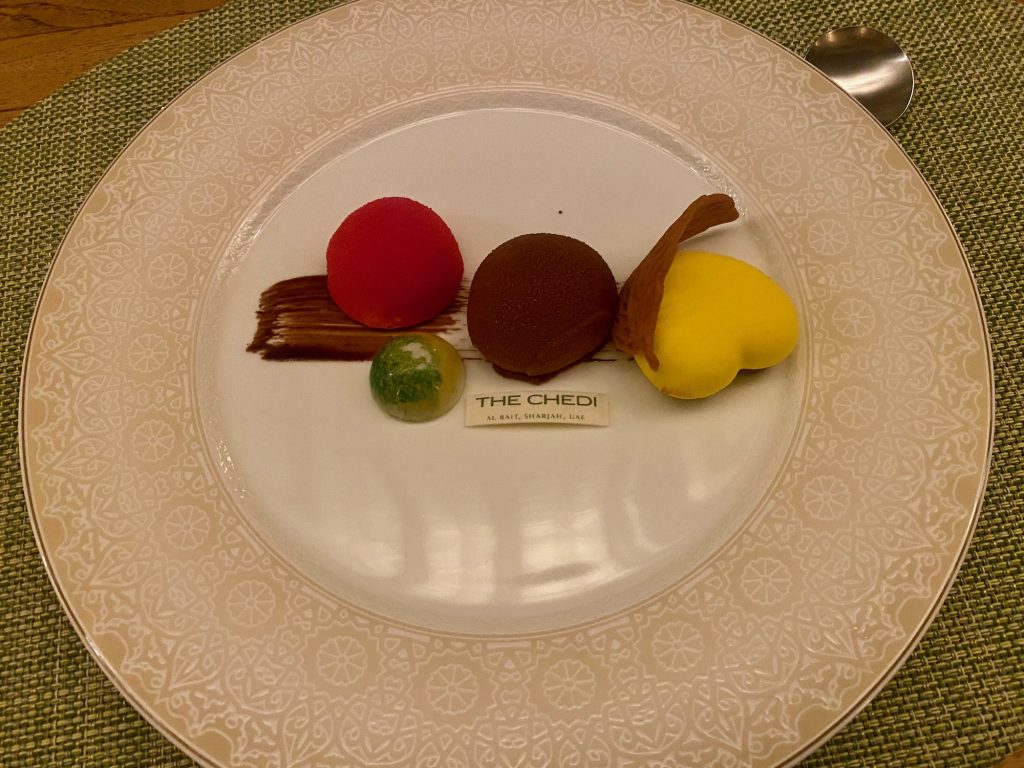
Dining
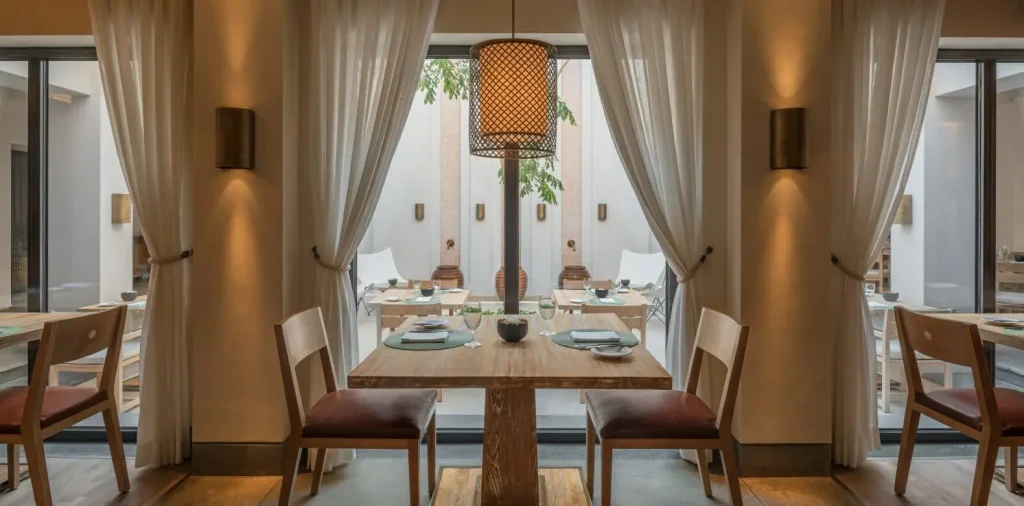
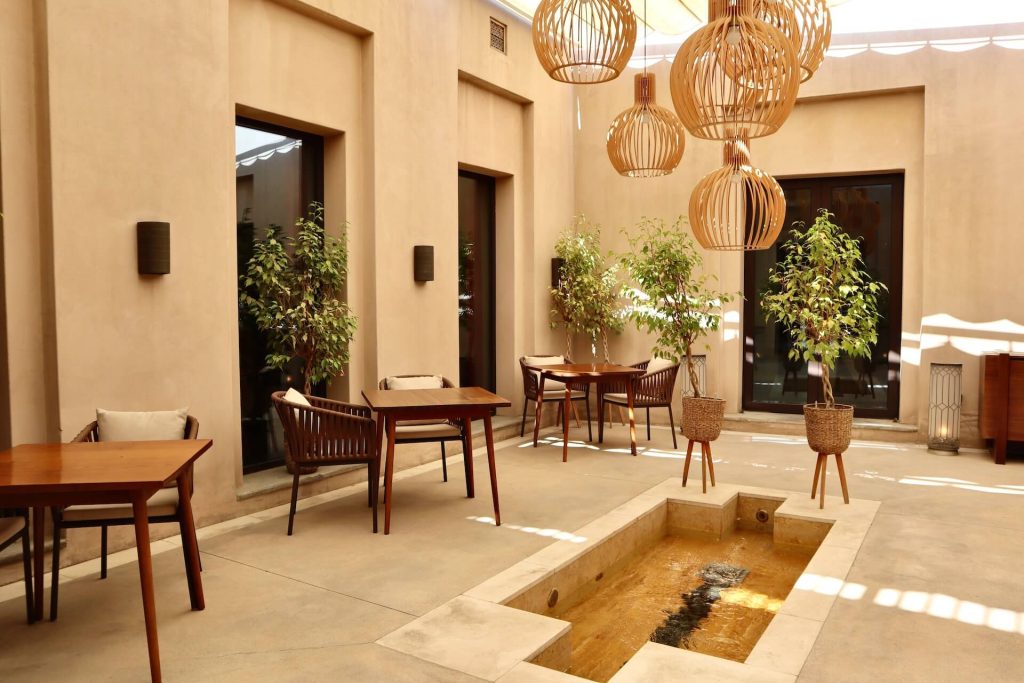
Dining at The Chedi Al Bait is deliberately measured and well considered, echoing the hotel’s wider approach to luxury. Rather than overwhelming with choice, the restaurants are distinct yet cohesive, each offering a different atmosphere while maintaining the same sense of restraint, quality and attention to detail. At the centre of the property is The Restaurant – an elegant, all-encompassing dining space set within the hotel’s restored heritage architecture. The interiors reflect the calm palette and generous proportions found throughout the hotel, while the adjoining open-air courtyard adds a relaxed, atmospheric alternative.
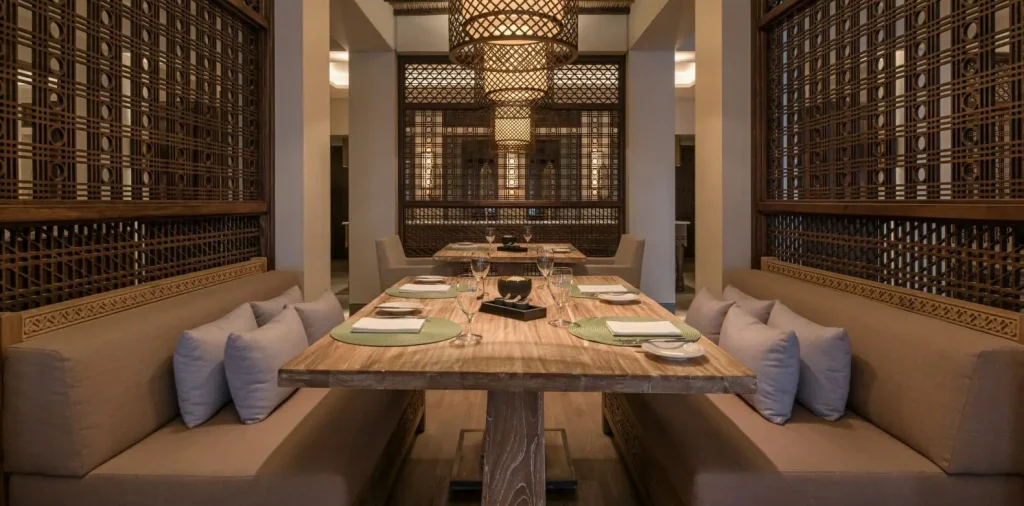
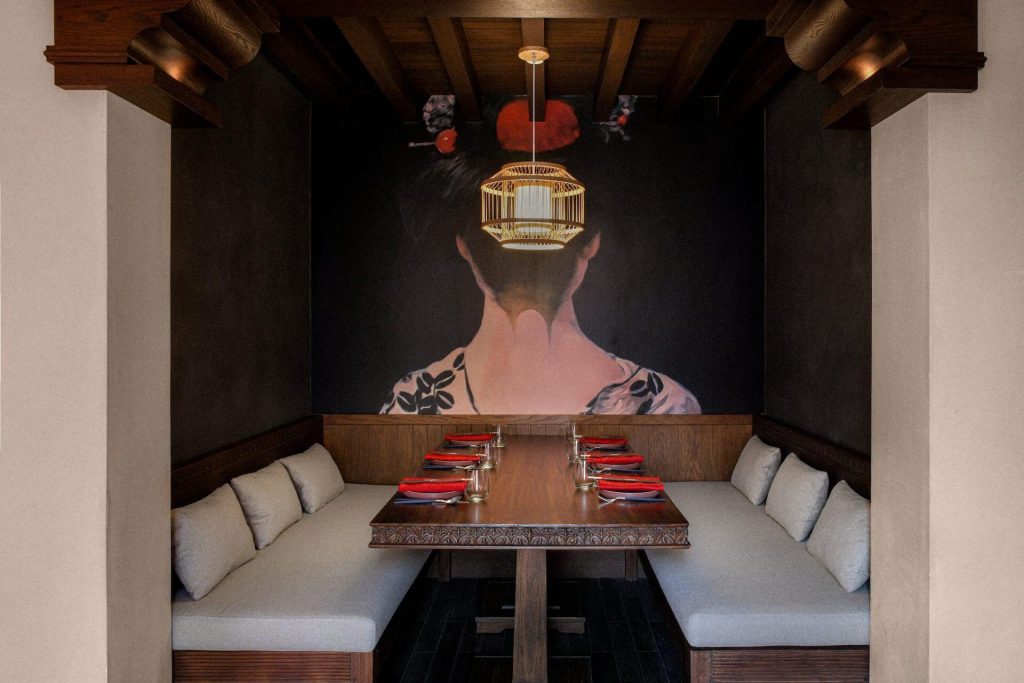
The menu draws on a broad range of international influences, unified by thoughtful execution and a focus on balance rather than overt showmanship. For a more contemporary counterpoint, NOMANI offers a refined fusion of Japanese and Korean cuisine. Intimate in scale and modern in feel, it provides a sharper, more destination-led dining experience while remaining aligned with the hotel’s understated sensibility. Completing the trio, The Café offers a relaxed setting beneath a beautifully preserved wind tower – ideal for coffee, tea and lighter bites throughout the day. Together, the restaurants form a cohesive dining experience – contrasting yet complementary.

Breakfast
Breakfast at The Chedi Al Bait stood out immediately for its calm, à la carte approach served in The Restaurant or the courtyard. I was loving the winter sun so for me, it had to be the latter. I was genuinely pleased not to be faced with a buffet – instead, each morning felt considered and indulgent as I perused the menu and pondered on the many choices. On my first morning, I started with a bowl of fresh seasonal fruit and thick, creamy yoghurt – simply presented and refreshingly light. However, the poached eggs quickly became a favourite. Cooked to perfection with the whites just set and yolks soft and golden, they arrived resting on warm sourdough, finished with a light hollandaise that was rich without being heavy. The balance was spot on – nothing overworked, nothing competing for attention – allowing the quality of the ingredients to speak for themselves. Another morning, I leaned into local flavours, opting for a more Arabic-inspired breakfast. These elements were particularly memorable – cool, silky labneh with a gentle tang, loosened with olive oil and begging to be scooped up with warm flatbread that arrived soft, pliable and faintly fragrant. The olives were plump and properly cured, offering a salty depth, while the dates—soft, sweet and almost caramel-like—added a natural richness. Together, the combination felt deeply satisfying yet light. The pastries with which I chose to close breakfast arrived warm, delicately crisp on the outside and soft within, clearly baked with care rather than sourced en-masse. Coffee was consistently excellent – rich, well extracted and unhurried – encouraging me to linger longer than planned. The experience felt personal, composed and restorative – a breakfast designed to ease you into the day rather than rush you through it.
Lunch
I deliberately skipped breakfast on one occasion in order to sample lunch at The Restaurant. I began with a selection of cold mezze, beautifully presented and full of contrast – smooth hummus with a clean, nutty finish; smoky baba ghanoush with real depth; and crisp, fresh salads that tasted as though they’d been assembled moments before arriving at the table. The stuffed vine leaves were particularly memorable – neatly rolled and glistening – with a tender bite that gave way to a fragrant filling of rice, herbs, and citrus. Warm bread arrived alongside, ideal for scooping and sharing, and the pacing allowed time to enjoy each dish without feeling hurried. The lamb chops were another highlight – perfectly cooked, tender and so well-seasoned that flavour was added and enhanced rather than overpowered. Equally impressive was my luncheon companion’s seabass, delicately cooked and served with fragrant rice and toasted pine nuts. The fish was light and flaky, the pine nuts adding warmth and texture while the rice absorbed the flavours beautifully. Everything felt – and tasted – balanced and carefully judged.
Dinner
Dinner at NOMANI felt more intimate and focused than elsewhere in the hotel, with a softly lit dining room that immediately encouraged a slower, more considered pace. The menu’s Japanese–Korean balance came through clearly, and I was glad to be guided towards a sequence of dishes that showcased both sides. I began with sashimi, impeccably fresh and cleanly cut, served simply enough to let the quality of the fish speak for itself. Each piece was delicate, cool and precise, setting a calm opening note. This was followed by Korean-style beef short ribs – slow-cooked until tender, glazed with a lightly sweet soy and garlic sauce and finished with sesame and spring onion. Rich and deeply savoury, it brought a welcome depth of flavour without tipping into heaviness. My main course was charcoal-grilled black cod, caramelised at the edges and beautifully flaky within, and finished with a miso-based glaze that added richness without overwhelming the fish. Alongside it, rice arrived fragrant and comforting, acting as a quiet counterpoint to the more complex flavours on the table.
The Library
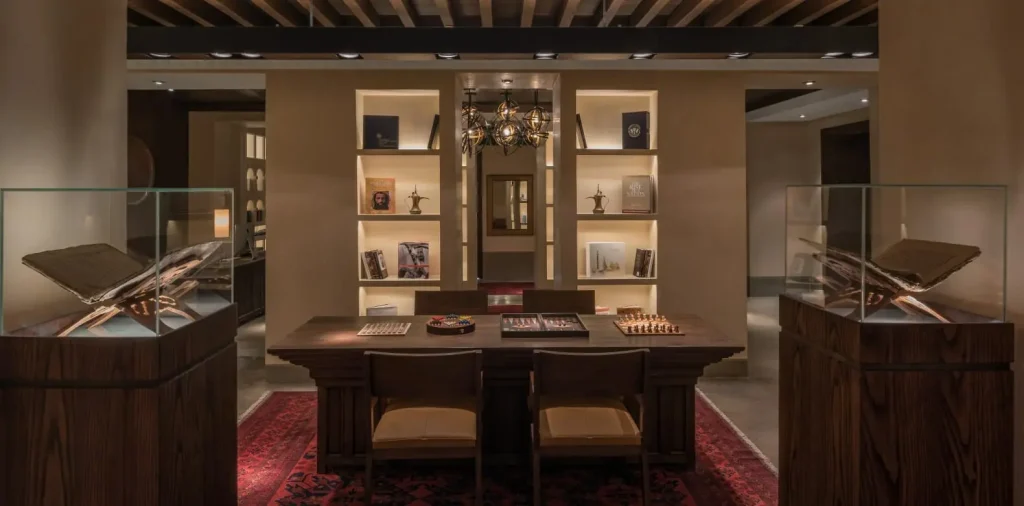
Rare is the hotel – even in the world of luxury hospitality – that houses its own library and museum. Imagine my delight, then, to discover that the Chedi Al Bait can lay claim to such an honour. Both library and museum sit within Bait Ibrahim Al Midfa, once the home of one of Sharjah’s most influential intellectual figures, and the sense of history is palpable. What first drew my attention was the remarkable door at the entrance. Known as the ‘Elephant Door’, it dates back to 1944 and still bears its original Arabic inscription above the arch. The heavy timber, hand-painted details and iron fittings speak of exceptional craftsmanship. As I passed through, it felt as though I was travelling back in time as I imagined those who had opened this very door in the past to absorb knowledge and discuss ideas, news and culture. Walking first into the library, I immediately feel as though I’ve stepped into a beautiful seat of learning rather than a hotel. The walls are lined with a thoughtfully curated collection of antiquarian and contemporary books, spanning history, travel, art and philosophy. Sitting at one of the carefully-appointed tables, I spent 15 minutes browsing through a glossy art and design publication but the library, open from 9am-10pm, is somewhere I could have happily spent hours. If only there’d been time for a game of backgammon. Onto the small but perfectly formed museum showcasing the history of the property and telling the story of the Al Midfa family. The exhibits include images, artifacts and personal items connected to the man’s life and work. Bliss for a history buff like me.
Gym
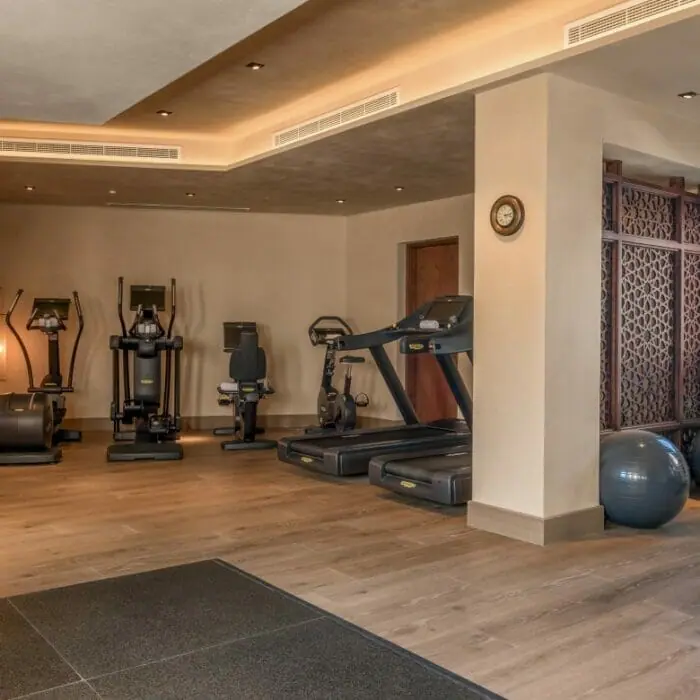
The gym facilities at The Chedi Al Bait are small but thoughtfully designed – very much in keeping with the hotel’s understated approach. While I didn’t personally use the gym during my stay, I took a look and was struck by how well considered the space felt. It’s compact but nothing seems missing — modern Technogym equipment is neatly arranged with areas for cardio, free weights, functional training and stretching. Rather than trying to compete with large resort gyms, it feels curated for guests who want to maintain their training routine while away.

Spa and Wellness
Entering the women’s spa at The Chedi Al Bait, I immediately appreciated the sense of privacy created by the clearly separate men’s and women’s areas. Knowing the space was dedicated solely to women made it feel calm, respectful and deeply comfortable from the start. The atmosphere was hushed and elegant, with warm stone, soft lighting, and the gentle scent of steam in the air. I moved slowly between the sauna and steam room, taking my time to unwind before my treatment. The separation allowed the spa to feel unhurried and intimate – a space where I could fully relax without distraction. A variety of therapeutic and rejuvenating treatments are available, ranging from classic massages to holistic rituals. I opted for The Chedi Signature Massage – a blend of remedial, Balinese, Swedish, and Lomi-Lomi movements that work on deep muscle tension. The therapist’s movements were confident and intuitive, combining deep pressure with long, flowing strokes. Tension melted away, especially from my shoulders and lower back, leaving me feeling both physically lighter and mentally calmer. Afterwards, I lingered longer than maybe I should have on the plush loungers in the women’s relaxation lounge but I felt so comfortable, I simply didn’t want to move.

Pool
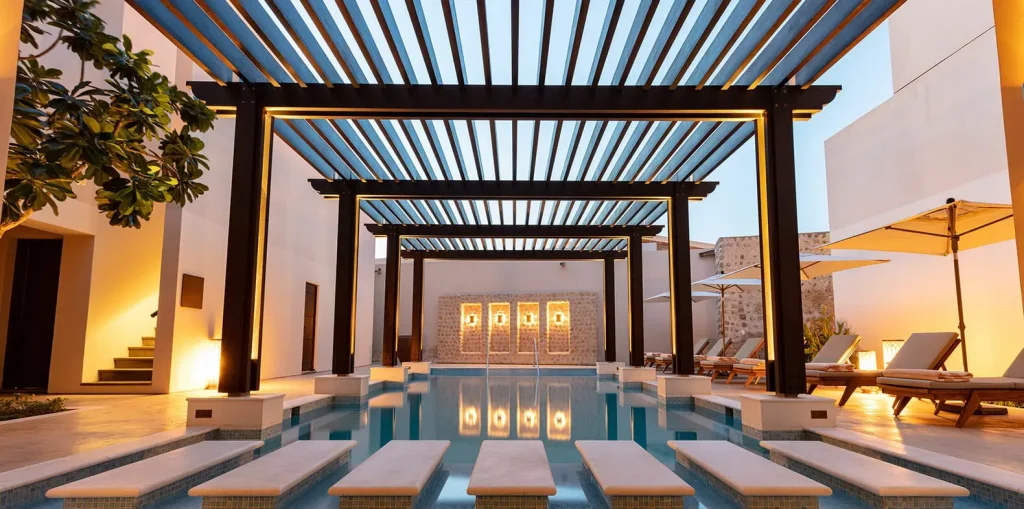
Situated within one of the heritage courtyards and surrounded by stone walls that soften the noise of the city while making it very attractive to look at, the pool at the Chedi Al Bait is neither large nor particularly dramatic. Rather, it blends in beautifully with the hotel’s atmosphere of calm quietness and, although bijou rather than Olympic in size, it never felt crowded. I found it to be the perfect place to cool off and refresh between sightseeing trips. The well-spaced, uber-comfortable loungers combined with shaded areas made time just slip away – especially with a good book in hand. Another plus? The service. Attentive enough to anticipate a drink or light bite yet sufficiently discreet to preserve the sense of calm.
Final Thoughts
There are hotels that momentarily dazzle, and then there are those that stay with you. The Chedi Al Bait, Sharjah belongs in the latter category. It does not rely on spectacle or scale, nor does it compete for attention in a region known for architectural bravado and glitzy bling. Instead, it offers something far rarer – a hotel that champions authenticity, heritage and restraint and which offers the luxury traveller a soulful alternative to the expected Middle Eastern opulence.
This property is included in our guide to the best luxury hotels in Sharjah