Located close to the River Douro in the charming Miragaia district and in front of a magical but practically vertical park, Timbre Virtudes is very much its own hotel. Quiet, dignified, steeped in history, the renovation of three historic and aristocratic family homes has kept the granite bricks and many original features admirably intact. Of particular note are the ‘flirting’ benches, which feature in a handful of rooms where maids used to overlook the nearby passageway and engage with suitors below. Enjoy the excellent Través restaurant and bespoke cocktails made at the bar by mixologist Bruno. The Luxury Editor’s Simon recently visited, so read on to discover more.
Norte Region, Porto
Timbre Virtudes
 (5 stars)
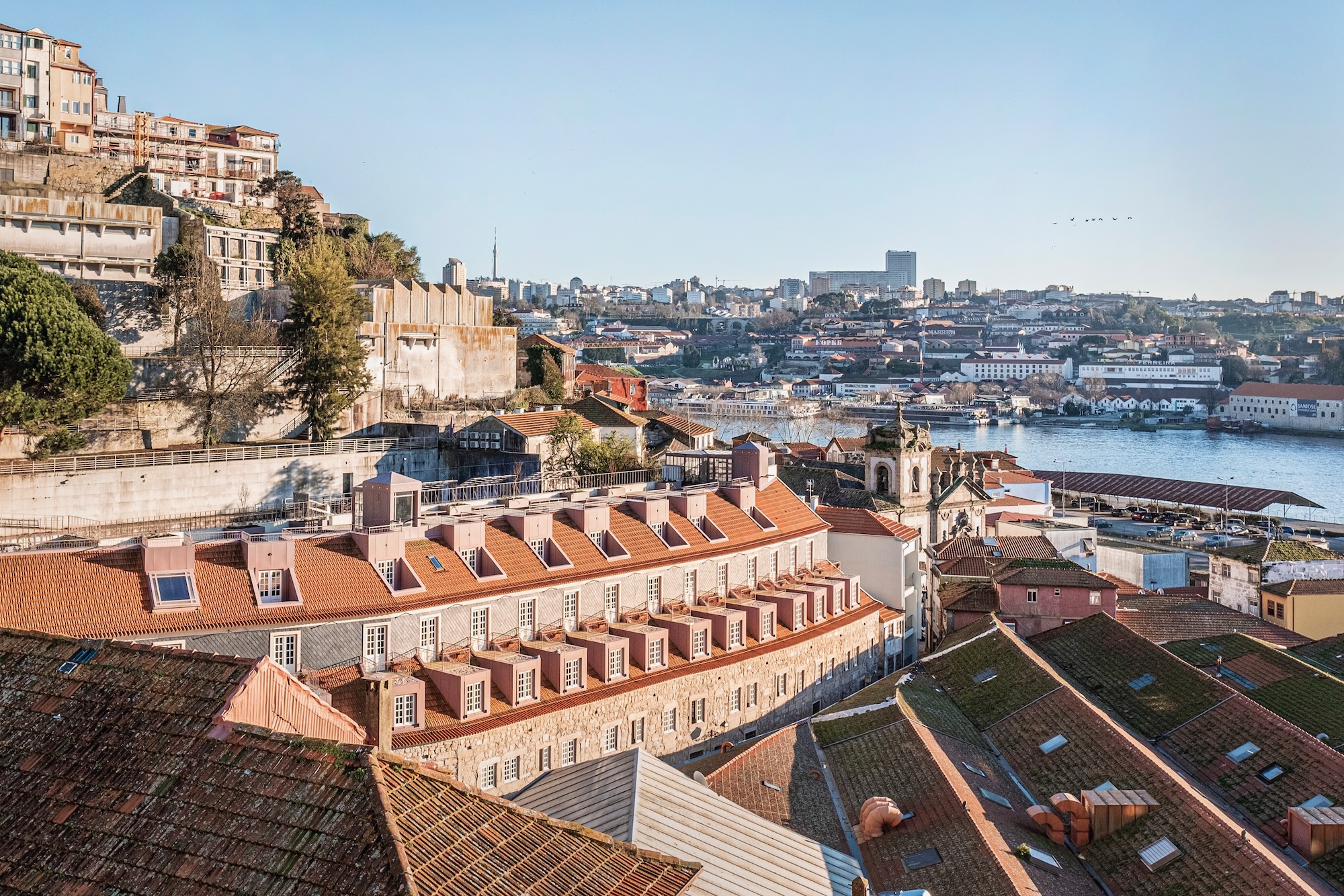
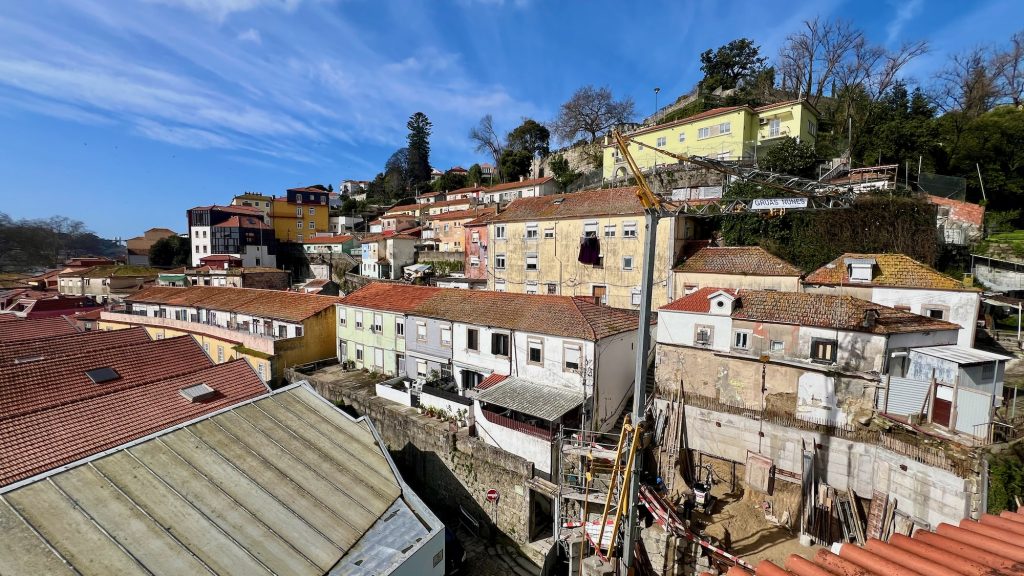
Pleasingly set back from a main road or even a minor one, Timbre Virtudes blends in seamlessly with Porto’s largely residential Miragaia district, best known for its colourful housing, hanging laundry, its cobbled streets and its proximity to the dramatic Douro River. Dating back to the 16th Century, the hotel’s 71-room expanse is constructed around the dwellings of three different aristocratic families who are believed to have been involved in the burgeoning maritime industry of the time. The building’s aristocratic origins are illustrated by a 17th-century coat of arms, displayed both above the entrance and adopted as the hotel’s brand signature, found variously on stationery, towels, and menus alike.


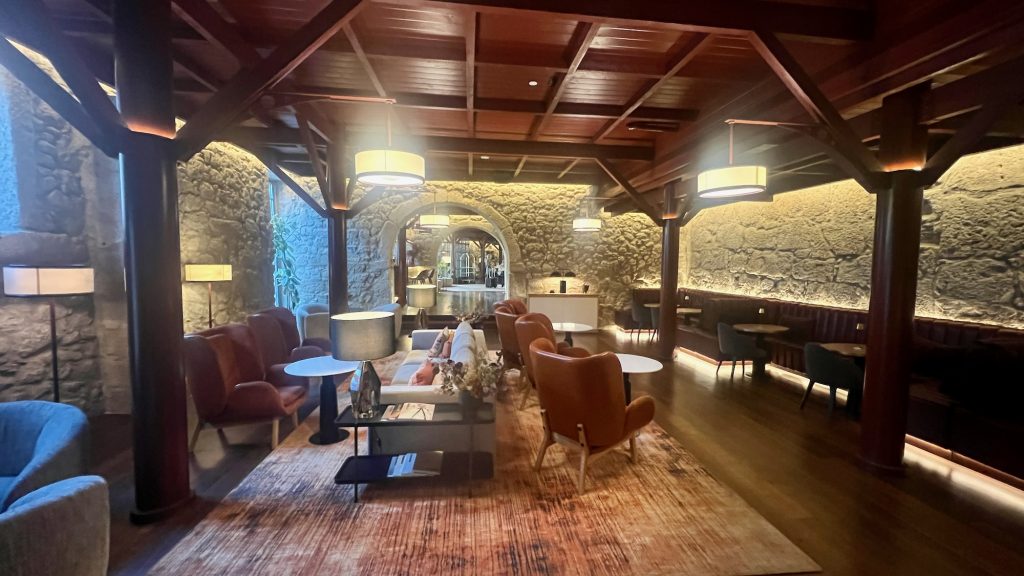
If the building’s exterior is dominated by original but pristine granite brickwork, the interior follows suit, providing the reception, bar area and restaurant with a cavernous elegance compounded by dark flooring, proscenium arches and burgundy pillars and ceilings. Stylishly mixing contemporary with historic, the space exudes what the hotel staff like to call ‘silent luxury’. It’s certainly dramatic and, in its own way, quite masculine too, brooding and atmospheric but paradoxically calming and gentle.

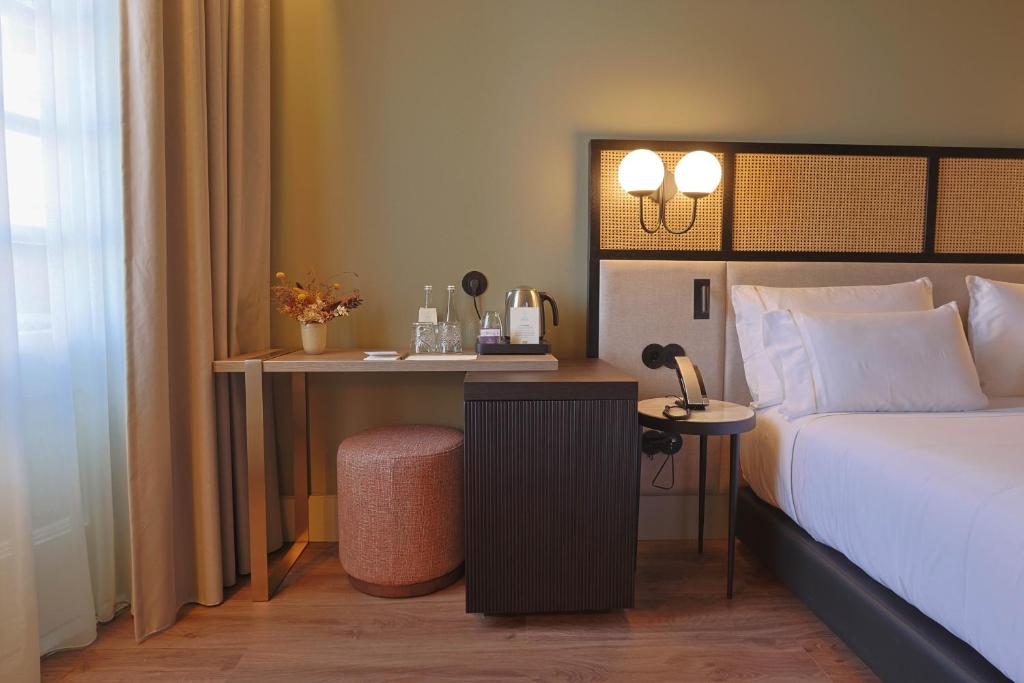
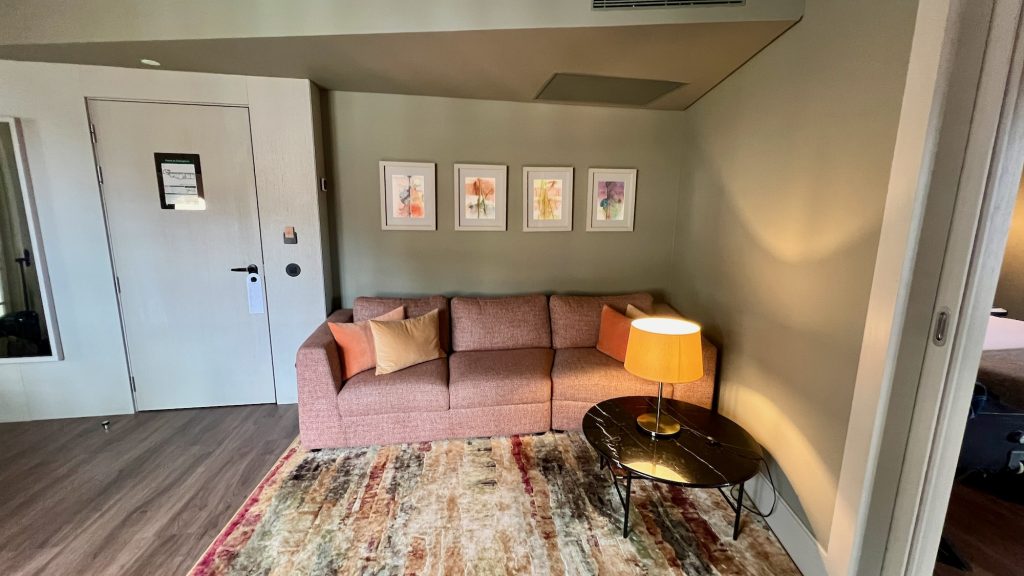
The Alfândega grand occupies a sizeable proportion of the top floor and stretches to an impressive 70 square metres. Homely and welcoming, walls are pistachio, floors are walnut and orange highlights from pillows and artwork inject the suite with energetic bursts. Compartmentalised into three sections, all with closing doors, the uncluttered bedroom sits furthest on the left as you enter. The bed is king-size, and the room has its own balcony, which is especially useful for catching the sun’s end-of-day rays. The living room has a comfy sofa, a TV, a minibar, a round dining table as well as its own balcony which, much like the bedroom one, offers beguiling and practically timeless views over terracotta roofs towards the river on one side and colourful residential properties on the other.



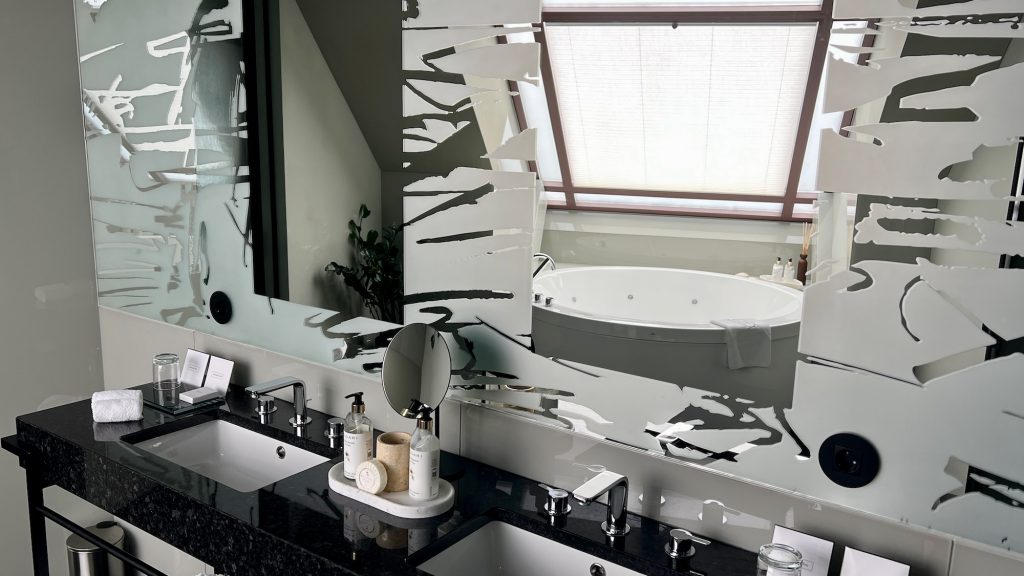
If the spacious bathroom is the suite’s highlight with its slick marble flooring, its his and hers basins, its faux steamed up mirrors and its Bulgari soaps, as charming as the shower is, it’s the jacuzzi which is the jewel in the suite’s crown. Sizeable in its roundness, with its own underwater lighting and powerful jets, it’s surely worth taking an evening off and staying in to luxuriate in this opulent monster of self-pampering. The Alfândega is the only space in the hotel which has a jacuzzi, but in-room massages are available for all.



The hotel’s chef Tiago Bonito held one Michelin star throughout his previous tenure at Largo do Paço in Amarante. Of his work, he says “My food is sea and fire. It’s smoke, eucalyptus, pine and vines. Flavours that I know and put into my dishes, creating experiences that appeal to all the senses.” Través restaurant’s granite walls and high ceilings make for dramatic dining and our sommelier cum waiter, the affable and endearing Rui, expertly curates the evening for us. Salmon in crispy tartelettes serve as a satisfying amuse bouche and an orange infused garlic and thyme butter renders the homemade bread irresistible.

If starters are both colourful, the Foie gras visually reminds one of a desert with its beige aesthetic offset by bright raspberries, green leaves and almost yellow croutons. Its soft texture is also dessert-like and the figs add a sweetness to the silkiness. The Boiled Octopus is cut into thick finger-sized chunks with green basil and coriander sauce and sliced carrots, lifting presentation.


The star of the show has to be the Tiger Shrimp with brothy rice for two. Rui serves from a large Le Creuset type black casserole dish at the side of the table and sprinkles with a generous helping of black pepper. Essentially, it’s a local version of the bouillabaisse and years ago, it would have been the kind of comfort food mothers or wives would serve their men after a hard day’s fishing on the nearby Atlantic.


Portions are generous but we still have two helpings each, all ably washed down by Lisbon’s Quinta Do Gradil Chardonnay. A Meringue served with Greek Yoghurt ice cream is surprisingly fluffy and a gin and tonic jus offsets the slightly sweeter strawberry element.


It’s impossible not to pass the bar on the way back to any of the rooms, situated as it is, directly opposite the elevator. Rui plied us with what we thought was a final tipple for the night, a Quinta Da Romaneira Tawny port, but the hotel’s resident mixologist, Bruno, has other ideas. How can we disappoint him? We’re not quite sure what to order so he offers to make each of us an off-piste, off the cuff, bespoke cocktail. After a brief question and answer session, he rushes off to get busy behind the bar. I end up with an earthy white truffle flavoured whiskey sour and my friend an espresso martini inspired whisky sour with prickly pear cactus, honey and egg white ingredients. The man is a wizard, the drinks gentle but intoxicating; someone please give him a prize!



It’s not long before we’re back at breakfast, last sitting for which finishes at a luxurious 11am. There’s a table in the main space which serves healthier fare such as chia seed puddings, yoghurt, granola, dripping honeycomb and beyond the proscenium arch, a larger spread which covers fried breakfast, pastries, breads, fish, cheese and meats. Golden, red and occasionally black fishtail tiles provide the space with an inviting and magical glow and for anyone who’s not in a hurry, a glass or two of the local sparkling wine is a must, as is Portugal’s national snack, a Pastel de nata. I try it all but my favourite has to be the two different types of granola which have both white and milk chocolate buttons in it.


In the summer Timbre Virtudes’ rooftop turns into one of the city’s coolest bars. In February, the bar is closed but Duran Duran’s Hungry Like The Wolf bursts over the speakers, providing the space with a suitable exoticism. Its view over the Miragaia district, the Douro river, the Ponte da Arrábida is a sight for sore eyes and behind it, almost within touching distance, is an architecturally out of kilter but fascinating brutalist school with a large concrete playground and tall concrete grey walls. The sun is out, and the always-friendly staff are more than happy to bring food or alcohol to guests who want to take advantage of this spectacular location, one of the many reasons this hotel is a must-visit when in Porto.