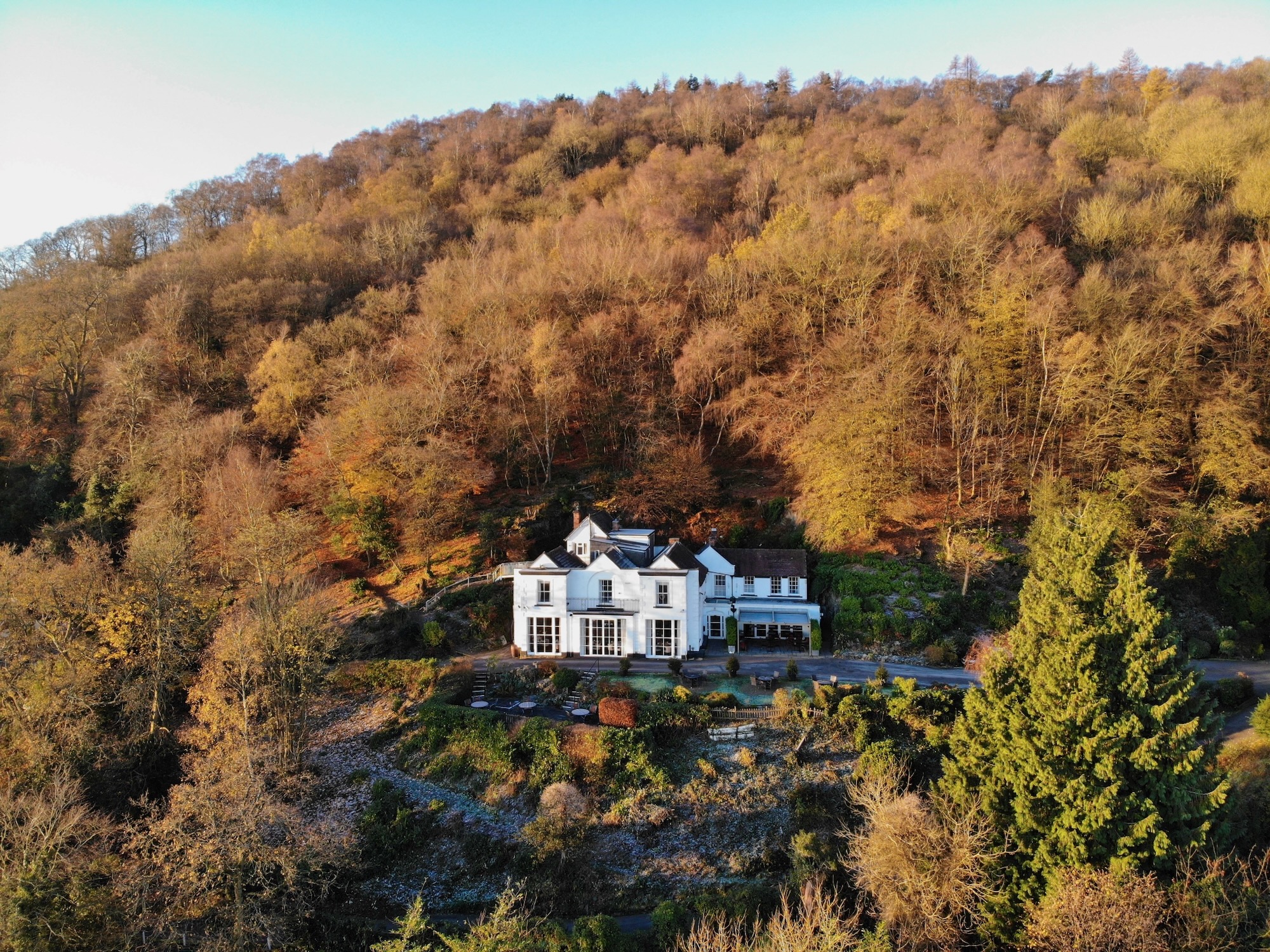
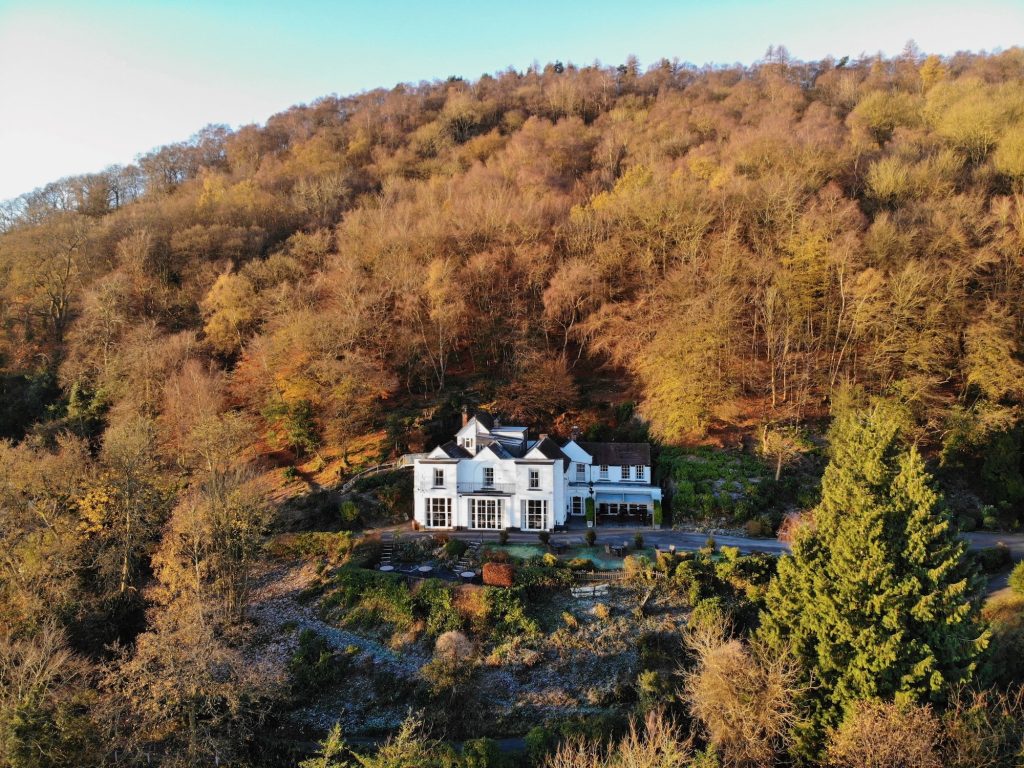
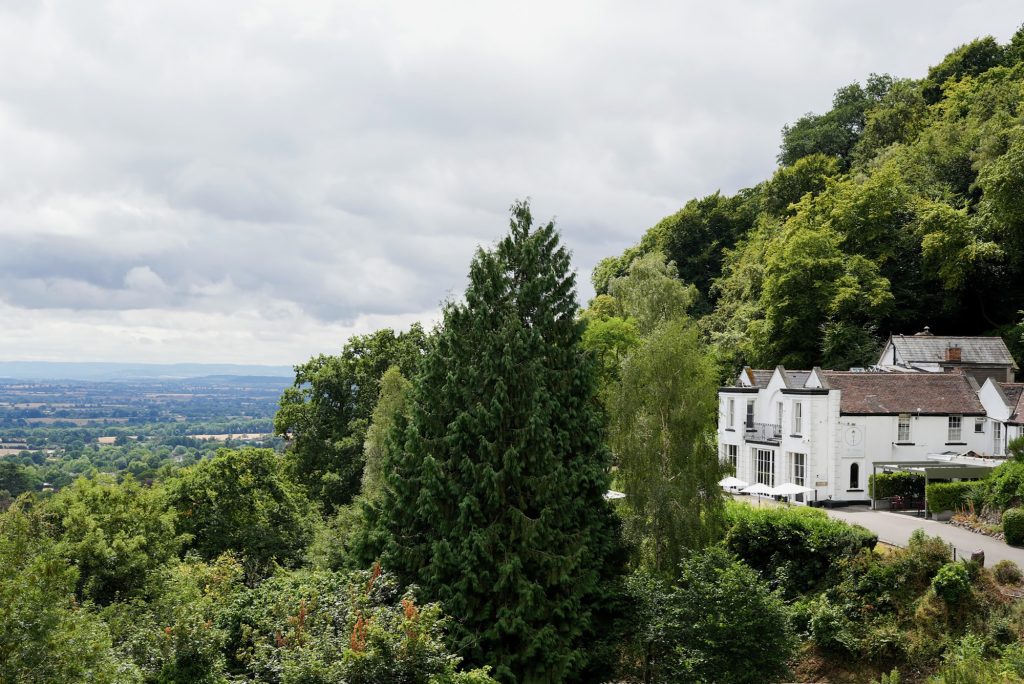
The Malvern Hills rise along the border of Worcestershire and Herefordshire in western England. Perched high on the wooded slopes is ‘Cottage in the Wood’, a historic, hidden-away, luxury hotel on a hill – and the ideal base from which to hike and explore the area, designated one of outstanding natural beauty. The Georgian property comprises thirty-two unique and stylish bedrooms which are set across the hotel’s three properties – the Main House, Beech Cottage and the Coach House. Select rooms in The Coach House are dog-friendly. For larger groups and families, two luxurious, self-catering guest houses are available – The Studio and The Chapel – which are tucked in the hillside just below the main hotel. Many rooms have sweeping and dramatic views of the Severn Valley, Vale of Evesham and the rolling hills of the Cotswolds. Dining is a defining feature of ‘The Cottage’. The award-winning 1919 Restaurant has earned a reputation for refined modern British cooking, with seasonal, locally sourced ingredients shaping elegant tasting menus. The Luxury Editor checked in – read on for the full review.
England, Worcestershire, Great Malvern
The Cottage in the Wood
 (4 stars)
History
Originally the site of a medieval deer park, The Cottage in the Wood sits on land that was once part of the Blackmore Park estate, a former country estate and landscaped park owned by one Thomas Charles Hornyold in Georgian times and later by John Vincent Gandolphi. It’s rumoured that ‘Lord of the Rings’ author J.R.R. Tolkien drew inspiration from the Malvern Hills and invented the name Gandalf after hearing the name Gandolphi! The estate was put up for sale in 1919, and the property then opened as a tearoom. The hotel’s restaurant is named after this date, as it was the official opening of the property as a hospitality destination. In the 1920s, composer Edward Elgar came to perform for a private audience at the Coach House, having lived in and around Malvern for much of his life. Then in 1947, the hotel began to run as a guest house, welcoming walkers and travellers exploring the hills. Gradual expansion followed, with additional buildings – the Coach House and Beech Cottage – increasing capacity.
In the 1980s and 90s, Baroness Margaret Thatcher was a regular guest at the hotel, always staying in room 35, which was then also known as The Blue Room. In addition, musicians Charlie Watts, Adam Ant and The Who have had links with the hotel, either from staying, playing or visiting the area. In 2015, the ‘Cottage’ was acquired by husband-and-wife team Nick and Julia Davies, former management consultants based in London, who left their corporate careers to move into hospitality. They embarked on a three-phase refurbishment – completely redesigning the ‘Cottage’ properties throughout and establishing the hotel as a fine-dining destination. The result is a unique, heritage boutique hotel – wonderfully romantic and sensitively curated – with an aesthetic that strikes a confident balance between contemporary design and relaxed country-house comfort.
Location
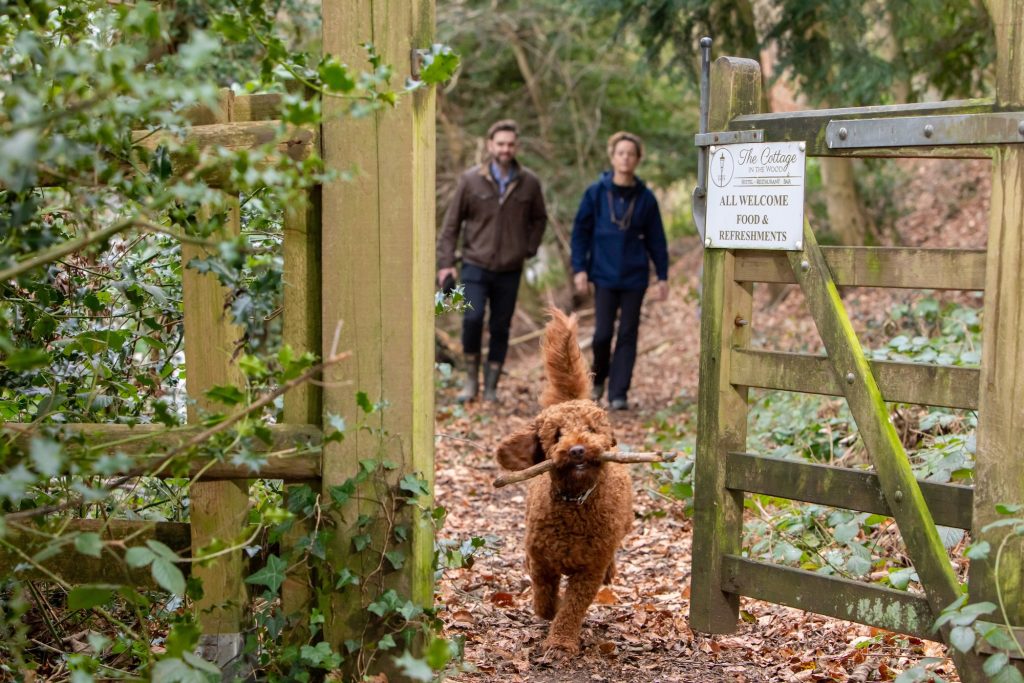
Perched high on the wooded slopes of the Malvern Hills, The Cottage in the Wood occupies a setting that feels wonderfully remote – just the ticket for a rural reset and temporary switch-off from high-tech life. Elevated above the Severn Valley and surrounded by mature woodland, the property offers a true sense of escape. Walking routes begin almost immediately from the hotel’s doorstep, leading through ancient woodland, across open hillsides and along the dramatic ridge that defines the Malverns. Routes vary from gentle, contemplative strolls to more demanding climbs, including the ascent of Worcestershire Beacon, the highest point, where expansive views stretch across Herefordshire, Gloucestershire and beyond. Yet the hotel is surprisingly well-connected, being just a short drive from the picturesque, heritage town of Great Malvern with its Victorian architecture, independent boutiques and cultural landmarks such as the Malvern Theatres.
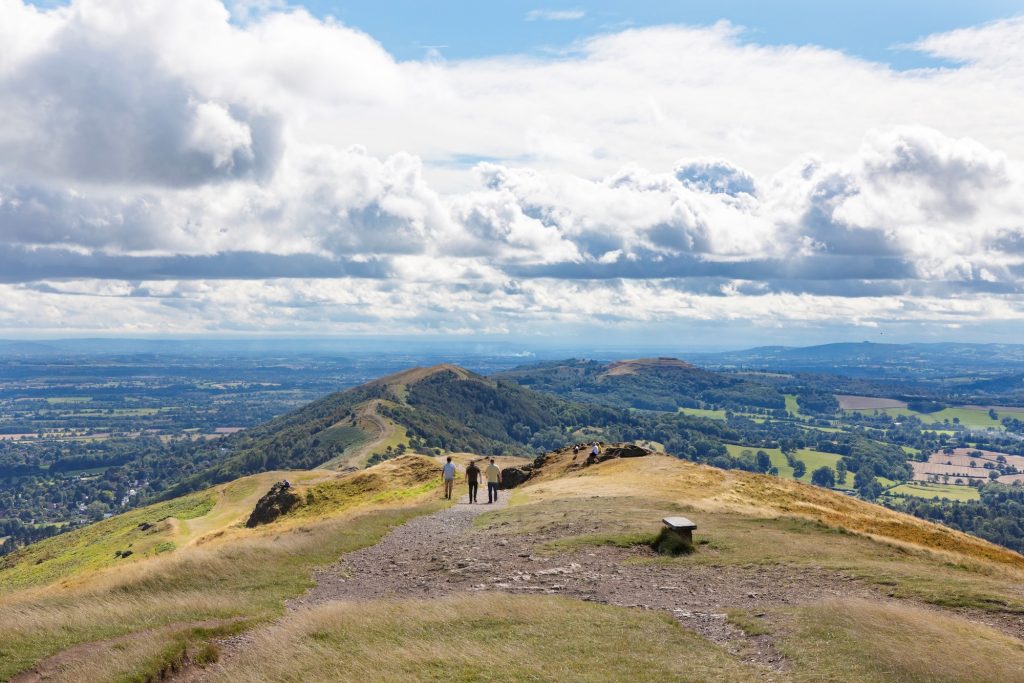
From here, regular rail services provide direct links to London, Birmingham and other major destinations, making it an easy transition from city pace to countryside calm. Road access is equally straightforward, with the M5 within comfortable reach. A short drive east from the hotel leads into the rolling landscapes of the Cotswolds, where picture-perfect villages unfold at an unhurried pace. Among them, Broadway stands out for its broad, honey-hued High Street, antique shops and long-standing artistic connections. It is this effortless interplay between immersion and accessibility – wild landscape on the doorstep juxtaposed with culture and connectivity within easy reach – that is just one of the reasons this hotel is truly unique.
Check-in
It felt rather like I’d gone back in time as I made the winding ascent through the Malvern Hills leading to this quietly elevated retreat. Discreetly sign-posted, the final turn revealed an elegant hillside sanctuary that blended seamlessly into its wooded surroundings. It was easy imagining myself to be a guest at a 1920s country house, weekend party – even more so when the reception area revealed itself to be located in a cosy, library-like space complete with an open fire.
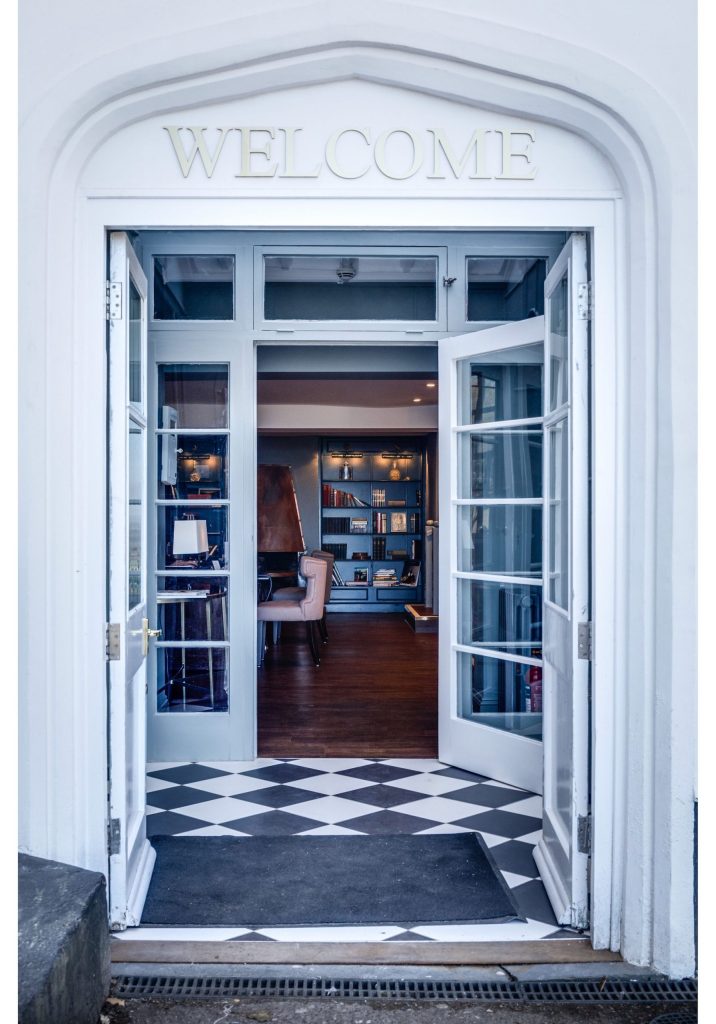
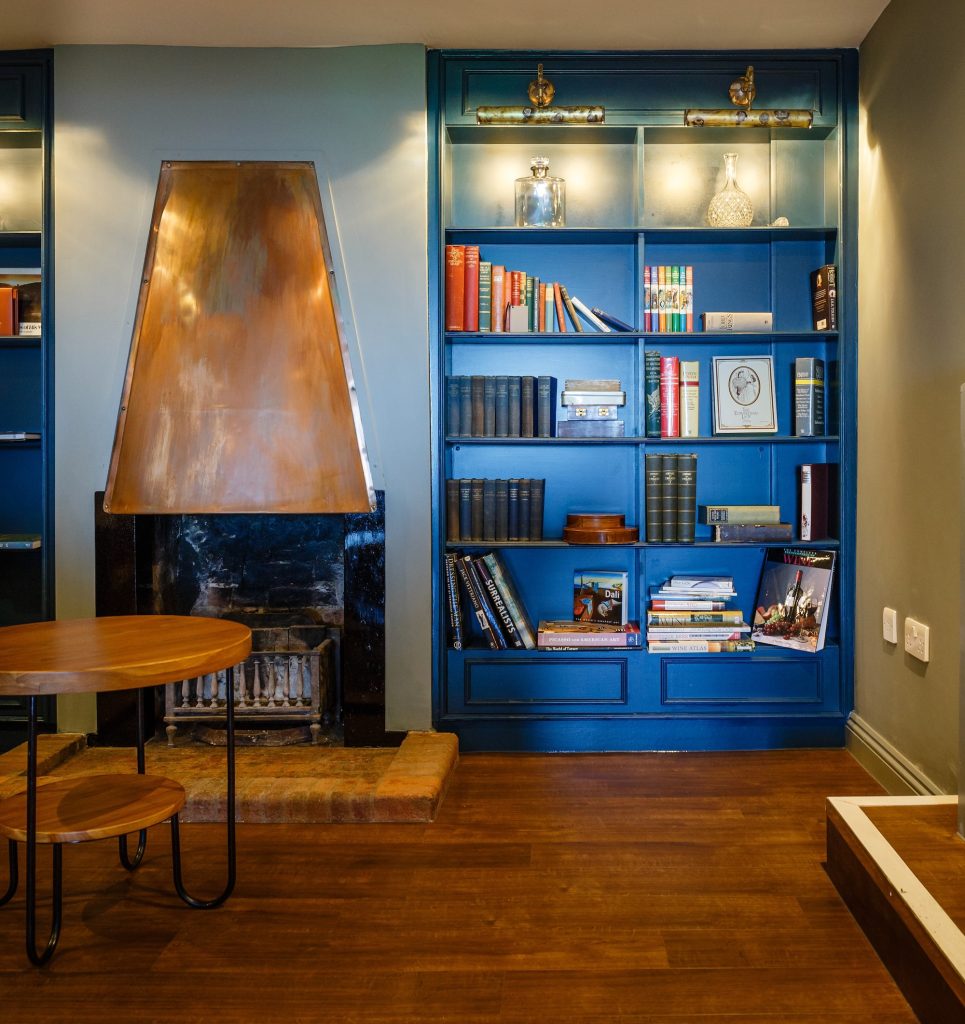
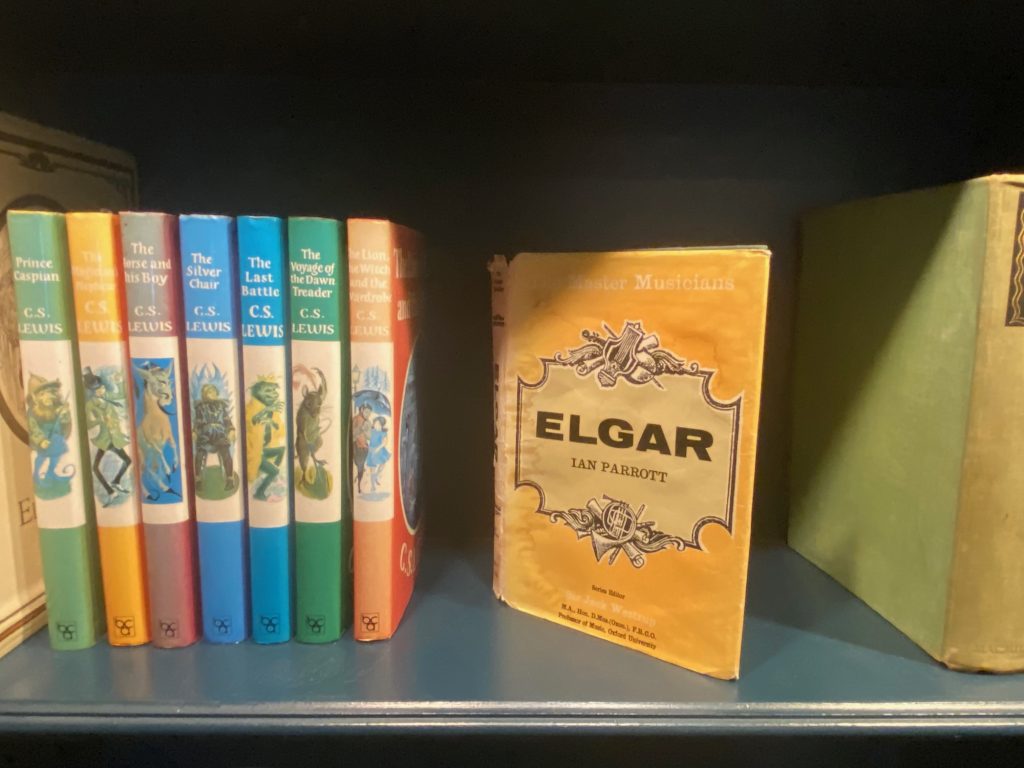
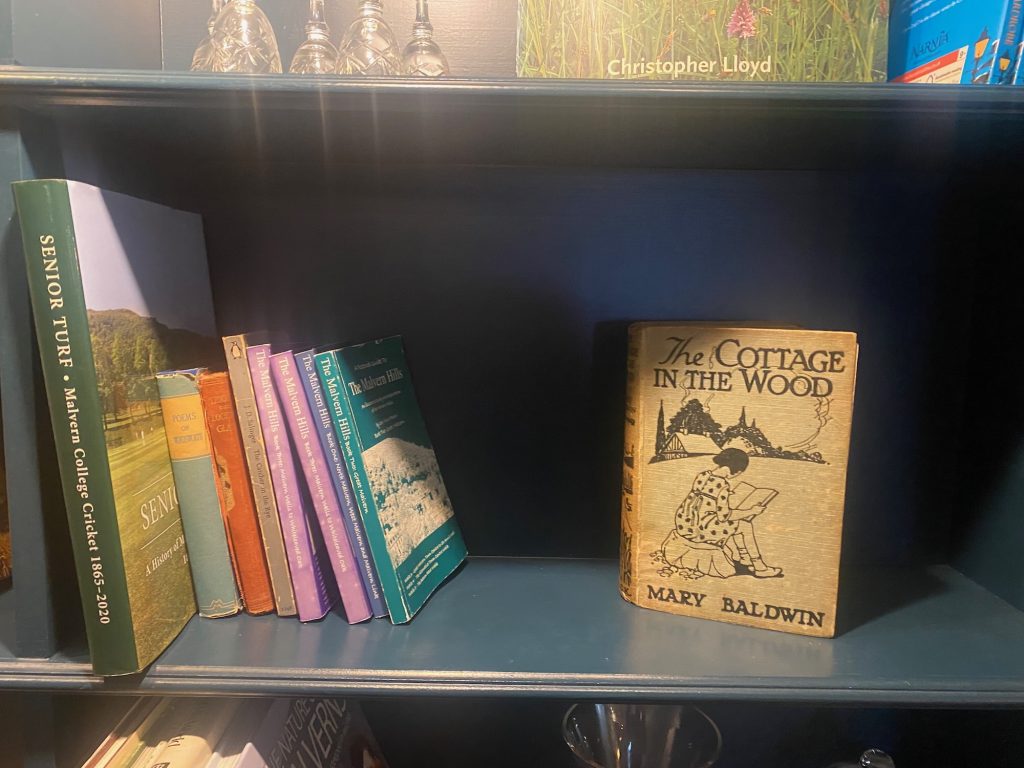
Following the warmest of welcomes and ease of registration, I browsed the floor-to-ceiling shelves flanking the fire, delighted by the distinctly local character of the vintage books available for guests to enjoy while curled up in one of the jewel-coloured velvet armchairs. There was ‘The Cottage in the Woods’ by Mary Baldwin, works by C.S. Lewis – who drew inspiration from the Malvern landscape during childhood visits said to have shaped his fiction – and a biography of the local composer Edward Elgar. I could easily have lingered there myself but I was too eager to see my bedroom.
Rooms
The hotel offers bedrooms in five categories across the three properties – Cosy, Classic, Very Good, Great, and Best, in addition to self-catering spaces, the Studio and the Chapel. On the first and second floors, the Best Rooms deliver an elevated experience – both literally and metaphorically – being generous in scale and bathed in natural light as large picture windows open onto sweeping vistas of the Severn Valley, Vale of Evesham and gentle Cotswold Hills. Uber-comfortable interiors are calmly considered, featuring beautiful fabrics and soft textures that feel effortlessly refined rather than showy – relaxed luxury, in short. The bathrooms are equally sumptuous with freestanding tubs, walk-in rainfall showers, and beautifully finished stone and tile details that echo the surrounding landscape.
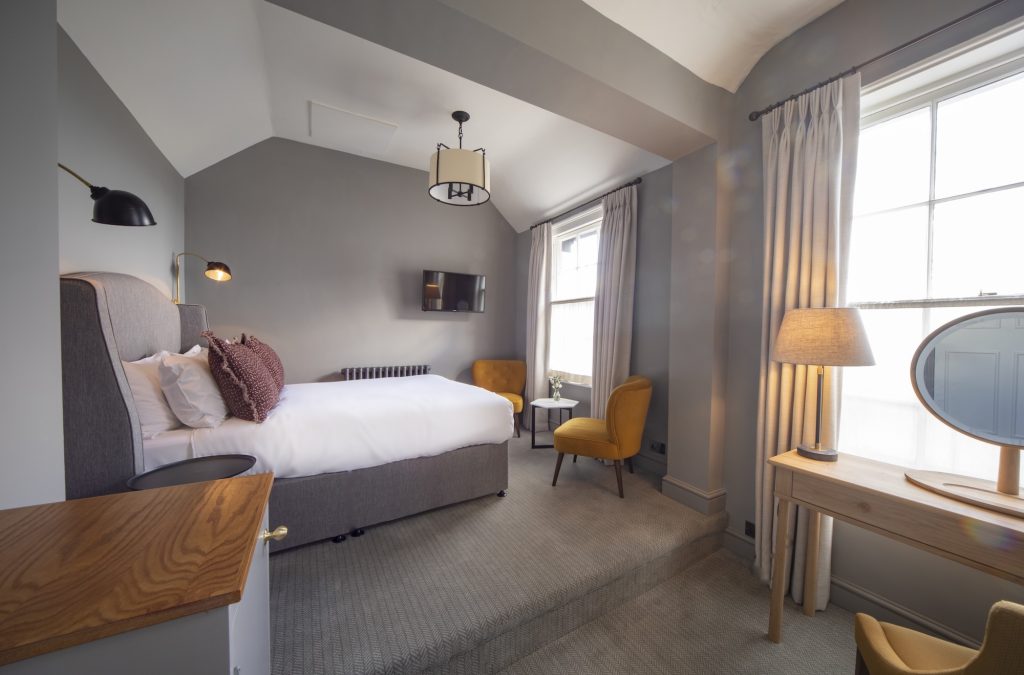
The Great Rooms strike a balance that combines quiet luxury with comfort and often feature private terraces or balconies that invite the outdoors in. Bathrooms are spacious, bright and contemporary, typically offering walk-in showers or shower-over-bath combinations. The Very Good Rooms continue the decorative narrative with their well-proportioned spaces, thoughtful finishes and the signature ‘Cottage’ blend of comfort and quiet elegance. The sleek, modern bathrooms are designed for practicality without losing style.
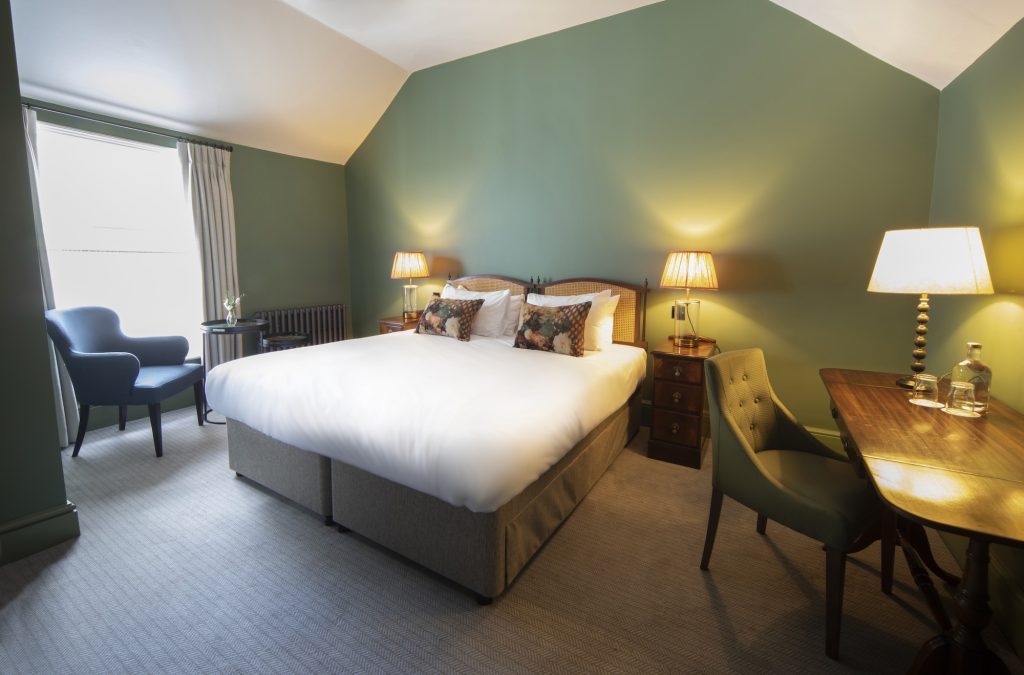
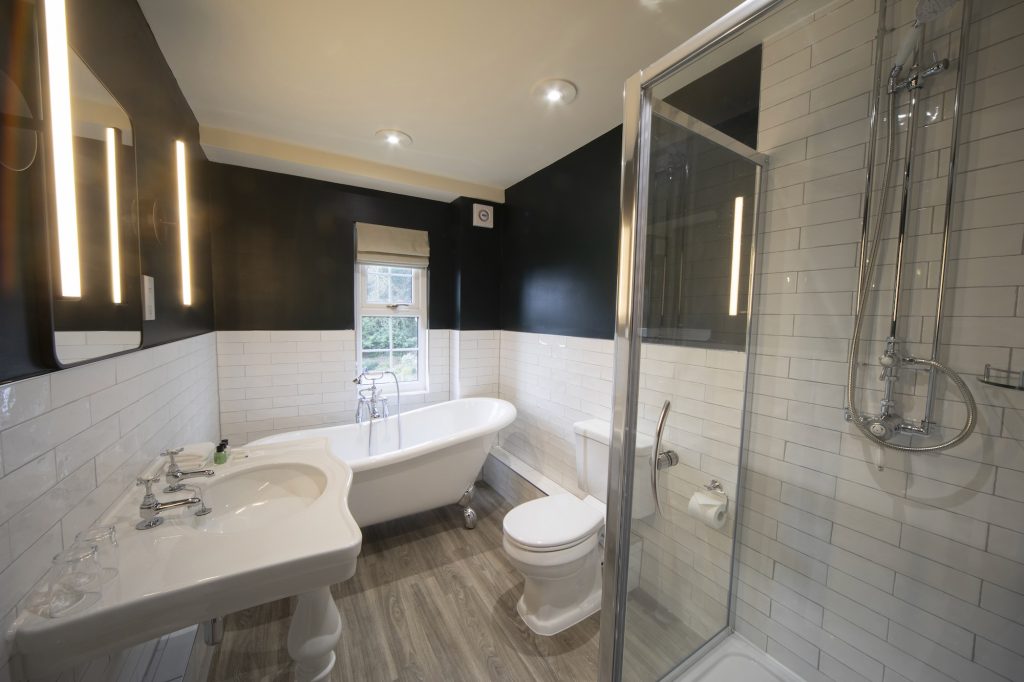
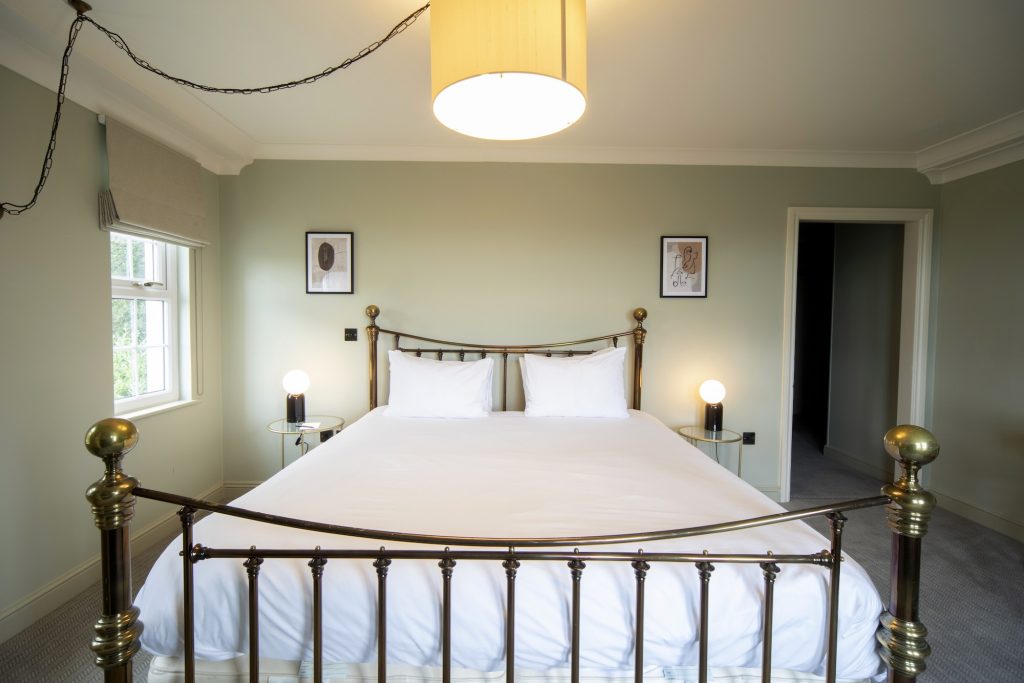
The Good Rooms provide a compact yet considered retreat, paired with neat, well-appointed en-suites that deliver everything required in a streamlined space. Meanwhile, the Cosy Rooms – the most intimate – create a warm, cocoon-like feel, complemented by compact but cleverly designed bathrooms. Beyond these categories, the Studio, which sleep up to four, offers a more private, apartment-style escape but with the same aesthetic as the rest of the hotel – soft, textural layers; a calming yet chic colour palette; beautiful linens, understated design and, not least, an incredible view. While bathrooms maintain that same quiet luxury with generous showers and refined finishes. Ditto the atmospheric Chapel, sleeping up to six. Retaining touches of its original architecture, this characterful, converted space blends heritage with contemporary comfort.
My Room
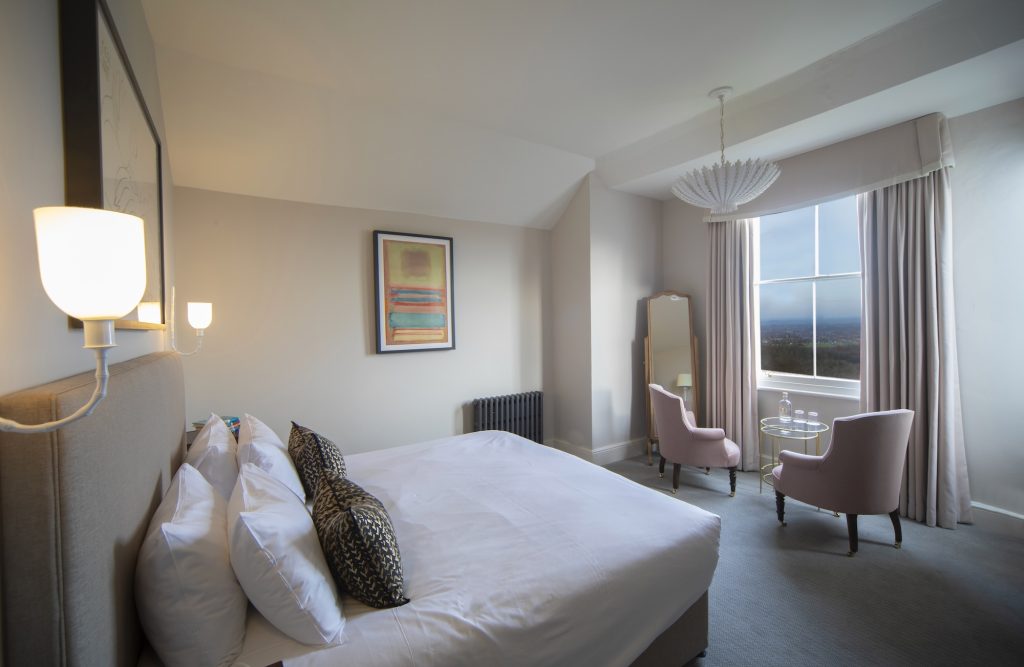
I stayed in one of The Best Rooms on the second floor of The Main House which offers one of the Cottage’s top experiences. The view from the large sash window opposite the bed took my breath away as soon as I entered the very spacious room – a magnificent, far-reaching vista across the Severn Valley. Expansive, ever-changing and so quintessentially English, I found myself humming Vaughan Williams’ ‘The Lark Ascending’. This landscape felt almost part of the room itself – drawing my eyes outwards to scudding clouds across a wide sky, a verdant valley and undulating terrain on the far horizon. The light created a constantly changing backdrop. The room itself was just as pleasing with a muted, dove grey palette and contrasting cream tones. Nothing was overworked or excessive. I loved the selection of images adorning the walls – sartorially perfect, classic black and white photos of early 1960s models which lent the room a curated, almost gallery-like feel.
Then, to my utter delight, I discovered a record player – complete with a collection of carefully curated vinyl albums which added such a personal touch as the artists were connected to the hotel in some way. This being a British hotel, there was, of course, a well-stocked hospitality tray complete with a selection of teas, proper coffee and sweet treats made on the premises.
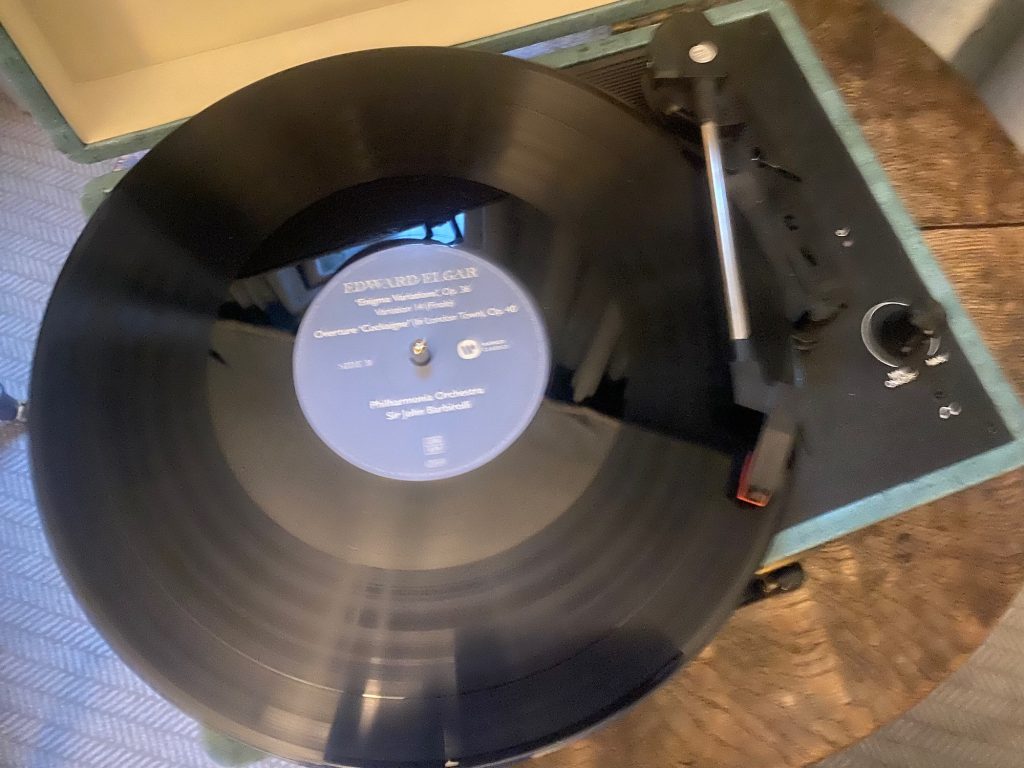

A generously proportioned, incredibly comfortable bed adorned with fine, crisp linen, marshmallow-plump pillows that were a dream to lie my head against and a cosy throw to cuddle under made it very hard to move once I was in situ. The bed faced the large sash window and therefore the ever-changing skyscape but I eventually roused myself and settled into one of two cosy armchairs set either side of a small table by the window and continued drinking in the view while nibbling on home-baked goodies and listening to an Elgar LP.
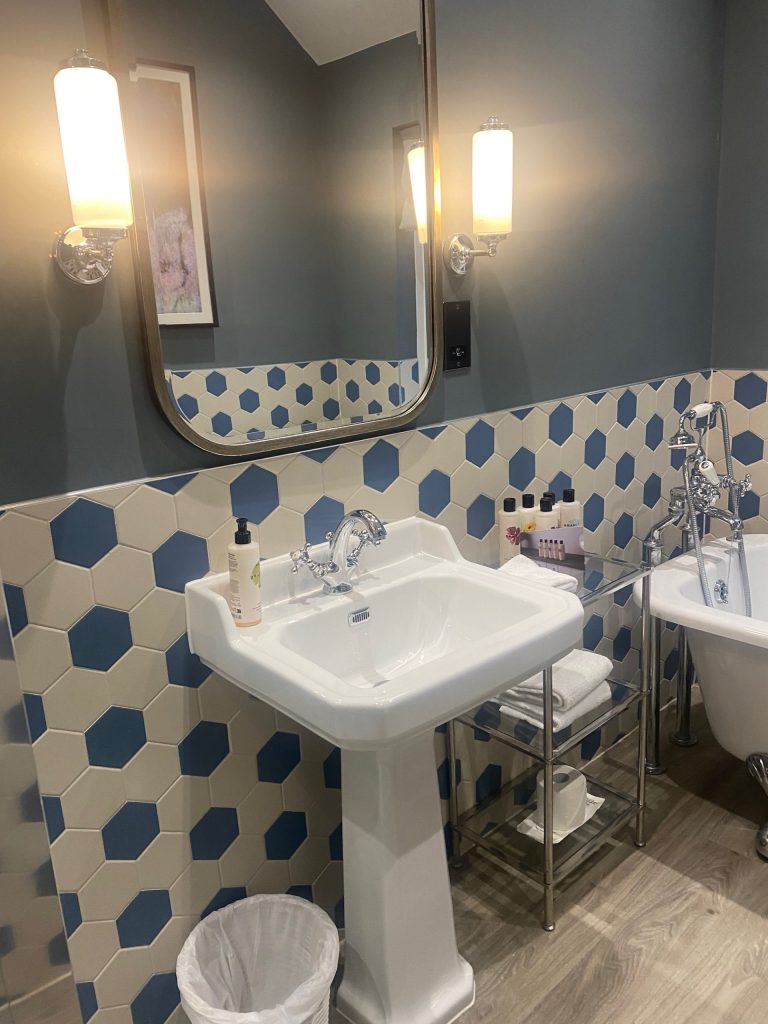
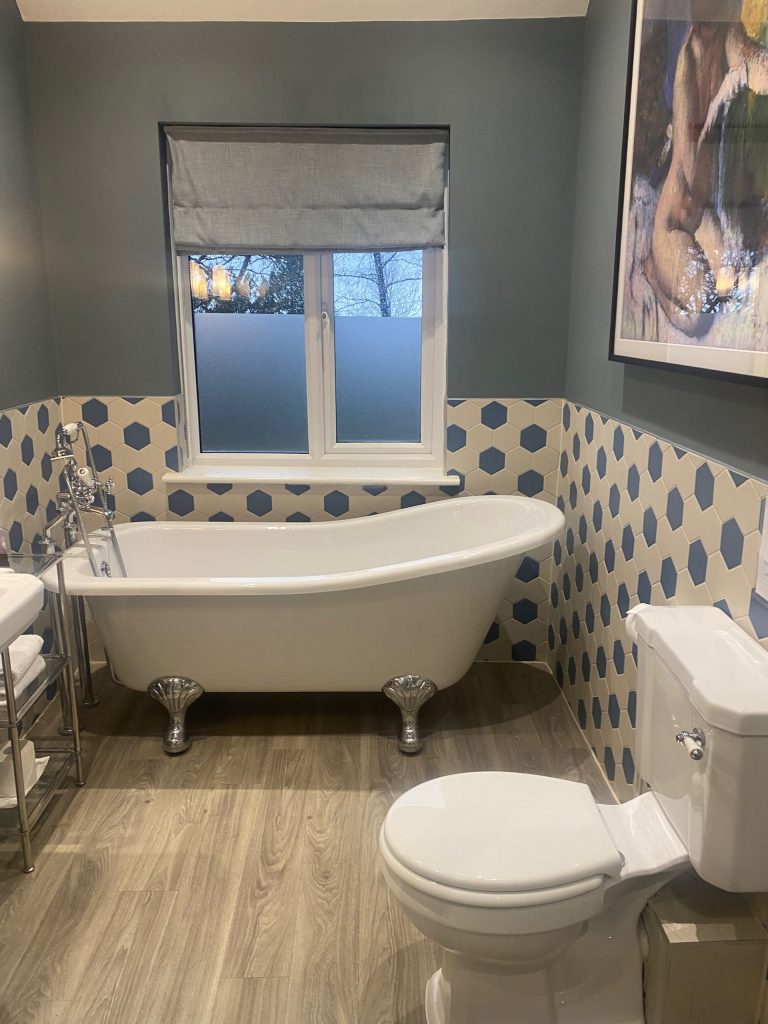
My bathroom was also a delight to spend time in – especially the freestanding bath-tub, perfect for an indulgent soak using complimentary, luxury Bramley products. Meanwhile, the walk-in, rainfall shower, gorgeous tiling and elegant stone finishes brought a spa-like quality to the spacious ensuite.
Dining
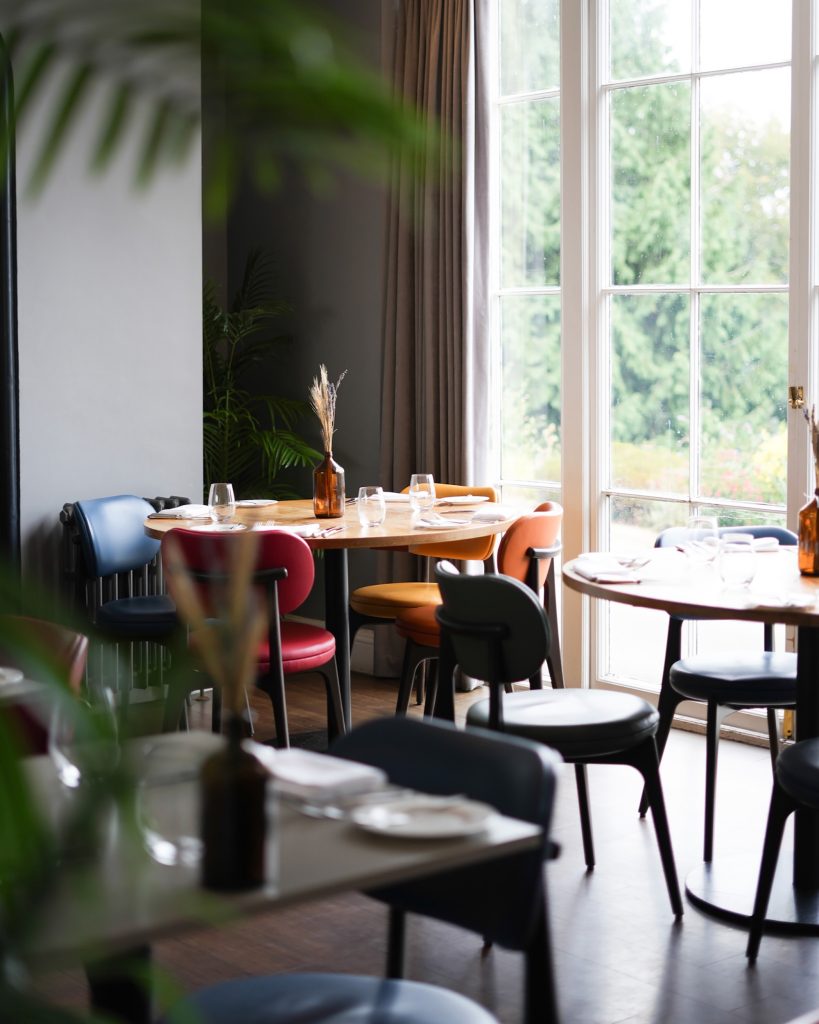
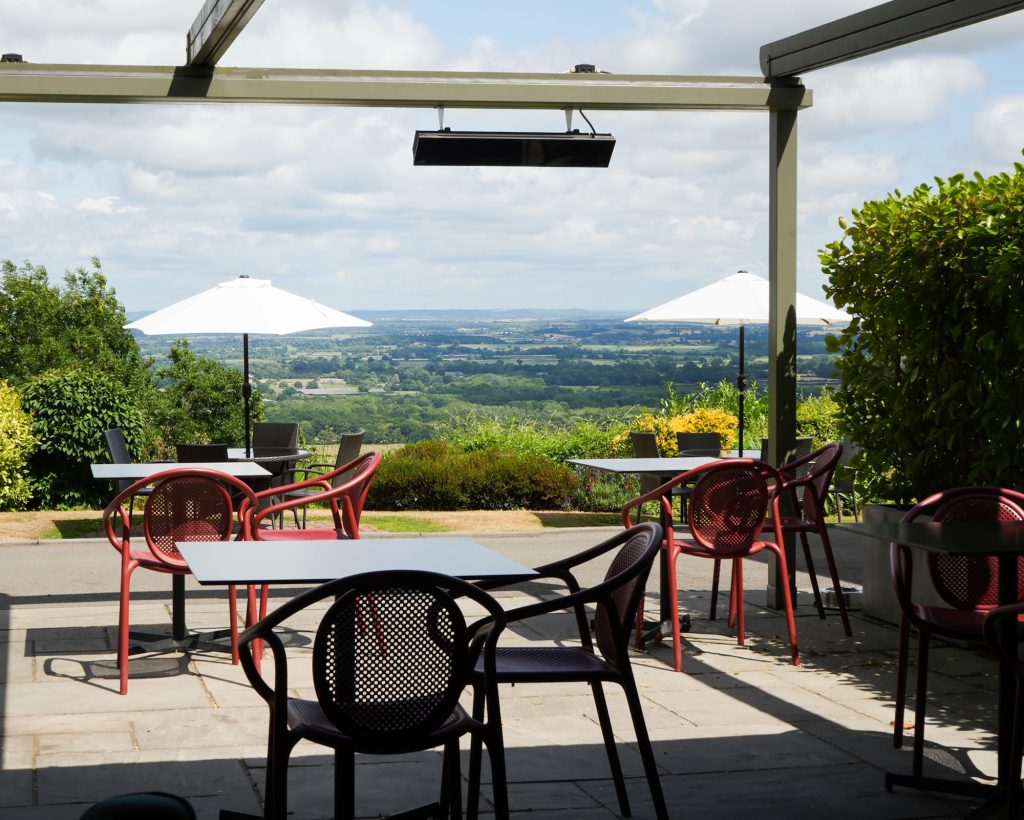
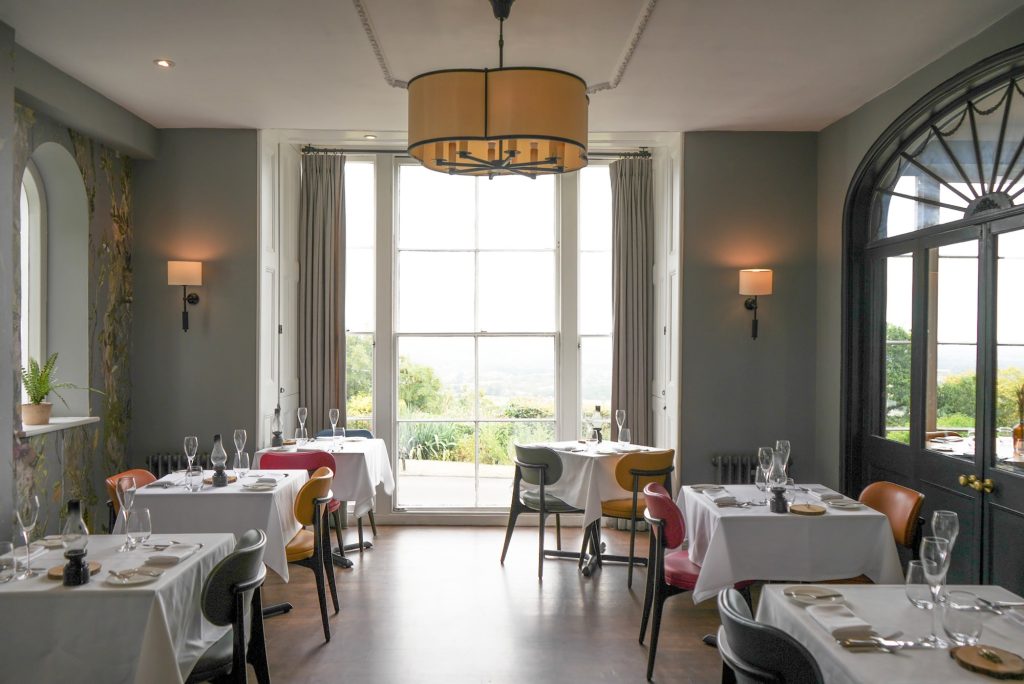
Dining at The Cottage in the Wood offers two distinct yet equally considered experiences, both shaped as much by their surroundings as the food itself. The restaurant spaces are quietly elegant, soft, nature-inspired tones, woodland-patterned wallpaper and natural textures subtly echoing the landscape beyond the floor-to-ceiling windows. At the heart of the hotel is the 1919 Restaurant – an award-winning, three AA Rosette eatery and Malvern’s only restaurant of its kind, also featured in the Michelin Guide 2025. Here, a seven-course tasting menu, crafted by Head Chef Mark Potts and his team, unfolds with creativity and precision, each dish rooted firmly in seasonality. In contrast, The Brasserie offers a more relaxed but no less refined setting with the same attention to quality. Light-filled by day and softly ambient by evening, it serves elegant, seasonal dishes that celebrate local and British ingredients, whether through small plates, classic favourites or a more indulgent five-course option. An intimately-lit cosy yet stylish bar and lounge with adjacent outside terrace complete with tables and seating overlooking the incomparable view, and a welcoming book-lined reception area make up the public areas. Whichever you choose, the atmosphere greatly adds to the experience. Quintessentially English in feel, it’s a setting where exquisitely prepared, quite delicious dishes combine effortlessly with beautiful surroundings.
Breakfast
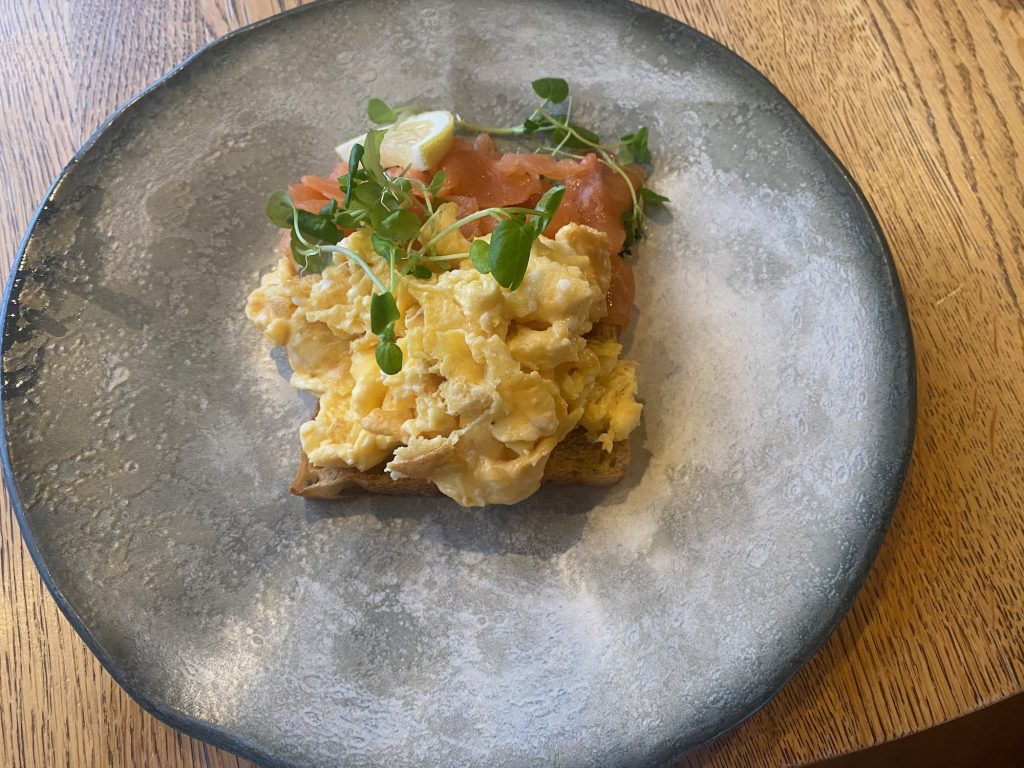
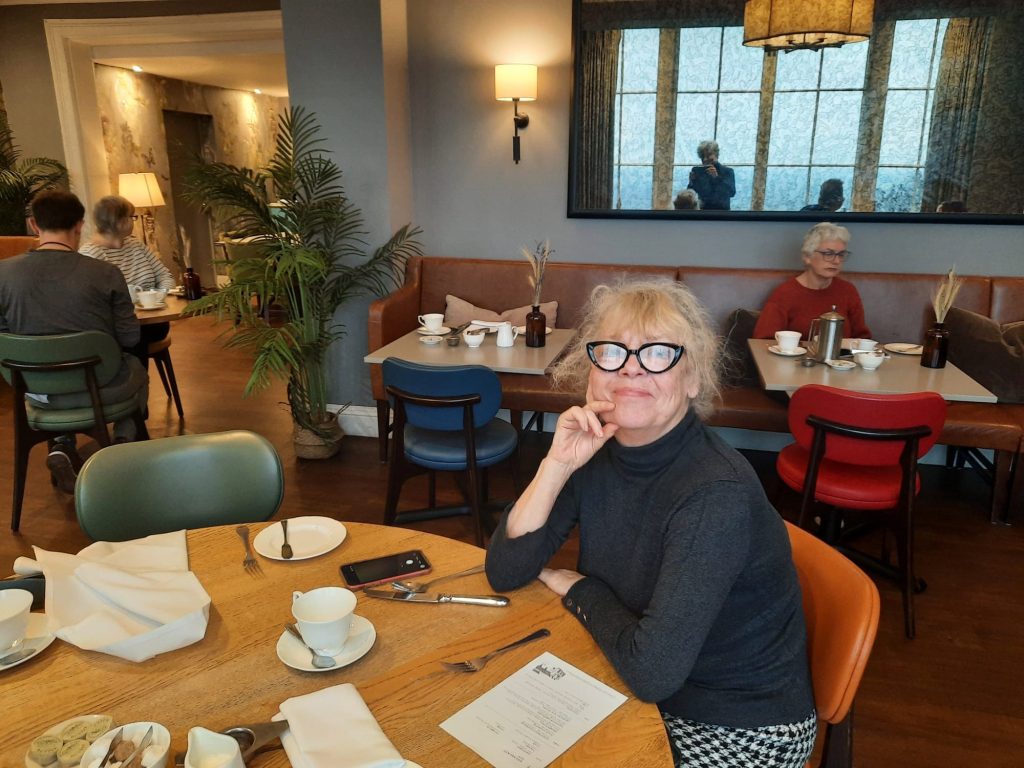
Breakfast at The Cottage in the Wood was impeccable. Seated by one of the picture windows, I found myself alternating between perusing the menu and lingering over the view beyond the ever-changing sweep of the Malvern Hills. It was a pleasure to discover that breakfast was not presented as a buffet but as a thoughtfully curated à la carte offering. Coffee arrived promptly – rich, smooth and restorative – setting the tone for what followed. On one morning, I chose smoked salmon with scrambled eggs – the eggs impossibly soft and creamy, the salmon delicately silky with just the right hint of salinity, all brightened by a scattering of fresh green leaves. The dish was as visually appealing as it was delicious -simple, elegant and beautifully composed.
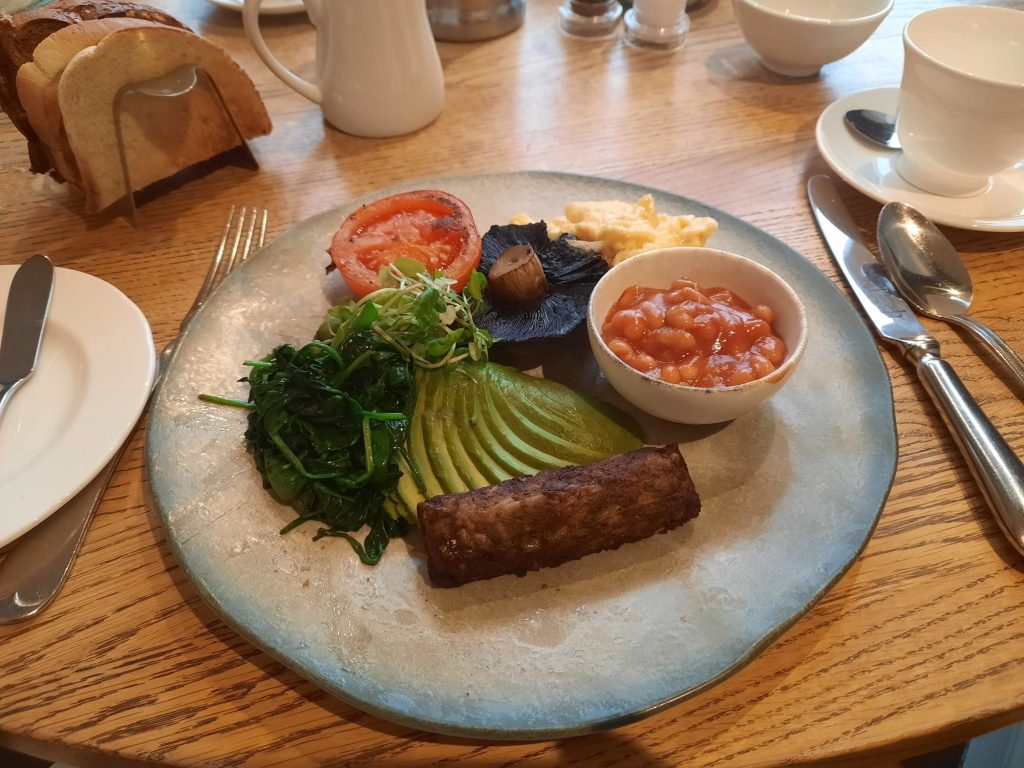
The following day, the vegetarian cooked breakfast proved equally good. Avocado was fanned with precision across the plate, accompanied by a perfectly grilled tomato half, a richly flavoured field mushroom, wilted spinach and baked beans served neatly on the side, alongside a well-cooked vegetarian sausage and the same luxuriously soft scrambled eggs. Once again, it was a plate that delighted as much in presentation as in flavour – each element distinct, harmonious and executed with care. On both mornings, I chose to finish with toast, butter and thick-cut marmalade, and a pot of English breakfast tea: traditional, comforting and somehow entirely fitting. Just as it would have done at my imaginary 1920s country house weekend away.
Lunch
For Lunch in the Brasserie, I was seated once again by the windows and immersed myself in the stunning view. The menu struck a confident balance between comforting classics and more considered dishes. Alongside options such as mushrooms on toast and a neatly pressed ham hock to start, and mains including pork belly, spiced cod, and a brie and cranberry croquette, there was a sense of thoughtful and seasonal variety without excess. I began with the haddock fishcake – delicately crisp on the outside, giving way to a soft, flavourful centre of perfectly seasoned fish. It was paired with finely shaved fennel and ribbons of cucumber, which brought a welcome freshness, while a quenelle of tartare sauce added a gentle sharpness that tied everything together. The dish felt clean, balanced and tasted absolutely delicious. For the main course, the coq au vin was deeply comforting yet refined – the chicken tender and richly infused with a glossy, wine-darkened sauce. Herb polenta provided a soft, fragrant base while baby carrots and a hint of tarragon lifted the dish with subtle sweetness and aromatic brightness. To finish, I chose a selection of three British cheeses, served with crisp biscuits and a spoonful of homemade chutney. It was simple, satisfying and perfectly judged, though desserts such as chocolate delice and tiramisu offered a more indulgent alternative.
Seven Course Tasting Menu with Wine Flight in 1919
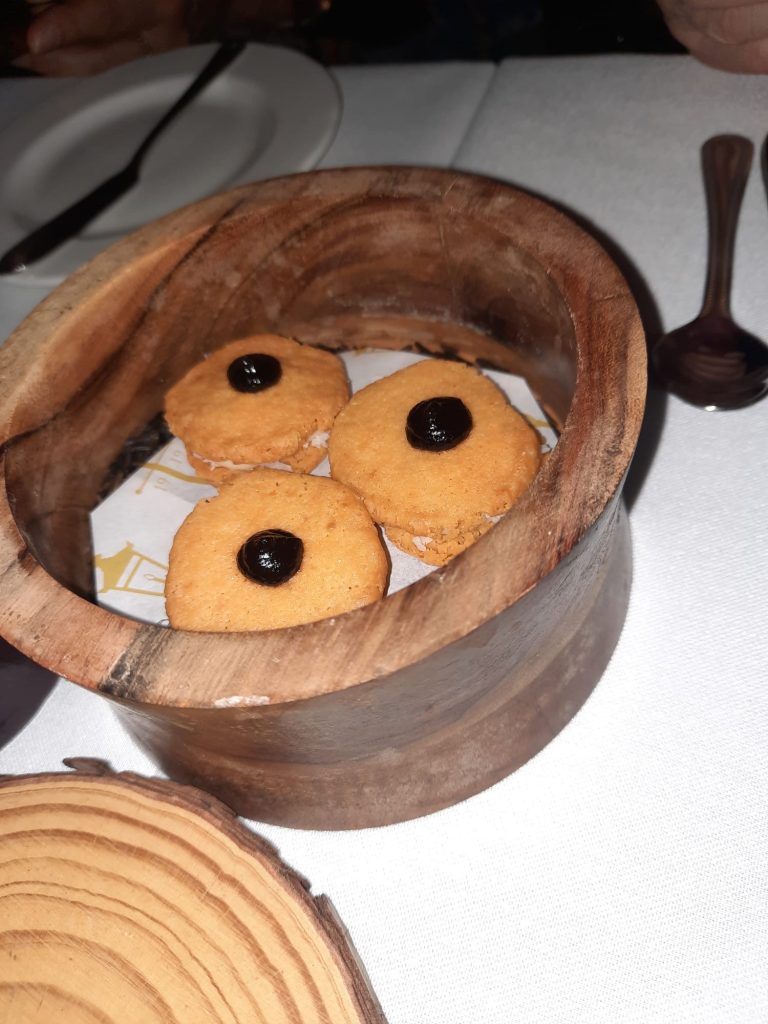
The softly-lit dining room of 1919 created an immediate sense of occasion, but it was the seamless interplay between food and wine that truly defined the experience. From the outset, there was a feeling of careful curation with each element designed to complement and elevate the next. The opening ‘Amuse-bouche’ trio was smoked eel with a bright lift of Granny Smith, a delicate cheese sablé enriched with black garlic, and a precisely balanced beef fillet tart which arrived alongside a light, refreshing glass of English sparkling wine that awakened the palate without overwhelming it.
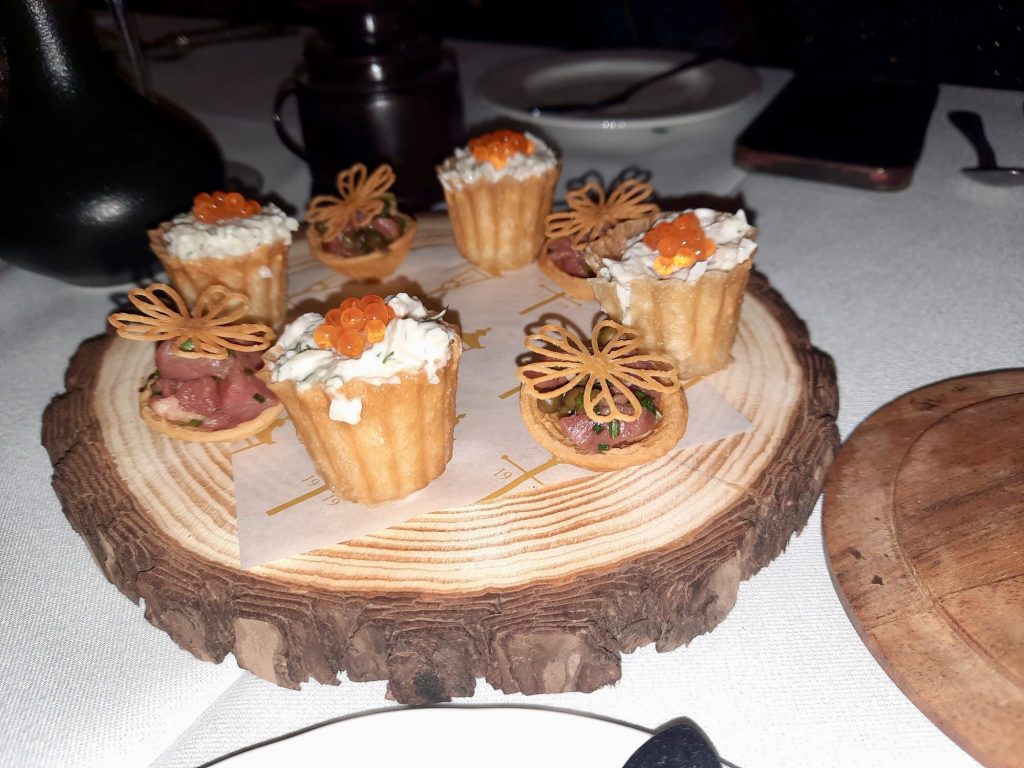
Warm sourdough with butter is followed before the first of the more structured pairings of salt-baked beetroot served with goat’s curd and pumpkin seeds, accompanied by a crisp Sauvignon Blanc. The wine’s lively acidity and citrus notes cut cleanly through the earthy sweetness of the beetroot, lifting the dish with precision and clarity. As the menu progressed, the wines deepened in character. A mineral-driven Albariño, with its saline edge and gentle stone-fruit notes, worked in perfect harmony with the grilled Cornish mackerel, amplifying both the richness of the fish and the brightness of lime and dukkah. The transition to the honey-glazed duck breast brought a shift to red – a supple Carignan, layered with dark berries and subtle spice, which echoed the depth of the dish while balancing the bitterness of chicory and the softness of gnocchi and celeriac.
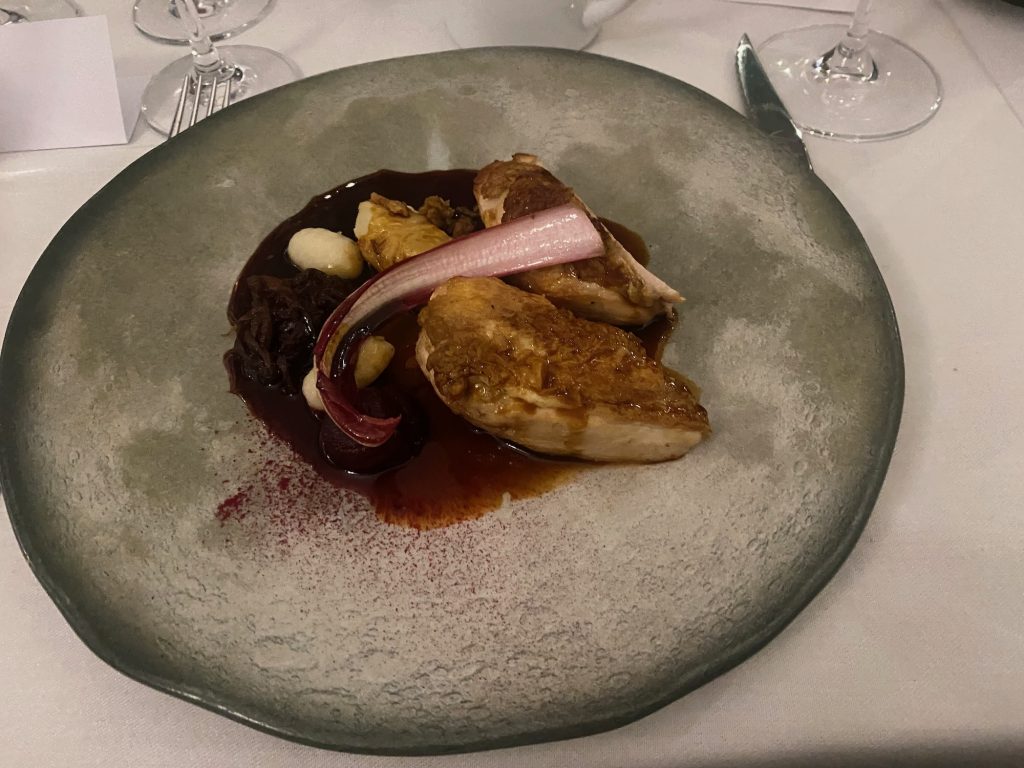
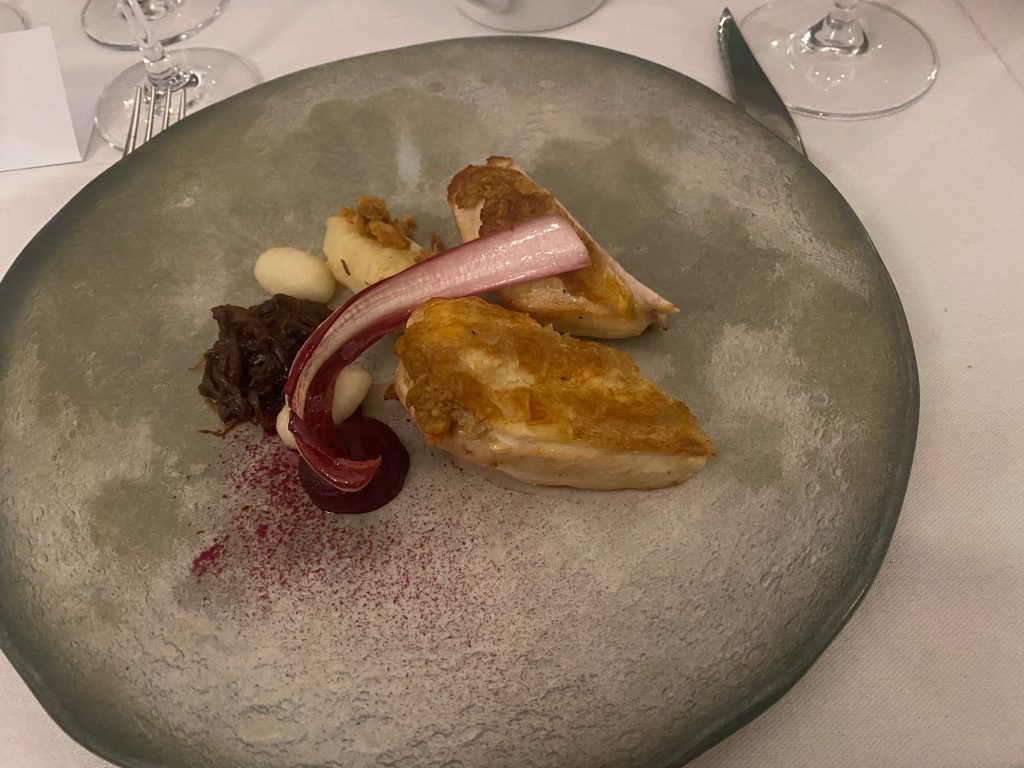
At one point, Head Chef Mark Potts made a brief, unassuming appearance in the dining room – quietly checking in with guests, his manner warm and understated. It was a small but telling touch, reinforcing the sense of care and personal investment that ran through the entire experience. The final stages were no less considered. A pre-dessert of rose geranium, lychee and coconut offered a fragrant pause, before a glass of golden Monbazillac – honeyed yet finely balanced – paired beautifully with the Chocolate Délice, its richness lifted by clementine and a delicate note of olive oil. Petit fours brought a final, elegant flourish. Throughout, the wine flight felt intuitive rather than instructional with each pairing enhancing without overshadowing. It was a quietly confident expression of both kitchen and cellar. A marriage made in gourmet heaven!
Final Thoughts
The Cottage in the Wood is a truly distinctive retreat, shaped as much by its setting as its design. Interiors are tastefully composed, with woodland-inspired wallpaper, soft textures and carefully chosen furnishings that echo the landscape beyond. Expansive views are ever-present, drawing the outside in and creating a constant sense of calm. Dining is exceptional, from the relaxed elegance of the Brasserie to the precision of 1919, each offering a memorable, seasonal experience. What makes it so special, though, is its atmosphere: intimate, unforced and quietly unique with a strong sense of place that lingers long after you leave.