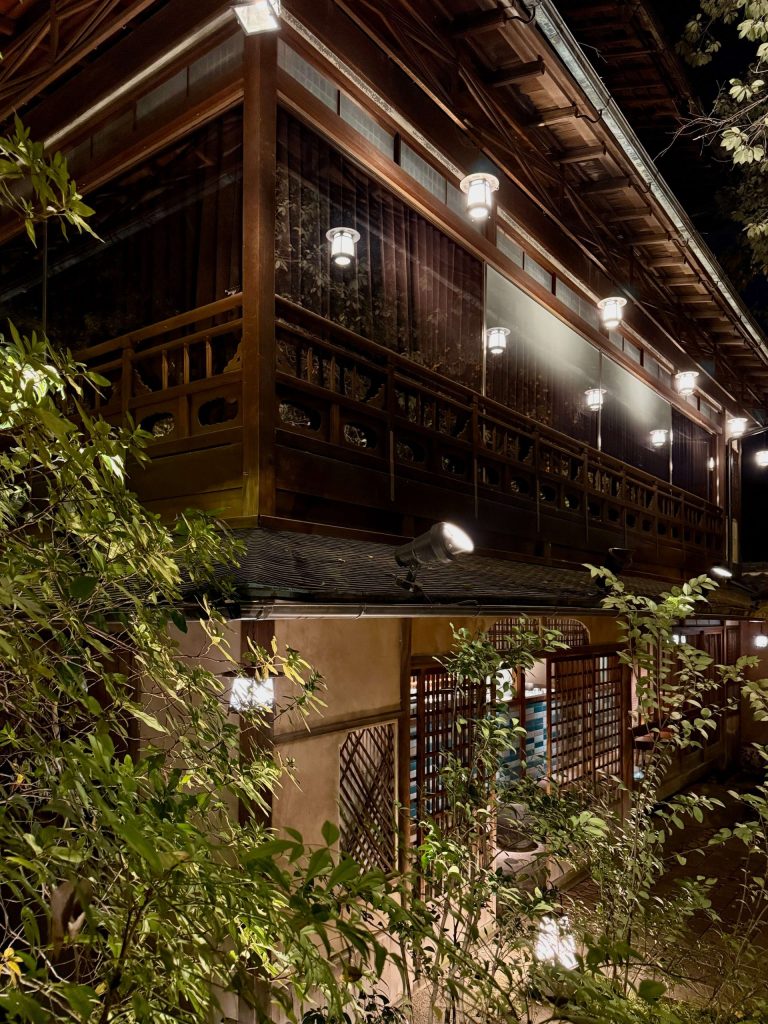
This 120-year-old Sukiya-style residence in the heart of Kyoto’s historic Gion district in Higashiyama Ward has been restored as an exclusive private villa for up to six guests. Hotel VMG Villa Kyoto was once the 1940s private retreat of tea master and restaurateur Goichi Uno, who hosted tea gatherings for Kyoto’s cultural elite. This award-winning property blends Japanese and Western architectural elements across two floors, with an original tea room, private garden, and tranquil views. Winner of Archello Awards 2025 Hotel Building of the Year.
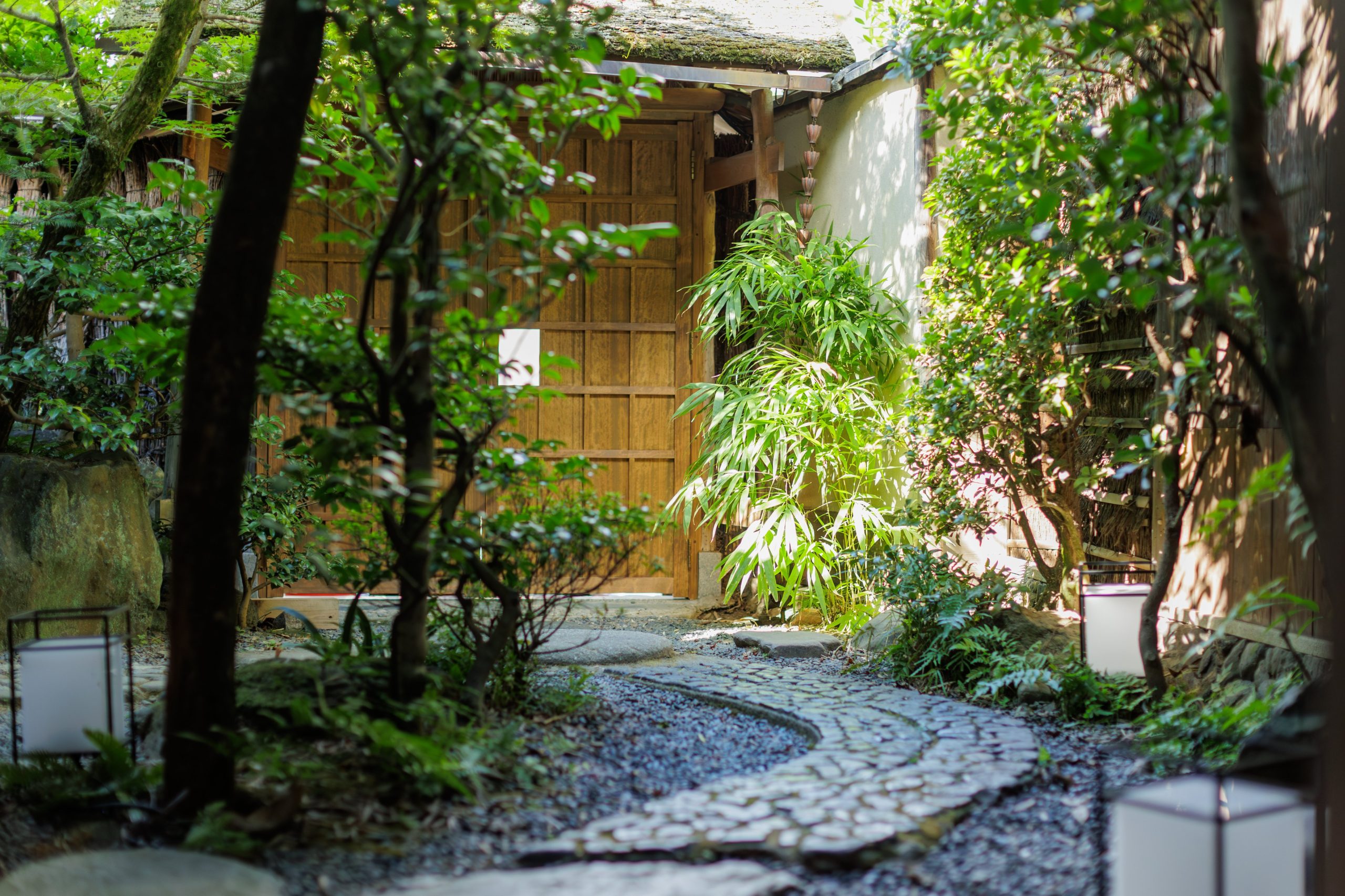
Slide open the oak gate on a quiet Higashiyama side street and enter a world that most visitors to Kyoto will never know. The attention to detail announces itself immediately: above the entrance gate, the porch roof is a miniature moss garden of nurtured mosses and lichen, while in the corner hangs a kusari-doi, a handcrafted rain chain of decorative cups, designed to guide rainwater from the roof in a gentle cascade. Even the practical is beautiful here.


River stones lead you through a garden patio to the entrance hall, where shoes give way to slippers. Welcome to Hotel VMG Villa, Kyoto. This is authentic Kyoto, experienced in an intimate and personalised way.
The villa stands on Nene no Michi, the stone-pathed path named for the wife of Toyotomi Hideyoshi, the warlord who built Osaka Castle. It sits between Yasaka Shrine and Kodaiji Temple, in what was Japan’s first designated preservation district for traditional buildings. The Gion neighbourhood is deeply evocative: little houses with high walls, wooden gates, and trimmed architectural pine trees towering above. Everything is low-rise, historical, lush with greenery. In fact, Kyoto is a city of gardens, and some magical ones lie within minutes of the villa, like the serene Entoku-in. Yet for all its central position, the house exists in remarkable tranquillity, with only the sound of birdsong from the garden filling the space, while one afternoon, the harmonious sounds of a choir, performing in the nearby Maruyama Park Concert Hall, filled the air.


A Place for Kyoto’s Cultural Elite
Goichi Uno acquired this house around 1940 as his private retreat. He was the proprietor of Sakau, a kappo restaurant once considered the finest in Osaka, and a tea master of the Enshu school. Under his stewardship, the villa became a place for tea gatherings that brought together Kyoto’s cultural elite, and that history infuses each corner of this remarkable home. The 4.5-tatami tea room (called yojohan in Japanese) remains on the ground floor, its calming simplicity unchanged.


Within the main house there is a blend of Japanese and Western elements that were fashionable among the upper classes of the era, and the restoration by architect Moriyoshi Naotake has preserved this character with remarkable sensitivity. The interior simplicity is calming, nothing overwhelms. Details, motifs, and design elements reveal themselves gently as you move through the rooms.
Archello Awards 2025 Hotel Building of the Year
The renovation, themed around the concept of Kirei Sabi, a blending of tranquility and splendour, won the Archello Awards 2025 Hotel Building of the Year. The original ceilings were too significant to alter, so lighting was rethought entirely. Indirect illumination rises from floor furniture and openings. New oak pieces contrast deliberately with the existing materials, making visible the relationship between old and new. Air conditioning hides within built-in furniture rather than disrupting the ceiling lines.
Your Private Kyoto Home
A long corridor runs the length of the ground floor. To the left as you enter sits the tea room. Ahead, the main salon opens through floor-to-ceiling sliding doors onto the garden, with traditional wooden geta slippers waiting should you wish to walk among the moss and river stones, the stone lanterns and maple trees. The visual harmony is a delight: inside and outside become one, the garden framed like a living painting that shifts with the light. As the day moves, the paper screens catch the changing sun and create their own shadow-play.

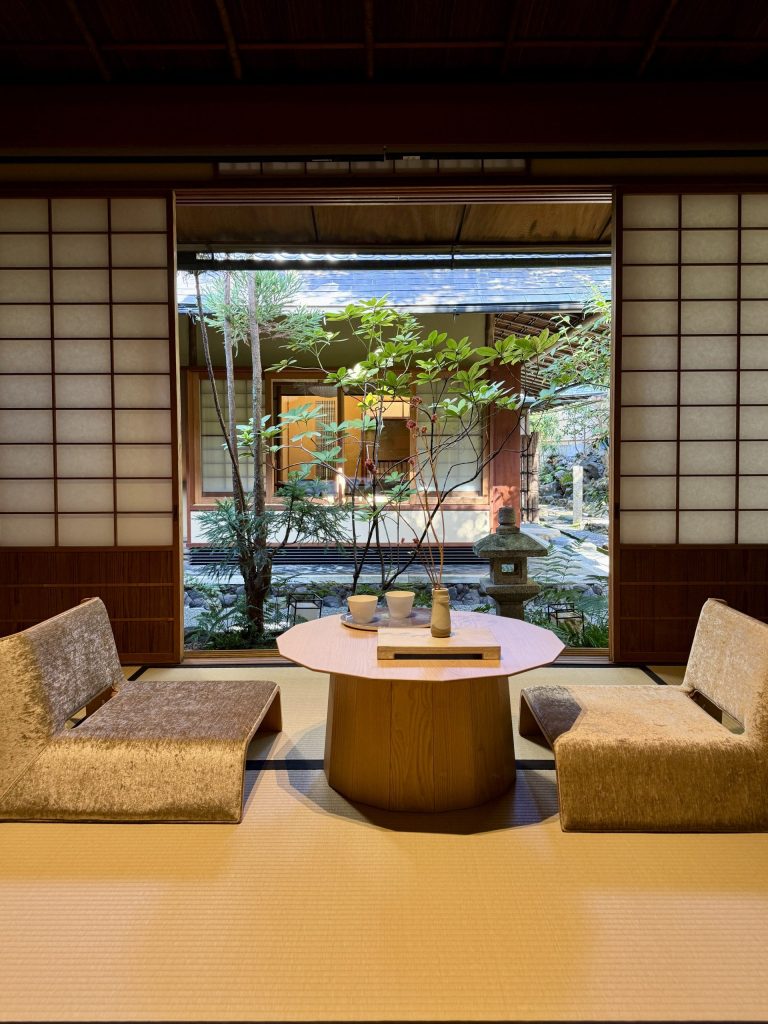


The garden itself rewards the curious. The river stone path winds through bright green moss that surrounds each stone, light filtering through the leaves and branches of the maples above. It is a small space that embraces you with beauty and tranquillity.
Luxury Accommodation
The villa has four bedrooms of various sizes spread across its two floors, including the master suite. The beds sit low, Japanese-style on tatami, but are dressed Western-fashion with duvets and fine linens. The main bathroom has a deep soaking tub, an enormous shower, and vintage glass windows looking out onto an internal bamboo garden.


A second bathroom includes a dressing room. Thoughtful details include the MINUCA amenities, their formulations based on rice bran left over from sake production.


Climb the stairs and the character shifts. The first-floor salon wraps itself in glass, the windows looking out through maple branches to the garden below and the rooftops beyond. Here the Western influence is stronger, a rarity for its time. The beautifully restored signature ceiling draws the eye upward.
The kitchen has everything required for a simple snack, and the large refrigerator is stocked with champagne, sake and wine. Yet cooking feels unnecessary when VMG’s dining options are so close at hand.
Heian Shrine Breakfast
Breakfast is taken at Heian Shrine, a short transfer from the villa. This magnificent garden is the backdrop for an unforgettable start to your day. A table is set overlooking Shinen, the garden of the gods, with views across the pond to Taihei-kaku, the elegant, roofed bridge that was once an Imperial gift.


The seasonal menu is deeply Kyoto: steamed fish with silken yuba, pumpkin and almond milk potage, Daikoku mushrooms, shibazuke pickles, and vegetables tucked into crisp monaka wafers. Afterwards, tickets allow you to walk through the garden itself. This is a unique guest experience reserved for those staying at the Villa.
Kiwami Omakase Dinner
For dinner, Kiwami is the address. The omakase counter sits within Akagane Resort Kyoto Higashiyama 1925, another historic building with its own Japanese garden. Chef Shu Ishii trained in Switzerland before returning to Japan, and his cooking reflects this unusual path. He has personality too, guiding you through each course with evident pride.
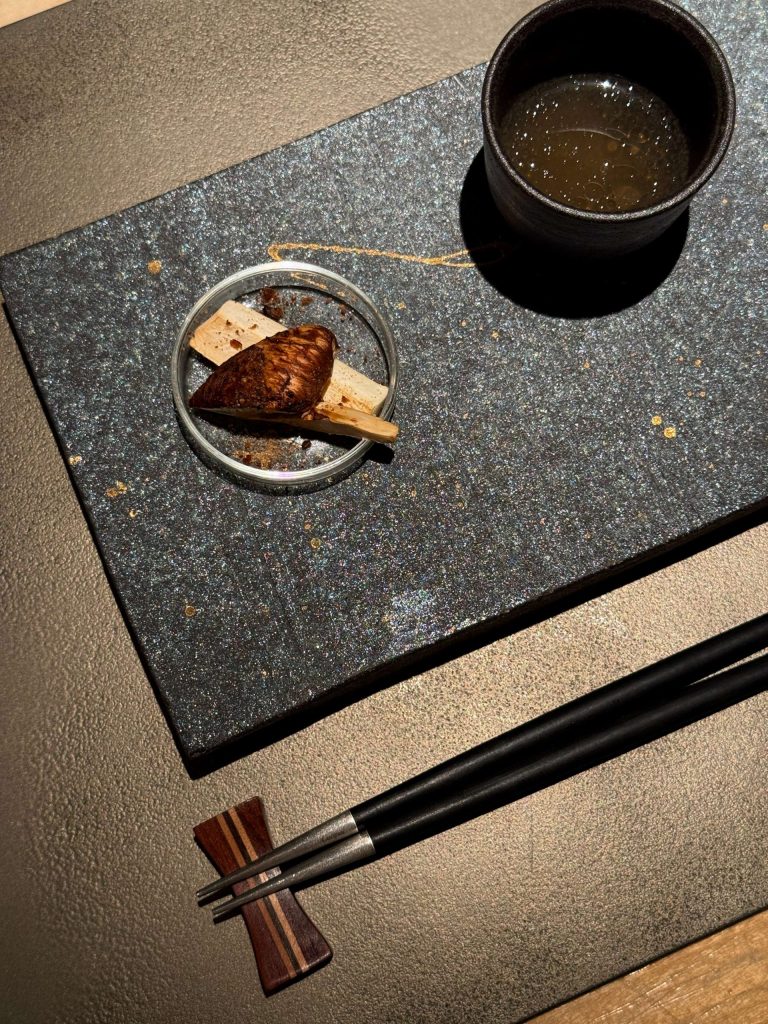



We began with prized Kyoto shiitake, some of the world’s most sought-after mushrooms, just a few slices lifted with chopsticks and accompanied by a small cup of stock. What followed was a procession of autumn: consommé-baked matsutake, fresh persimmon with Chinese cabbage, cauliflower with caviar, pufferfish milt with leek, porcini with potato, Shinshu trout in a delicate consommé tea rice. The meal ended with sweet potato mont blanc and soy sauce ice cream, a combination that sounds as if it should not work but did, brilliantly. Sake pairings throughout. The setting, the food, the quiet theatre of the counter: another magical experience of staying at Hotel VMG Villa, Kyoto.
Returning to the villa after dinner, relaxing in the first-floor salon with a glass of sake, one feels truly at home. The day-trippers have gone. The city belongs to those who sleep here.
The Real Kyoto
Kyoto is a popular international destination. The main streets of the historic Gion district can be busy during the day. But staying at VMG Villa puts you inside the old town as a resident. You wake to silence.


You walk to Yasaka Pagoda at seven in the morning, the sky just beginning to warm, the streets empty save for a few visitors and, unexpectedly, wedding photographers. Couples in traditional dress or wedding clothes pose at magical spots while professionals capture the moment. It is an insight into the culture, this impulse to mark life’s passages in beautiful places, and at that hour you have the streets almost to yourself.


(Photography of Kyoto sights, Copyright Andrew A Forbes)
Personalised Care
There is no staff in the house; one enjoys total privacy. The concierge team at the nearby VMG Resort Kyoto greets you on arrival with traditional sweets, warm aromatic hand towels and refreshments. They help shape your stay, arrange private transfers, book temple tours or a traditional tea ceremony, and remain available whenever needed. But the villa itself is yours alone.
This was an unforgettable Kyoto stay. Each moment revealed the charm and magic of this city. Paper shoji screens filtered the light. A single flower stem in a small vase cast its shadow on a low table. These are the glimpses that stay with you, the texture of a way of living that is unique to VMG Villa Kyoto, your home in Gion, the city’s evocative, historic geisha district.
Contact Details
Website: www.vmg.co.jp
Address: 523 Washiocho, Higashiyama Ward, Kyoto, 605-0072, Japan