Say the word Tsowa to me now and I smile before I’ve even decided to. That’s the whole review, really, if you want it in one sentence. Everything else is just me trying to explain why.
Here is the thing about Tsowa Safari Island that I keep coming back to: almost nobody knows it exists. Not in the way that the famous Zimbabwe and Zambia safari names are known, the ones that show up on every shortlist and every “best of” feature before you’ve even started researching. Tsowa sits on its own small island in the Zambezi National Park, upstream from Victoria Falls, genuinely under the radar, and there is a particular kind of joy in finding a place like that, knowing that most people haven’t, and won’t, and that you got there first.
Getting there is part of the story, and it should be: a 4×4 from Victoria Falls Airport through mopane woodland, on tracks that test the vehicle and the spine in equal measure. Then the river’s edge, a guide waiting, a small boat. The Zambezi is Africa’s fourth-longest river, after the Nile, the Congo and the Niger, and I had been on it before, on other trips, and thought I knew roughly what to expect. I didn’t. The light was starting to go gold, the water moving fast beneath us, and something about being that small on a river that size, heading toward an island I couldn’t yet properly see through the trees, got me in a way I wasn’t prepared for. Recognition, mostly, meeting something I half-knew and being caught off guard, again, by how much it could still move me. Nobody on the boat said much. I noticed it in the others before I noticed it in myself: the chat trailing off, everyone just watching the bank go past, the trees getting denser. I went quiet too, eventually. There wasn’t anything to say yet, just the anticipation of what was approaching.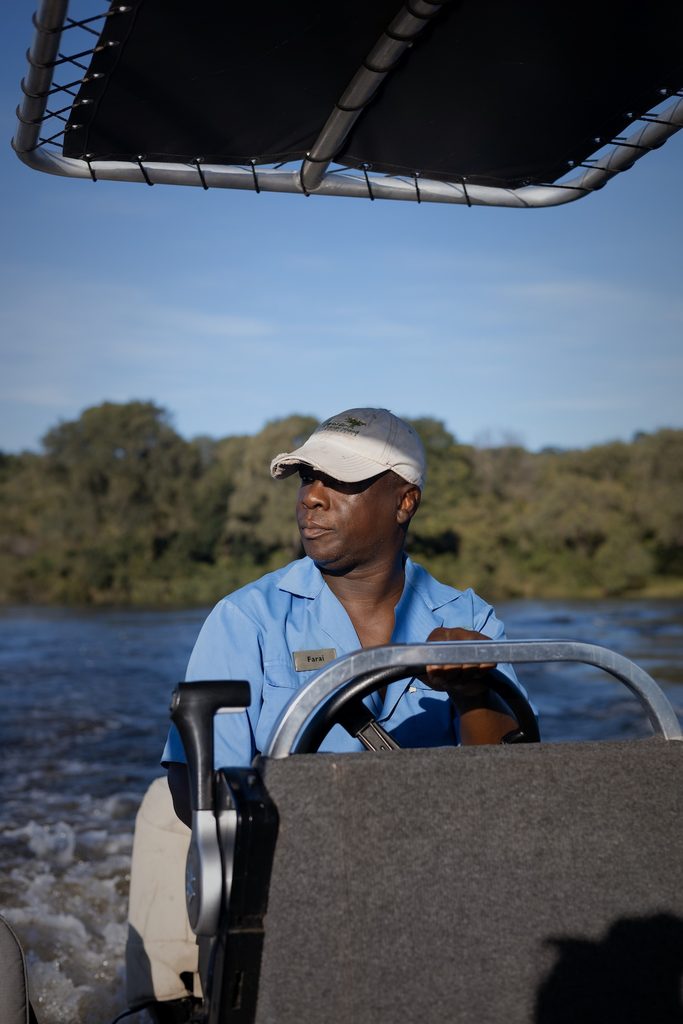
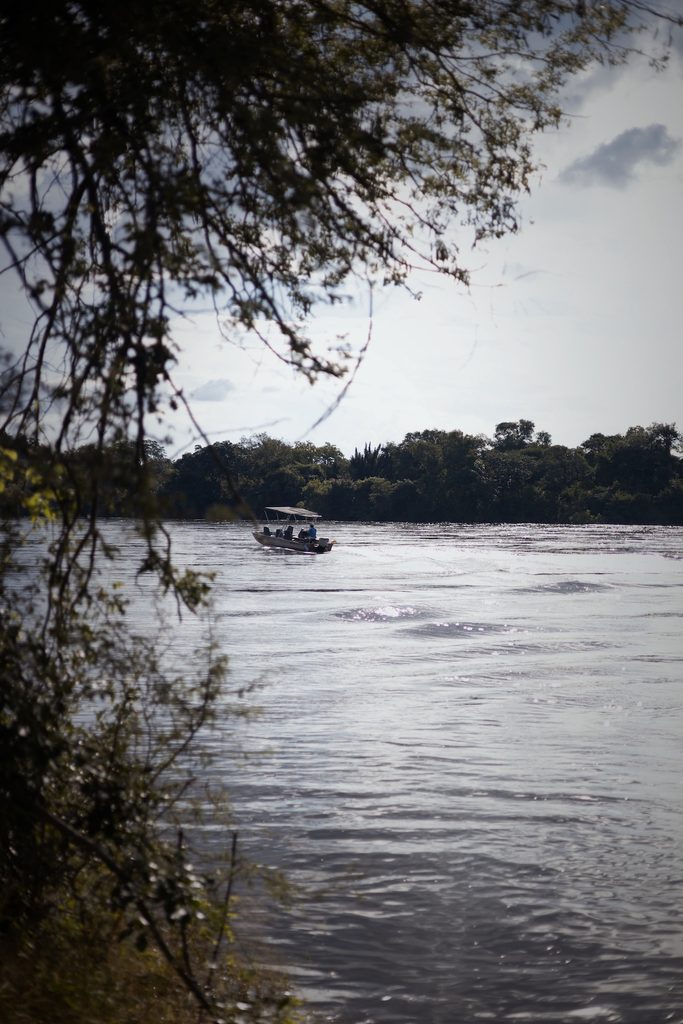
Nine tents. Eighteen guests at full capacity. We were among only a handful in camp during our stay, and the island felt, for those few days, entirely ours.
We arrived to cool towels pressed into our hands to wipe the dust of the journey from our faces, and a drink made from baobab fruit, Amarula poured into it right in front of us before we’d even sat down. I have a slightly unreasonable fondness for Amarula (it borders on a personality trait at this point) and the only thing that could have topped that welcome is if they’d just handed me the bottle.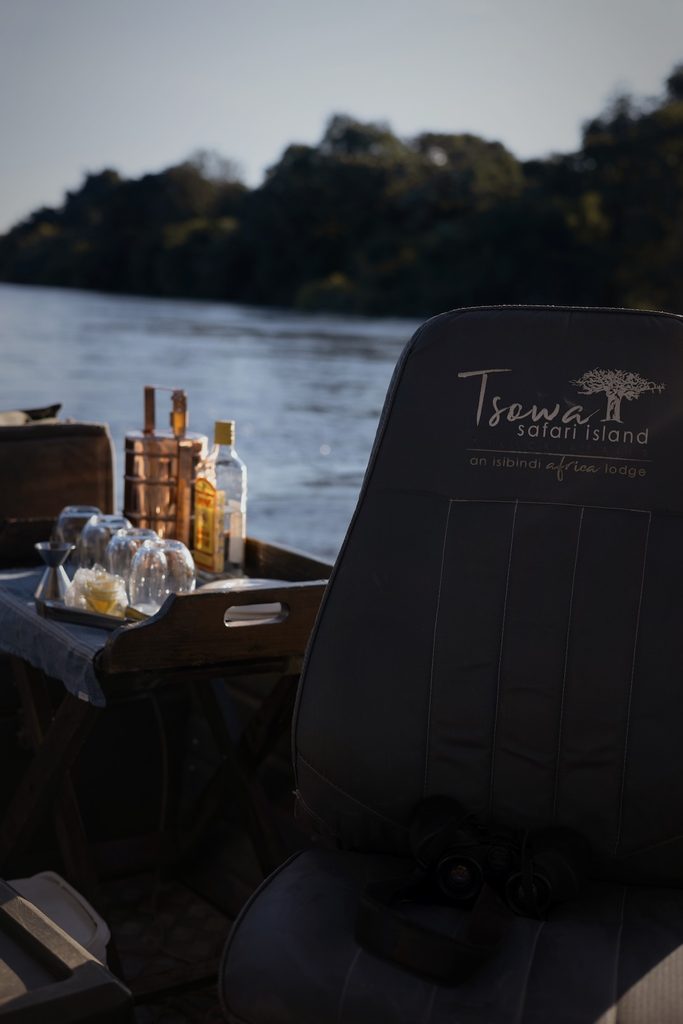
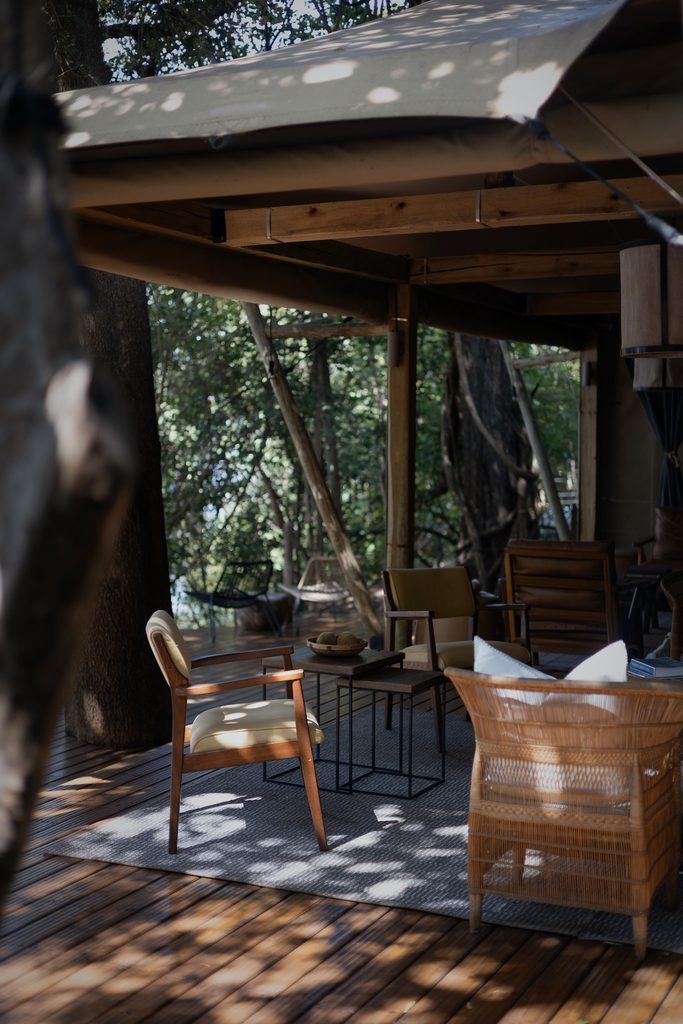
Above: Sundowners on the water – gin, tonic and binoculars come as standard. The lounge deck, built around the trees rather than over them.
I want to tell you about the mud first, actually, because it’s the story I keep telling people back home and the one that makes me grin every single time.
Second evening, on the way back from a game drive, our vehicle sank properly into mud. Not the gentle, photogenic kind, but the real, the-axle-is-going-nowhere kind, close to a herd of elephants, the light fading fast. I want to be honest about how it felt, because it wasn’t what you’d assume: I was laughing. Safari is a journey before it’s anything else, and every real journey collects a story along the way, and this was clearly going to be ours. You sit there and you understand, in your bones, that the people running this place are entirely capable, which means you can simply enjoy whatever happens next instead of panicking about it. We had nowhere we needed to be. Dinner could wait. We sat in the dark with gin and tonics, telling stories, while Aleck Zulu, our guide, born in this very park, who tried banking and hospitality administration and even a stint with the ministry of construction before coming home to the one place that actually fit, radioed for help with the unhurried calm of someone who has been here before, literally and otherwise.
The rescue vehicle also got stuck. A second one was called. On the third attempt we were finally pulled free, fully dark by then, the stars completely out, Zulu handing us cold drinks as though the whole thing had gone exactly to plan. “There is no hurry in Africa”, he said, meaning both literally, about that particular evening, and as something closer to a philosophy he genuinely lives by. We didn’t need to be anywhere. That is a real privilege, one we forget to notice most of the time, on safari and off it, and that night in the mud was one of the best of the entire trip.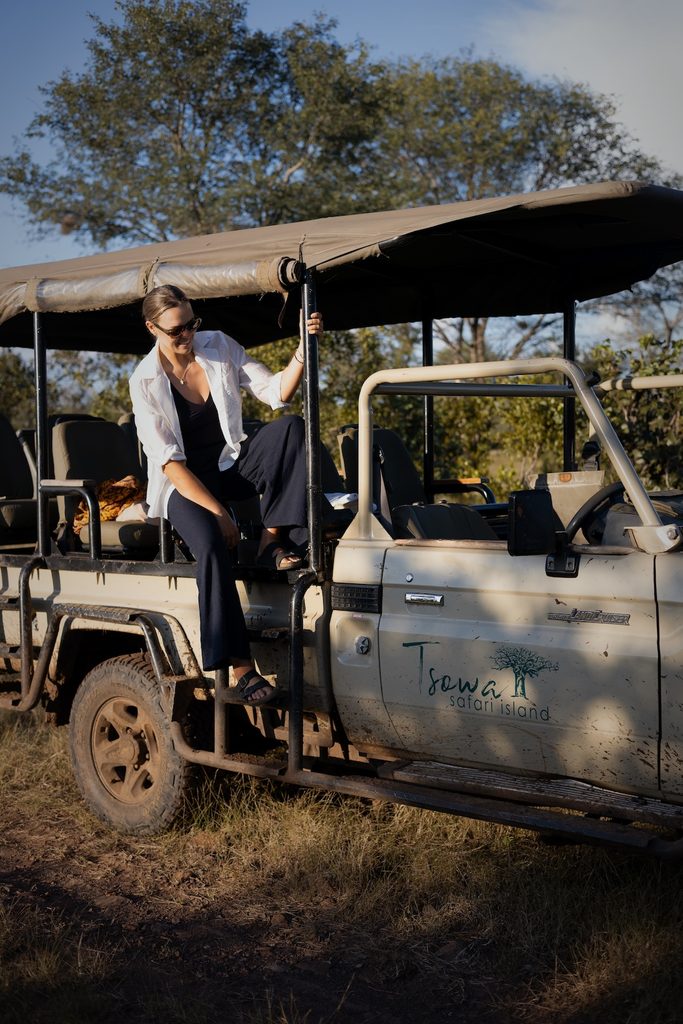
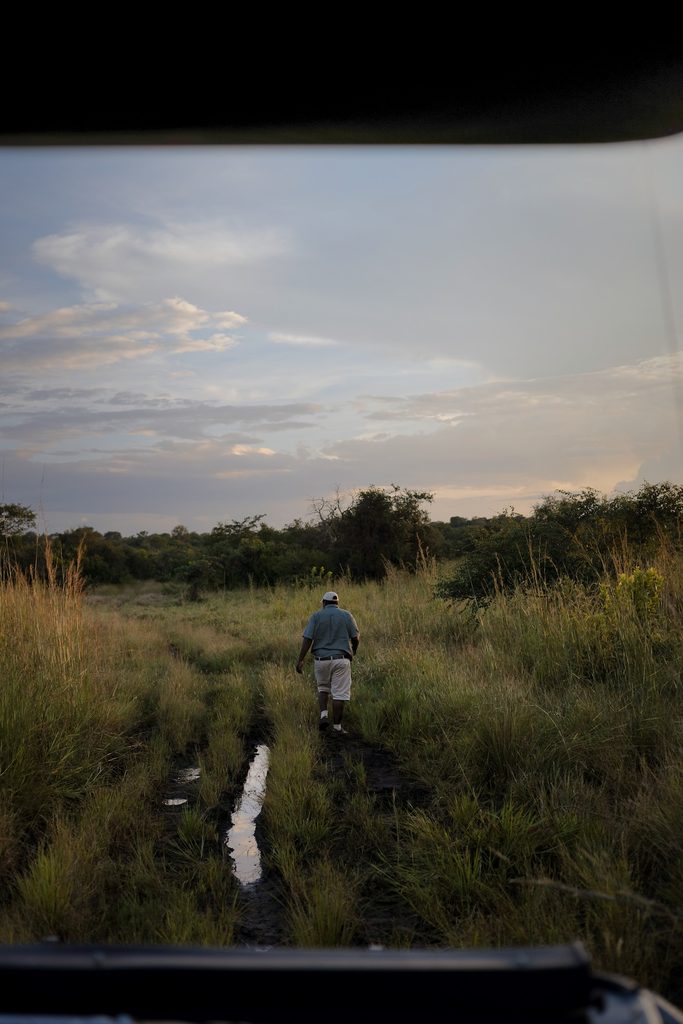
Above: Sundowners on safari. Assessing the way ahead: Aleck Zulu walks the waterlogged track as the light goes, shot from the back of the stuck vehicle.
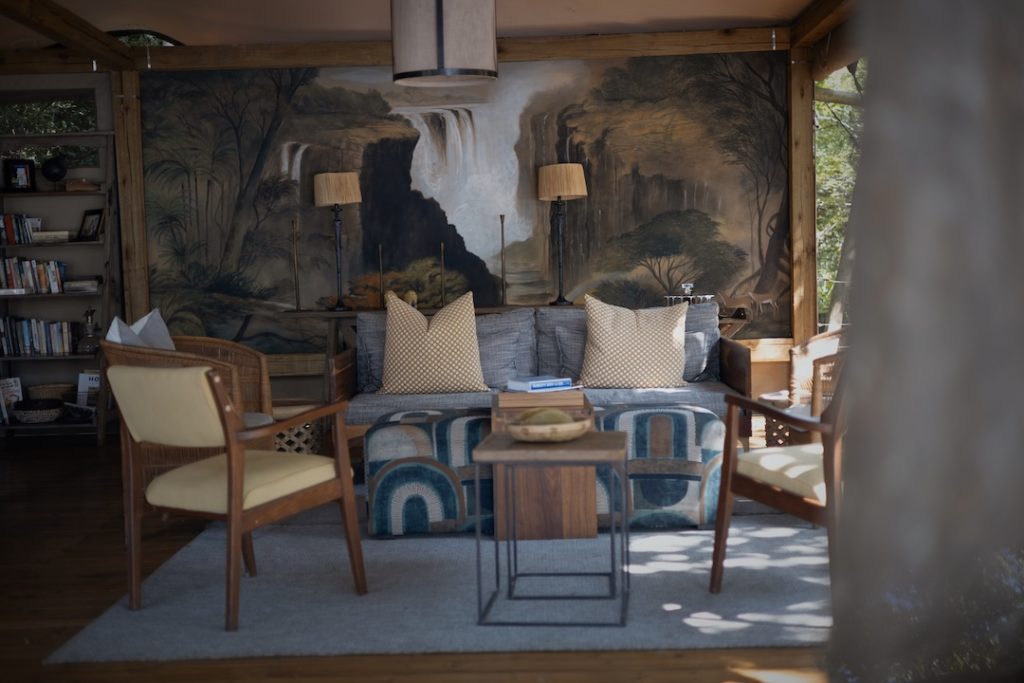
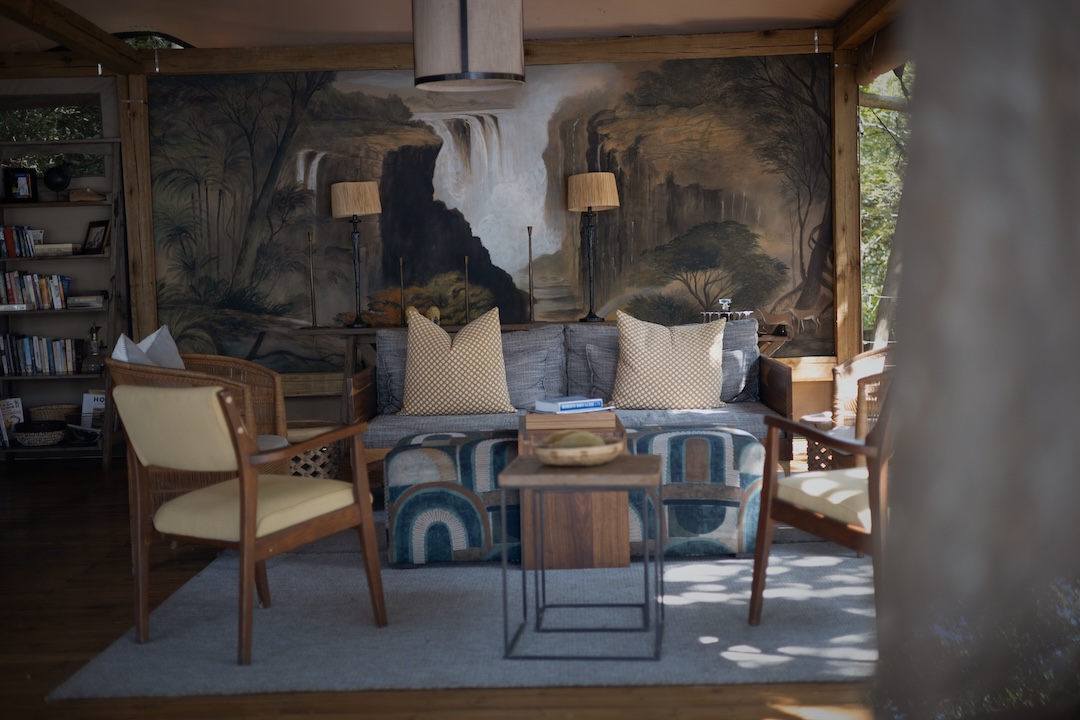
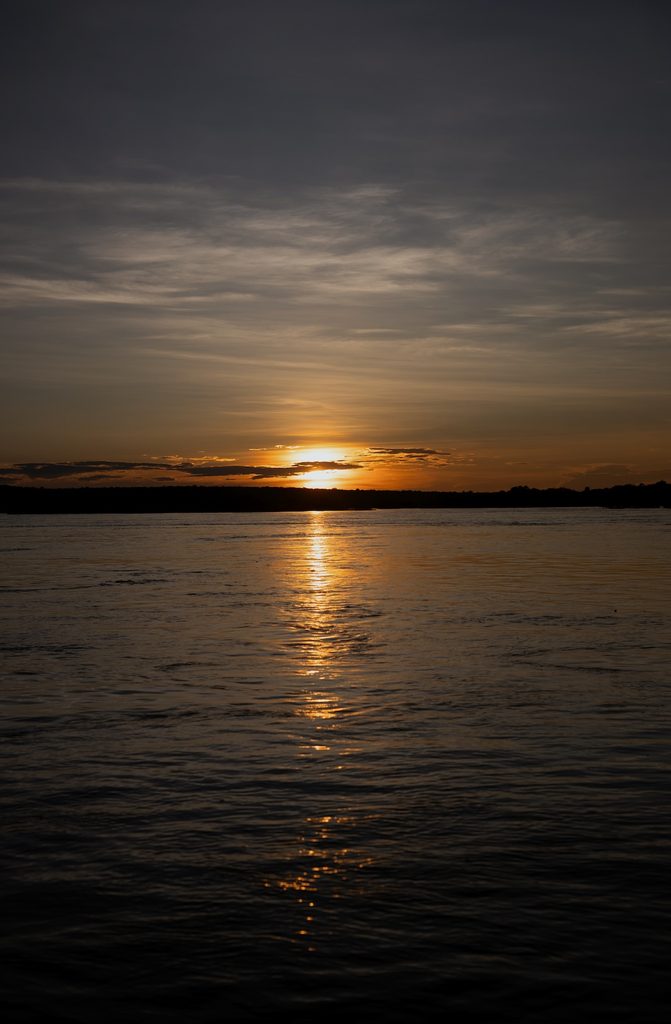
The island itself does the rest of the work. The camp is built into the trees rather than over them a genuinely old baobab anchors the lounge, the whole structure arranged around it rather than the other way round. The fire pit deck hangs over the river, close enough to hear the water moving beneath you while you have a drink, the light running from gold to copper to near-black as the evening goes on, the Zambian bank slowly disappearing across the water. Dinner happened under the trees most nights, wine properly paired, the conversation easy because there was genuinely nothing competing for attention except each other and the dark and the occasional hippo announcing itself somewhere out in the current.
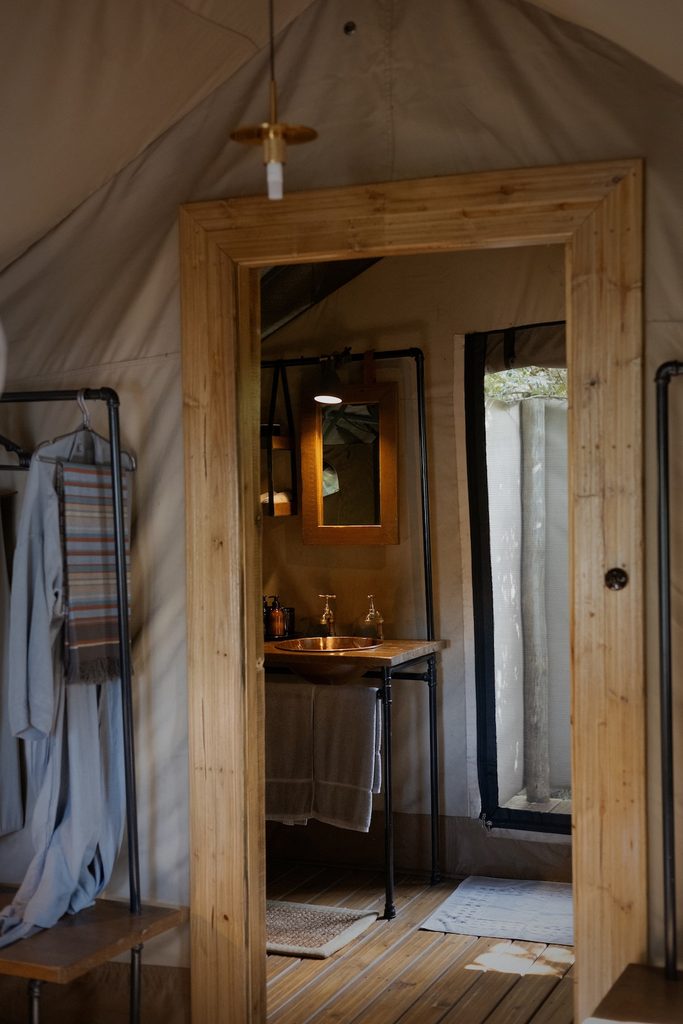
The tents are where the design really sings, and I have thought about them more, in the weeks since, than almost any other room on this whole trip. Dark wood, dark leather, proper beds, a particular brand of simplified luxury that doesn’t need to perform itself to be felt. Books on the shelves, a magnifying glass left out as though someone had just set it down mid-read. Each tent sits over the river with its own deck, the Zambezi simply there, constant, doing what it does regardless of who is watching. The outdoor shower is the detail I keep mentioning to people back home, slightly to their bemusement: walk out the back, enclosed entirely by trees, the river audible just beyond, and shower in the open air with the bush around you and the water at exactly the right temperature. After a day on safari, dust coming off, the heat of the day finally releasing and nothing between you and the trees except the trees themselves. I would build one at home if I could, planning permission and nosey neighbours notwithstanding.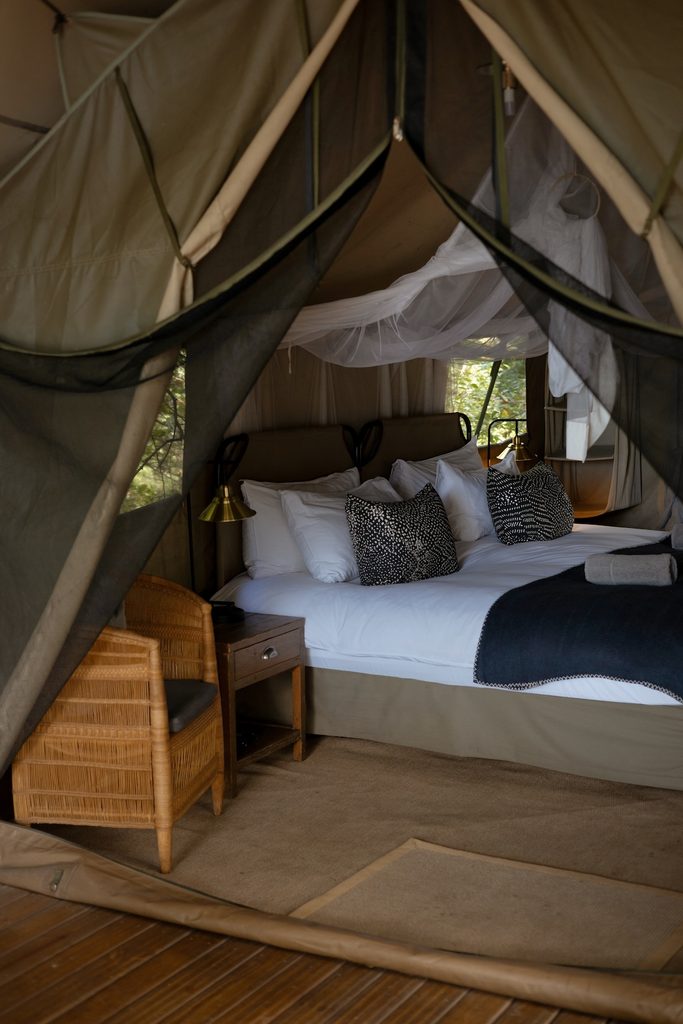
On our second morning, we skipped the game drive entirely. I have never voluntarily done that before this trip, on any previous safari, and I want to be clear it wasn’t because the wildlife wasn’t worth seeing; we’d watched elephant and giraffe on previous drives, which never stops being thrilling no matter how many times you’ve seen it happen but because the river right there beneath our deck was reason enough to stay exactly where we were. We did yoga on the tent deck as the sun came up, facing the water, the practice slower than usual because nobody was watching the clock. Coffee afterwards, no rush, the light shifting on the surface in increments too slow to properly notice until you’d been looking for twenty minutes and the whole colour of the river had changed. I realised, sitting there, that I had spent weeks in camps and barely seen any of them properly: up before dawn, out until dark, the lodge itself reduced to somewhere you sleep between activities rather than somewhere you actually inhabit. That morning was the first time on the entire trip I was genuinely present in the place I was staying, rather than passing through it on the way to the next scheduled thing.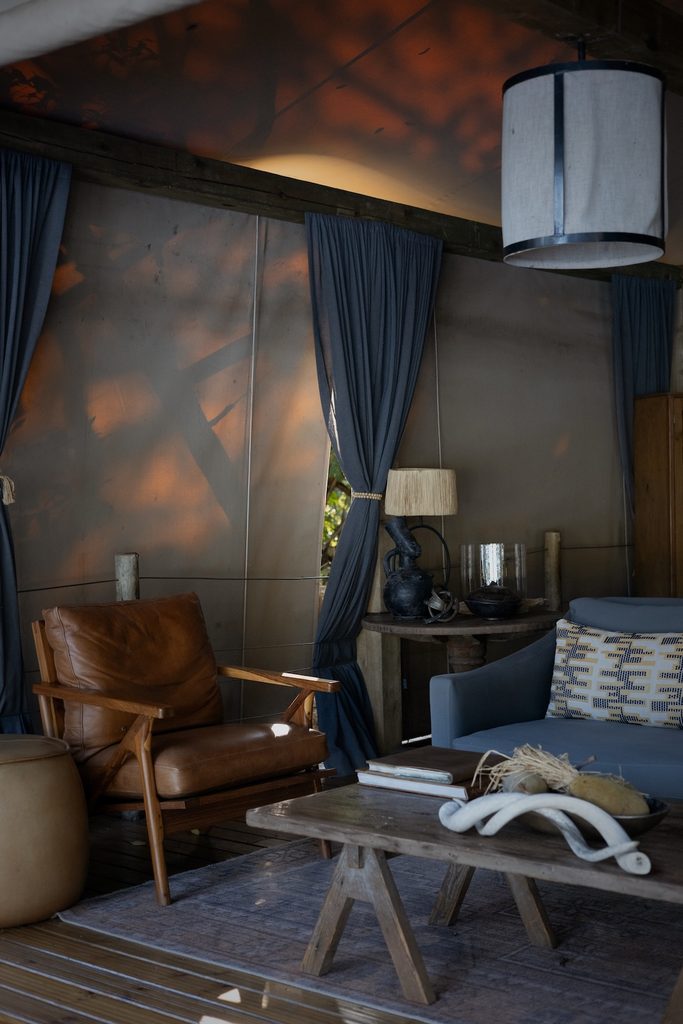
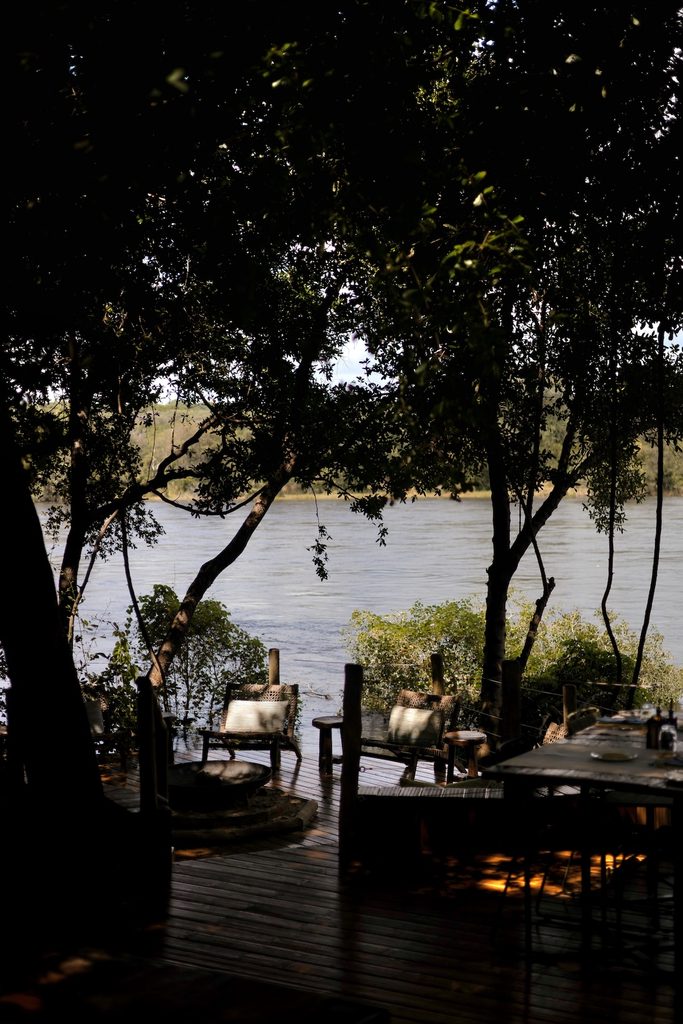
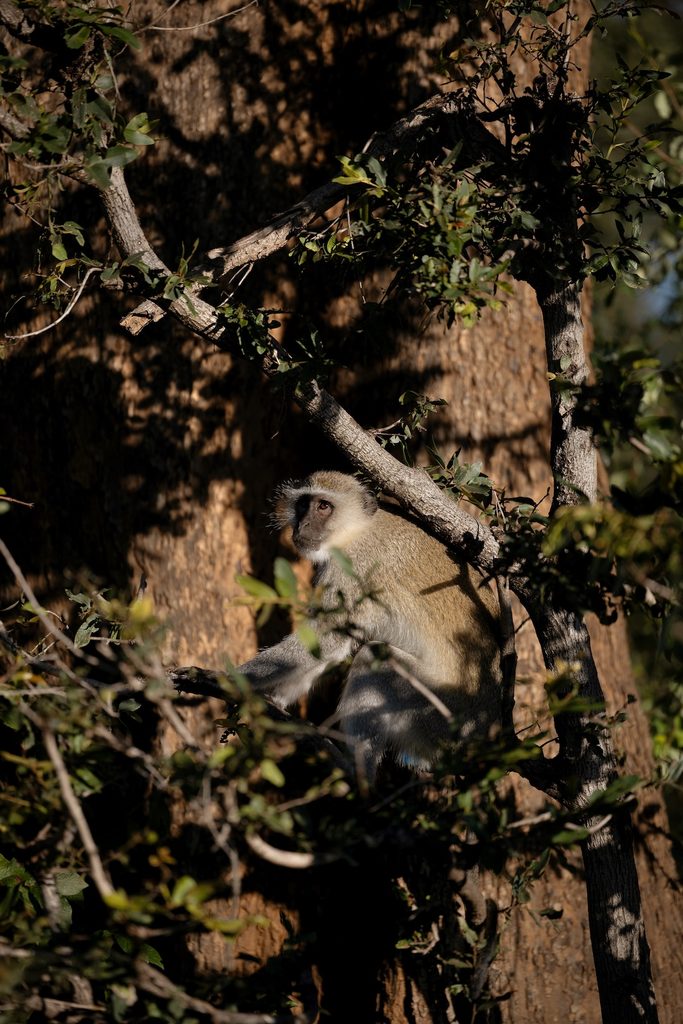
The bush was thick and dense for the time of year, and game viewing overall was quieter than at some other camps we visited, it is worth saying plainly, because the honest version of this place matters more than the flattering one. In a different season, when the vegetation has died back, I imagine the visibility opens up considerably, and the walking safaris and guided canoeing that the high water ruled out for us would add something else entirely worth coming back for. What we didn’t lack was hippos. Several of them, visible from the deck without going anywhere at all, surfacing and disappearing in the current just off the island, completely unbothered by the people watching them from above.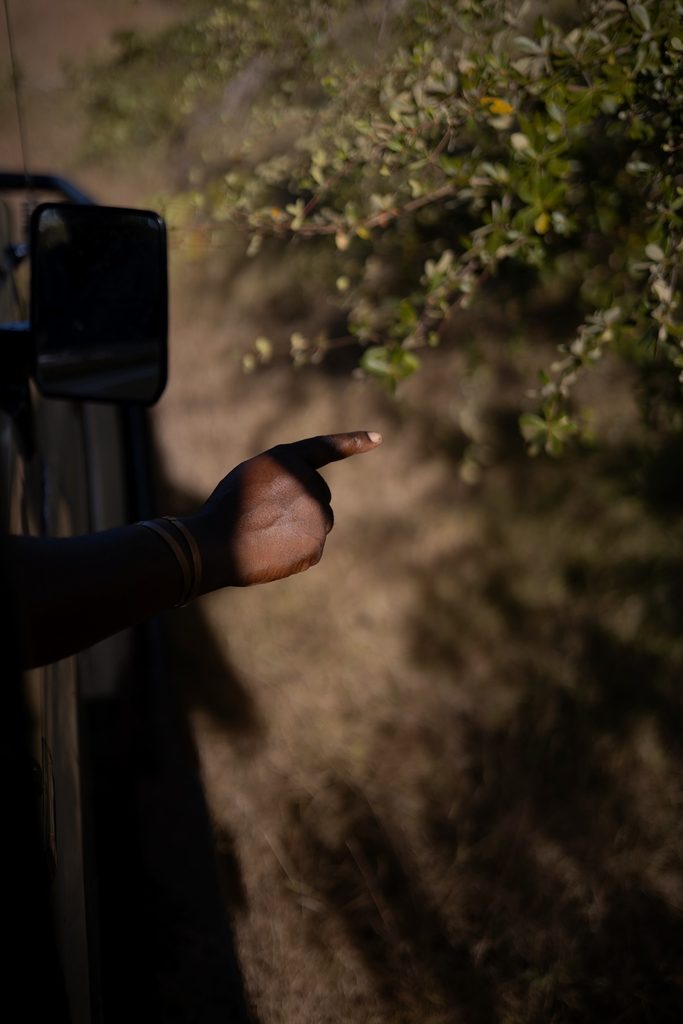
Anna Mugabe ran the camp day to day, Assistant Lodge Manager, and at the time of our stay the only woman on the team, a fact she mentioned plainly and without complaint, in a way that told you she’d built her place there entirely on her own terms. She showed us where the recent floodwater had risen over the planned spa site, talked about the island the way someone talks about somewhere they’ve decided, completely, to belong to. There is a quiet confidence in people who run remote camps well, a sense that they have made peace with the isolation rather than simply tolerated it, and Anna had that in full. One evening she sat with us after dinner. We talked about coming home: what it costs, what it means to leave somewhere and come back to find it essentially unchanged. “Africa is resilience”, she said. I wrote it down on my phone before I forgot it.
When the water is low, elephants will sometimes swim across to the island itself, something the staff mentioned almost in passing, the way you mention something so woven into your life it barely registers as remarkable to you anymore. We didn’t see it happen ourselves, the water far too high for that this trip, but I think about it often: an elephant simply deciding to cross, mid-river, and arriving somewhere that happens to have nine tents and a fire pit on it. The river decides almost everything here: where the animals go, what you can do, how the days move, and the camp has built itself entirely around that fact rather than fighting it.
We tried to push our departure back at the end, one more hour on the deck, one more look at the river before leaving. It didn’t work logistically. We left on schedule. The boat back across the Zambezi felt shorter than the one coming in, same fast-flowing water, same forest on the bank, but somehow finished before I’d registered it had started.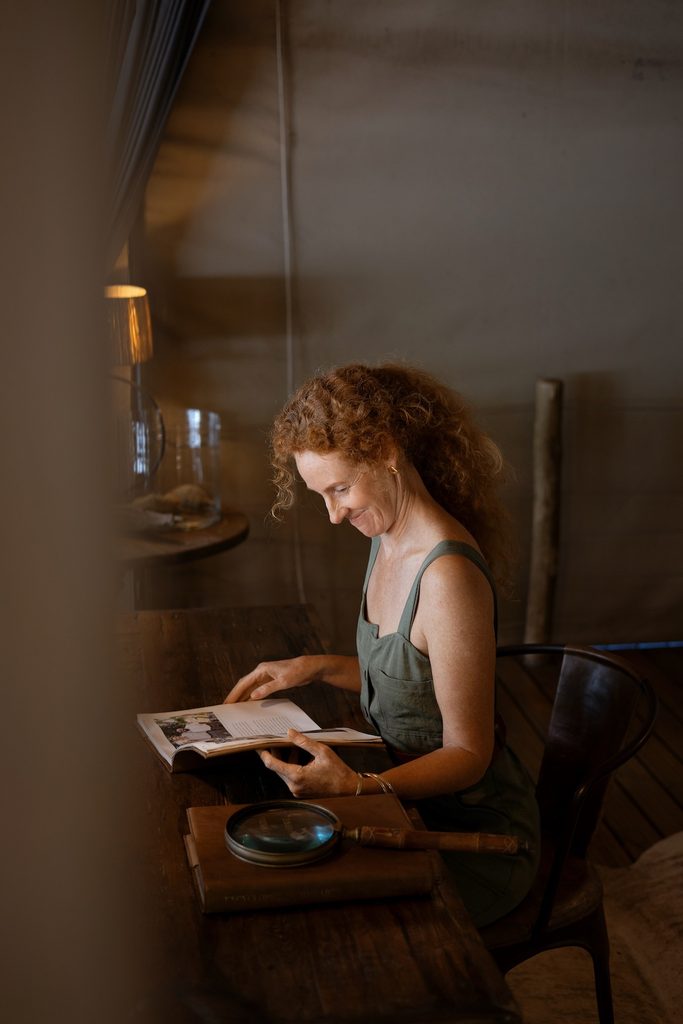
I still smile when I say the name. That’s really the whole thing. A small, quiet, slightly hidden island in the middle of one of Africa’s great rivers, where almost nobody we know has been, where the mud got us stuck and the elephant herd was close and the stars came out properly while we waited, and where I finally, for one whole morning, sat still in a place rather than rushing through it. There is a specific pleasure in being early to somewhere, in knowing, as you tell friends about it afterwards, that you are introducing them to something rather than confirming what they already suspected. Tsowa is still, for now, that kind of place. Find it before everyone else does.
Contact Details
Website: www.tsowasafariisland.co.za
Address: Tsowa Island, Zambezi River, Zimbabwe