In the storybook hilltop village of Panicale, with commanding views of Umbria’s rolling countryside and sparkling Lake Trasimeno, Rastrello is a charming boutique hotel with stylish guest accommodation and a sought-after restaurant, Cucina & Giardino. Promising privacy and tranquillity, the hotel is also steps from the village square and the heart of the community’s cultural and gastronomic scene.
Umbria, Panicale
Rastrello
The Arrival
I first wrote about Umbria ten years ago, when it was only beginning to emerge from the shadow of Tuscany. Chiantishire, as it is lovingly called by the Brits, with its postcard good looks and the greatest hits of Florence and Siena, has somewhat suffered from overtourism. Returning this September, I was happy to find that although Umbria, the only region of peninsular Italy without a coastline, is now firmly on the tourist map, it has kept its charm. As we explored during a particularly hot September, the lanes were empty, and driving between hilltop villages through olive groves and avenues of cypress felt like being in a film.
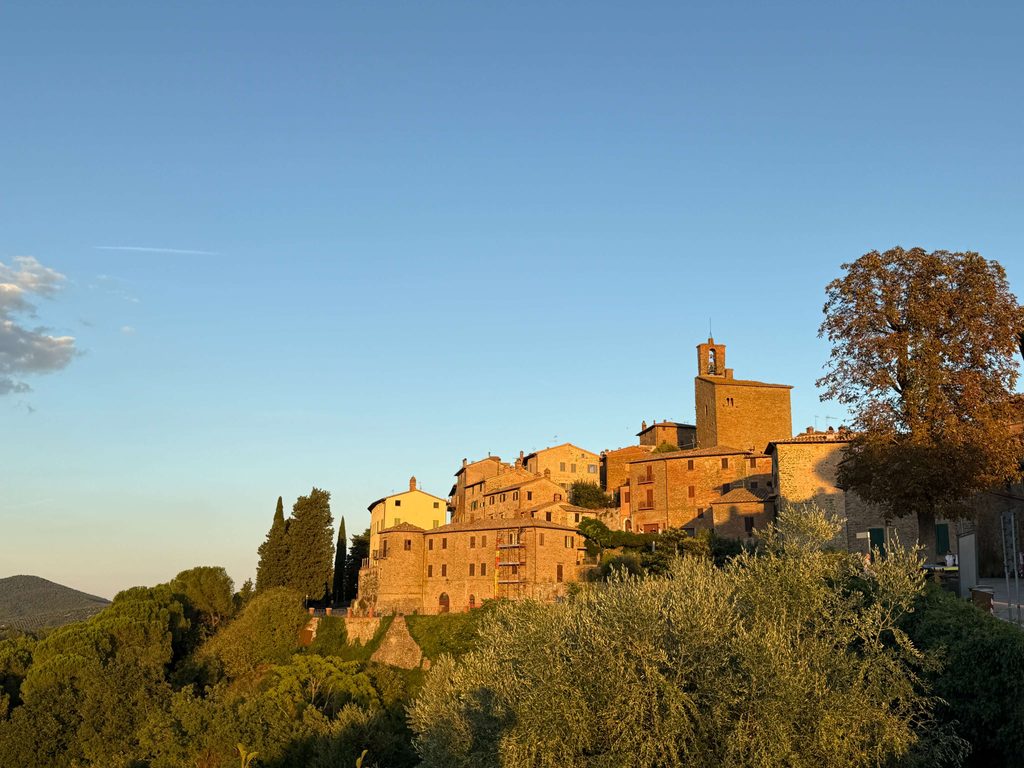
Panicale is one of the loveliest of the area’s villages as it seems to have almost escaped the notice of most travellers. One takes a winding road up to this delightful hilltop refuge.
The Village
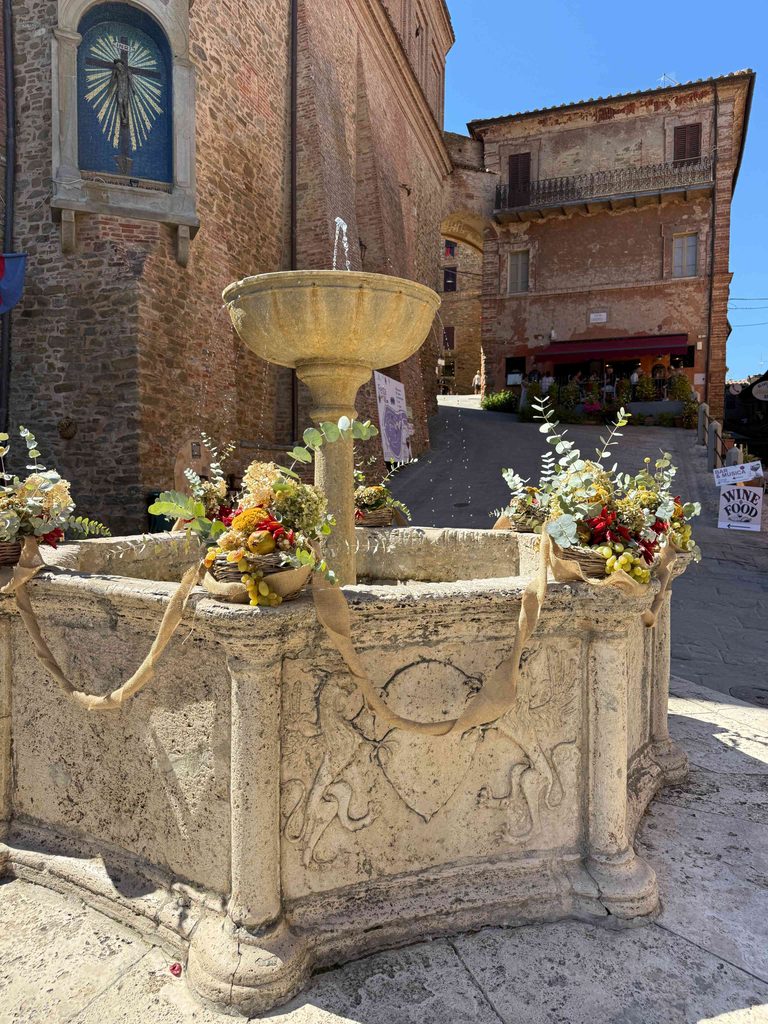
Rastrello stands on the edge of Panicale, with open views and a feeling of space. Yet the square is just behind the house. From the corridor outside our suite, a window looked up the alley to the café tables in Piazza Umberto I, yet because another building stands in between, we never heard a sound. The square has a wonderful travertine fountain from the 15th century, which during our stay was dressed with baskets of grapes, pomegranates, chillies and dried hydrangeas for the Festa dell’Uva, the grape festival held each September.
I live in Spain, where village life is loud and late, and rural Italy always surprises me by how peaceful it is. Even the festival held during our stay, surely the liveliest weekend of Panicale’s year, was a gentle affair. By day, the square was almost empty. In the evenings there was live music, and a walking trail through the village from stall to stall, where local wineries shared their wines. Rastrello had a stall of its own, where I tasted a Grechetto from Duca della Corgna with squares of focaccia baked with black grapes. The next day tractors pulled decorated floats through the streets. One carried staff from the local hospital in their white coats, another the grape pickers with a barrel pouring a fountain of wine, and behind them a group in traditional dress. It was a beautiful weekend.
The Family
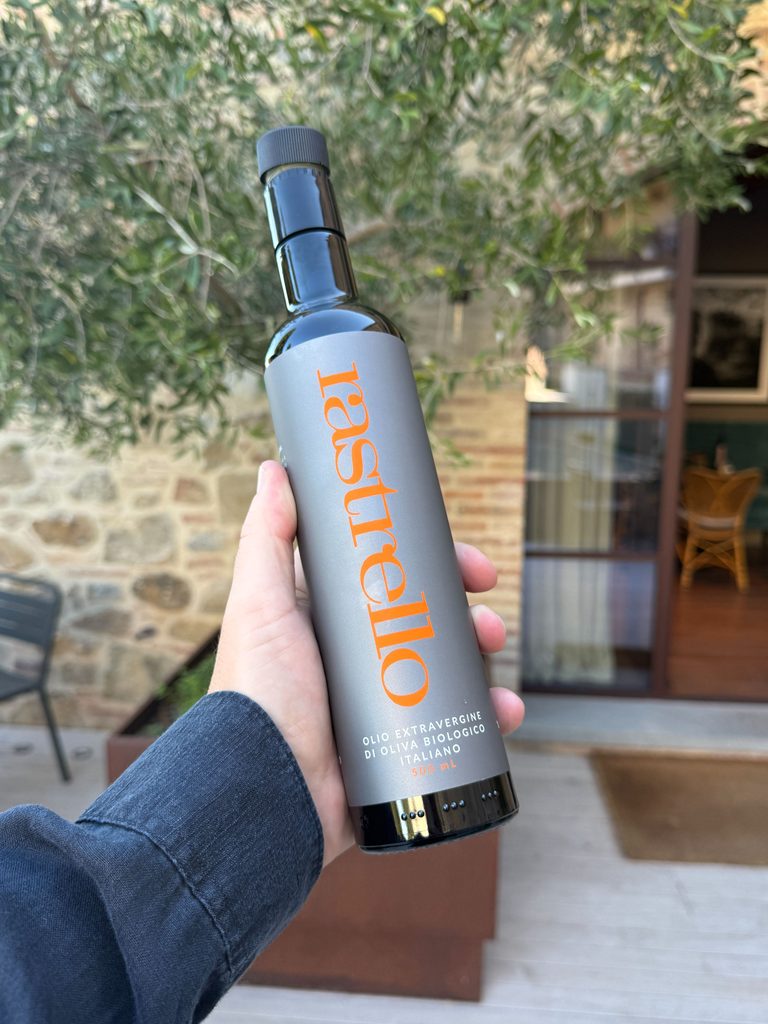
Reception is in the original palazzo, where resting on the desk is the village cookbook, open at a portrait of Nonna Elida, the matriarch of the Wassmann family who created the hotel. Rastrello means rake in Italian, and is the identity of this hotel, evocative of its beginnings. The Wassmann family’s story in Panicale began among the olive trees. A small hand rake is used to comb olives from the branches at harvest, and it is the hotel’s emblem, printed on the napkins and the menus. Christiane Wassmann’s parents, Elida and Günter, settled in the village in 1995. The family bought a farm with olive groves, where some of the trees are up to 400 years old. Every autumn, relatives and friends still gather to lay the nets and harvest by hand. In time, Christiane and her husband Berny renovated this palazzo in the village into a hotel. Today a bottle of the olive oil stands on every table, and it is used in the dishes at dinner, including flavouring the ice cream. It is even used in the massage treatments.
The House
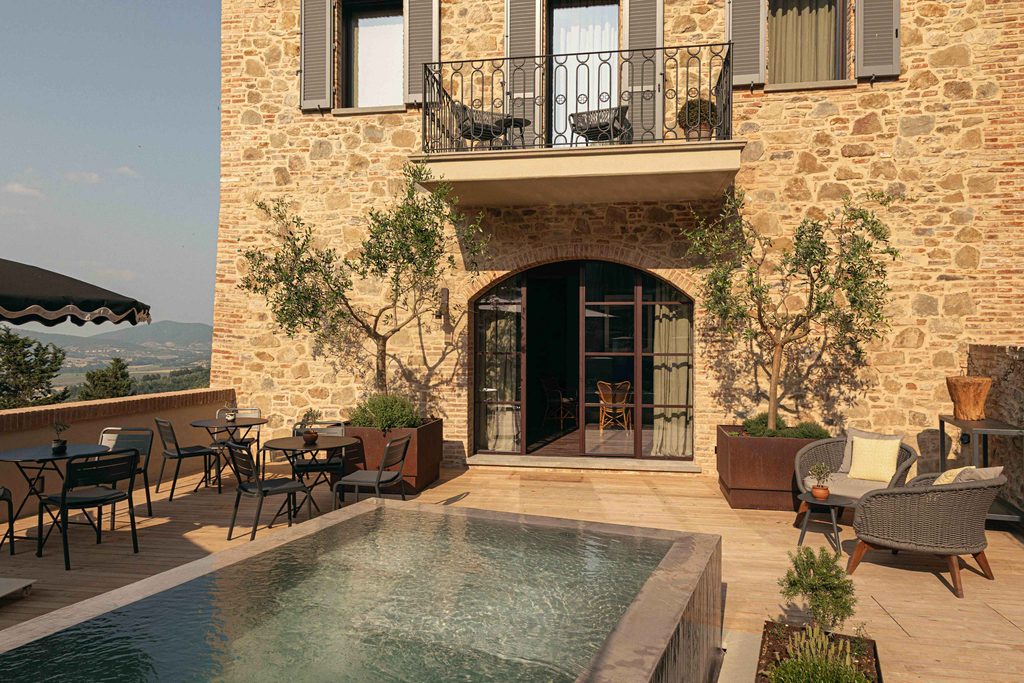
Rastrello is built into the hilltop village, so it has front doors on two levels. The lane where you unload is at lower ground level, while reception, the garden and the restaurant terrace are one floor up, level with a narrow pedestrian alley that reaches the village square in less than a hundred metres. The hotel is made up of two old houses facing each other, with the original palazzo said to date from the 14th century. The Garden Annex across the terrace, which opened in 2025, has been restored with the same care, style and attention to detail. In both, the brick and stone have the pale, worn patina of centuries that Italy is so good at preserving.
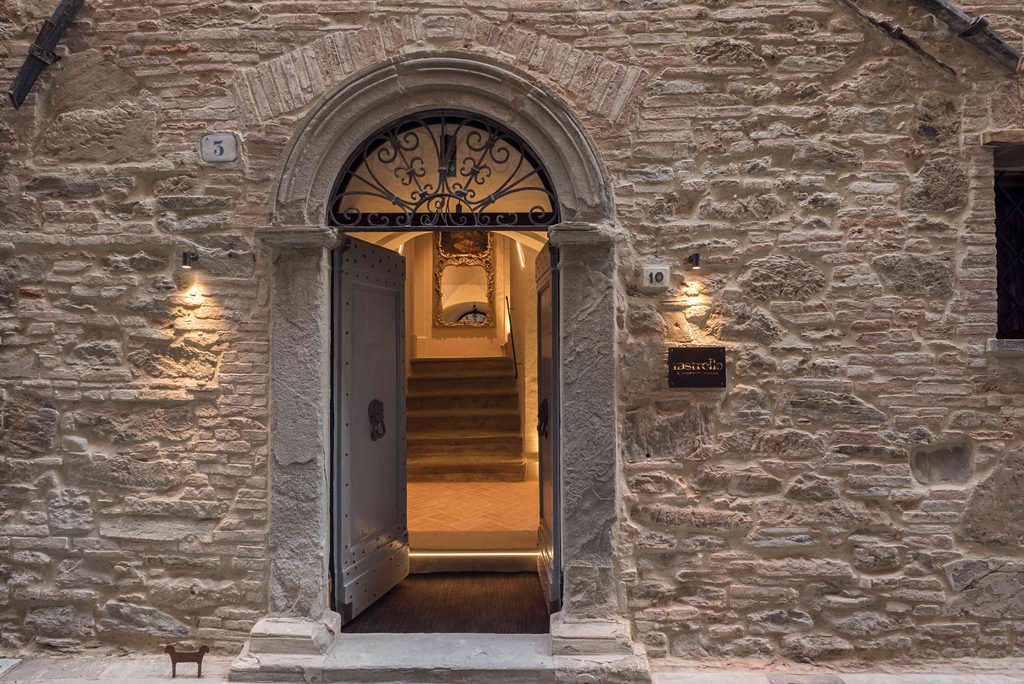
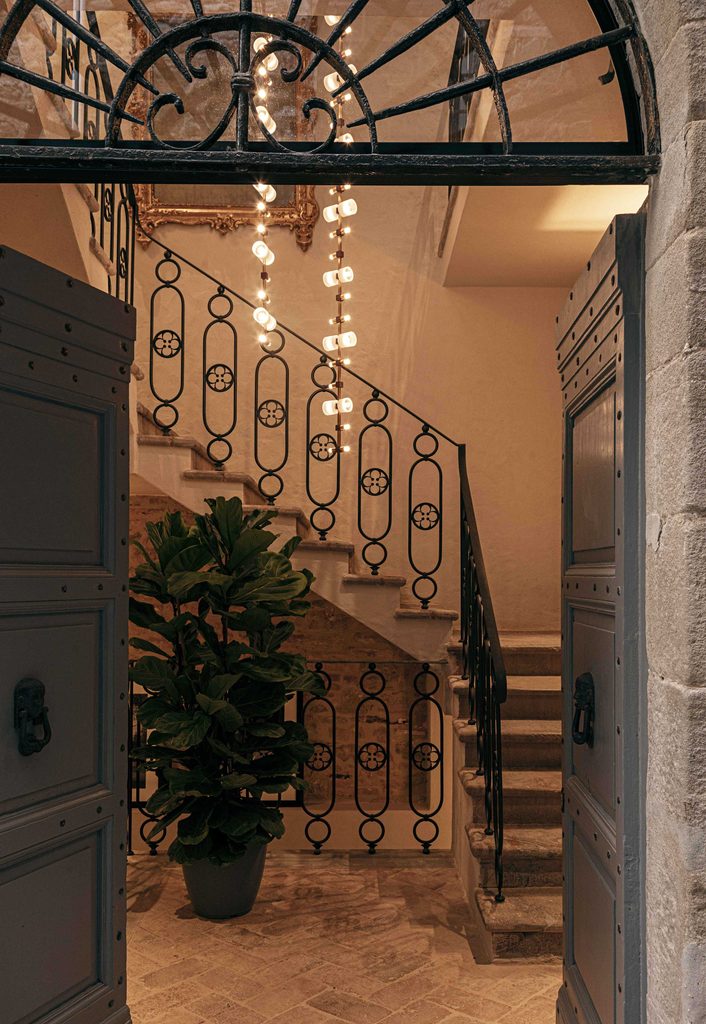
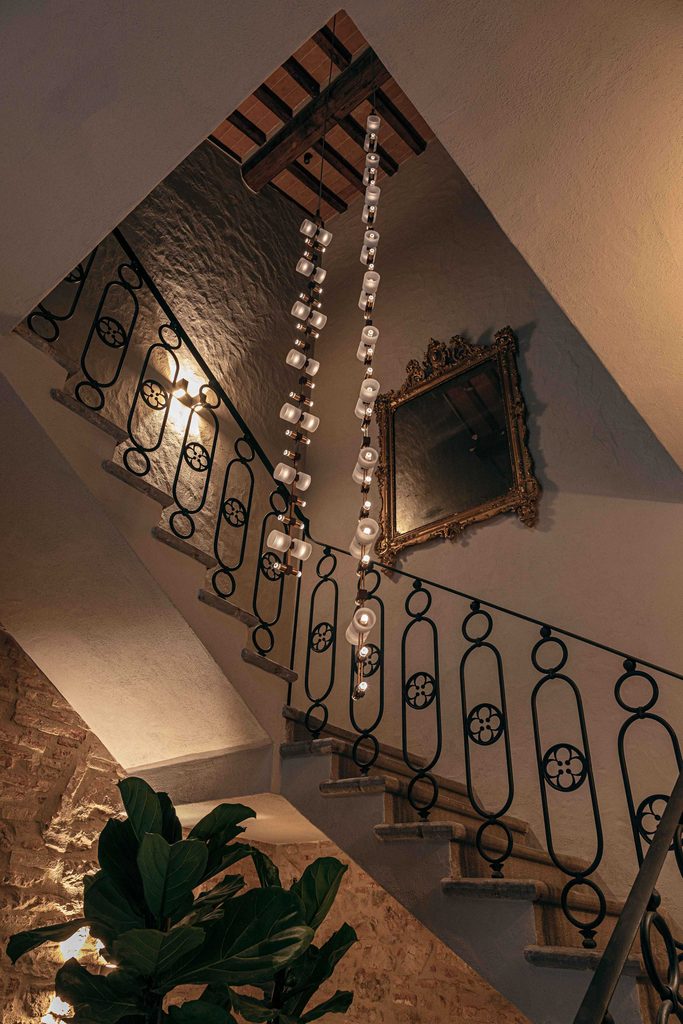
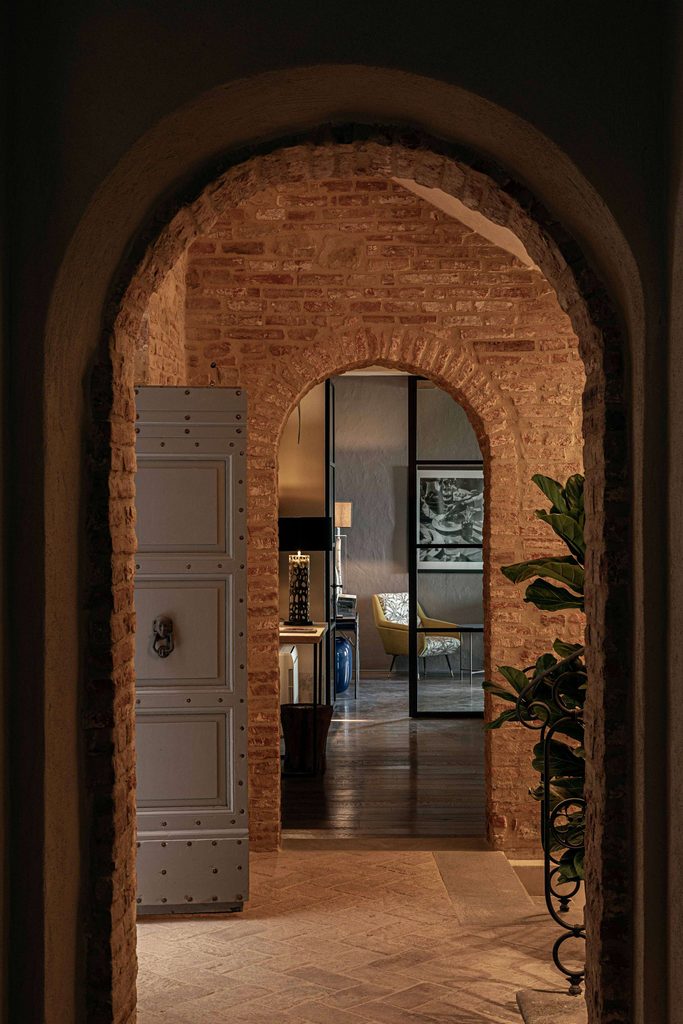
Each house has its own guest entrance, opened with the room key, so you can come and go without passing reception or the restaurant. The doors, with their stone arches, wrought-iron fanlights and antique knockers, are examples of the architectural features found throughout this charming property. Inside one finds herringbone brick floors, old beams and terracotta ceilings, soft plaster walls, wide oak boards, and in the Garden Annex, a stone staircase with an iron balustrade of circles and quatrefoils.
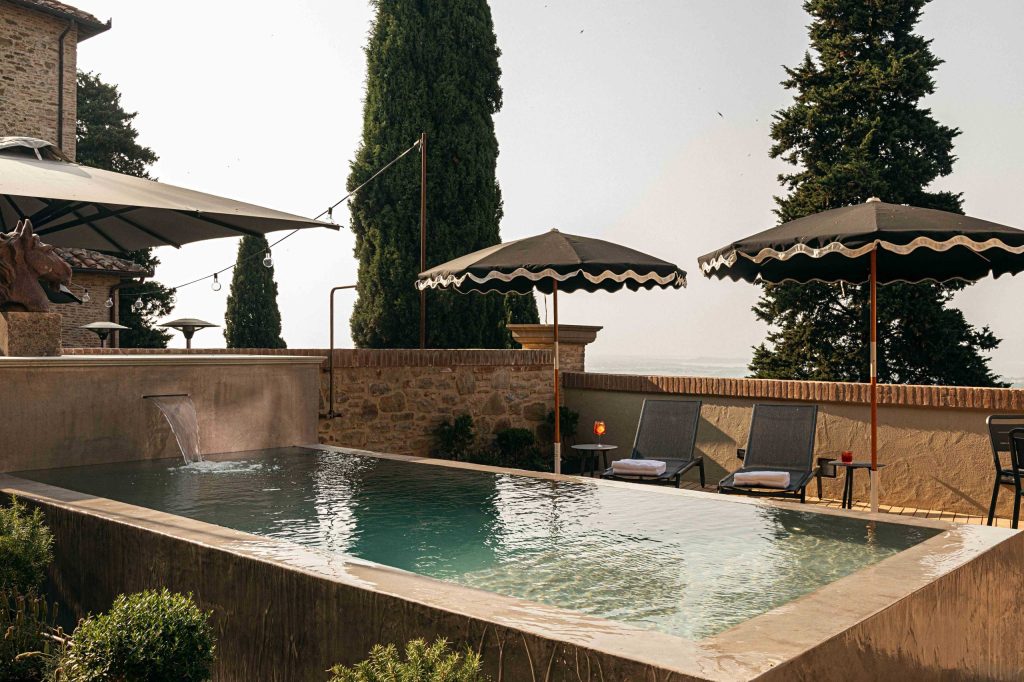
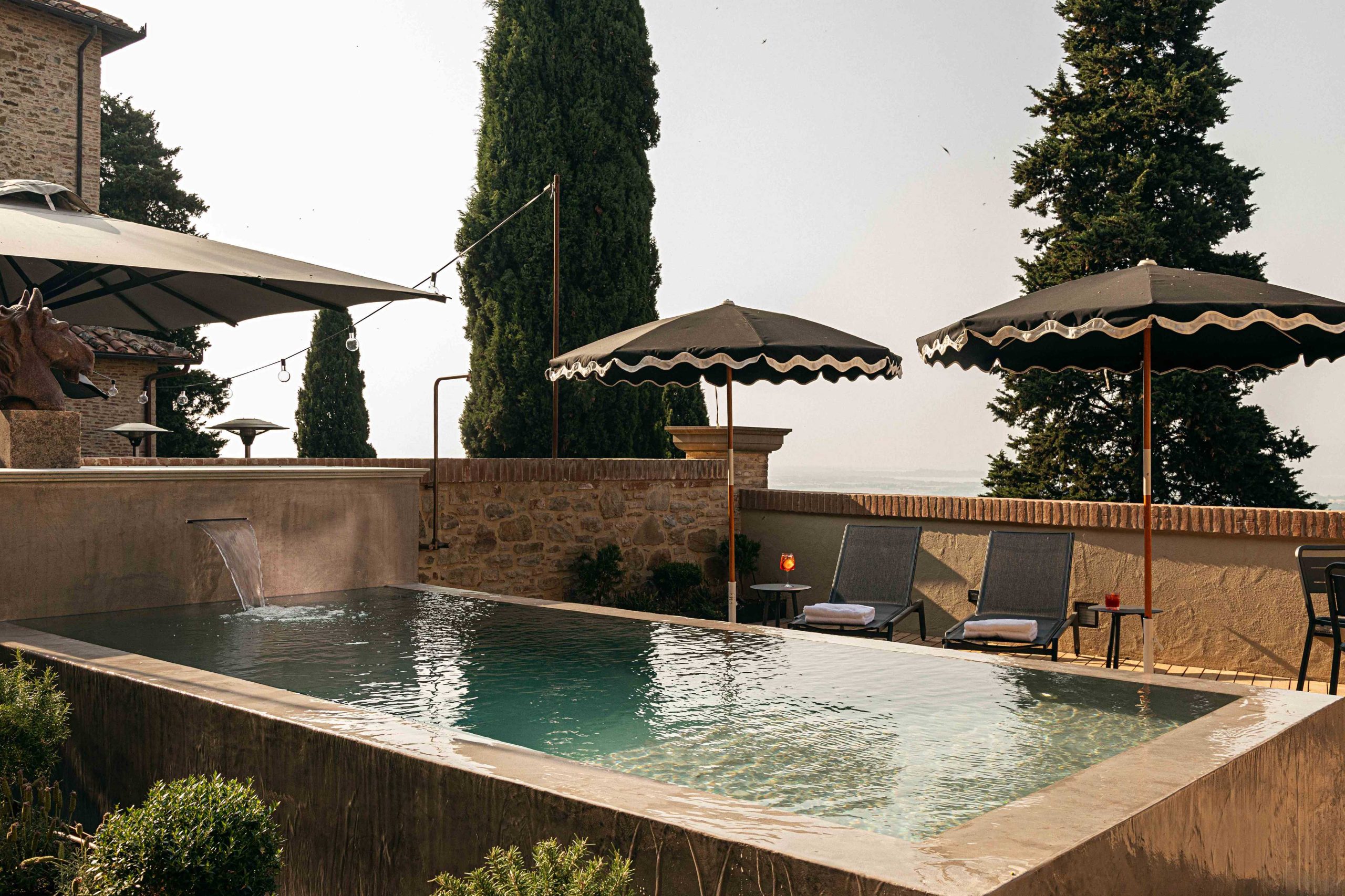
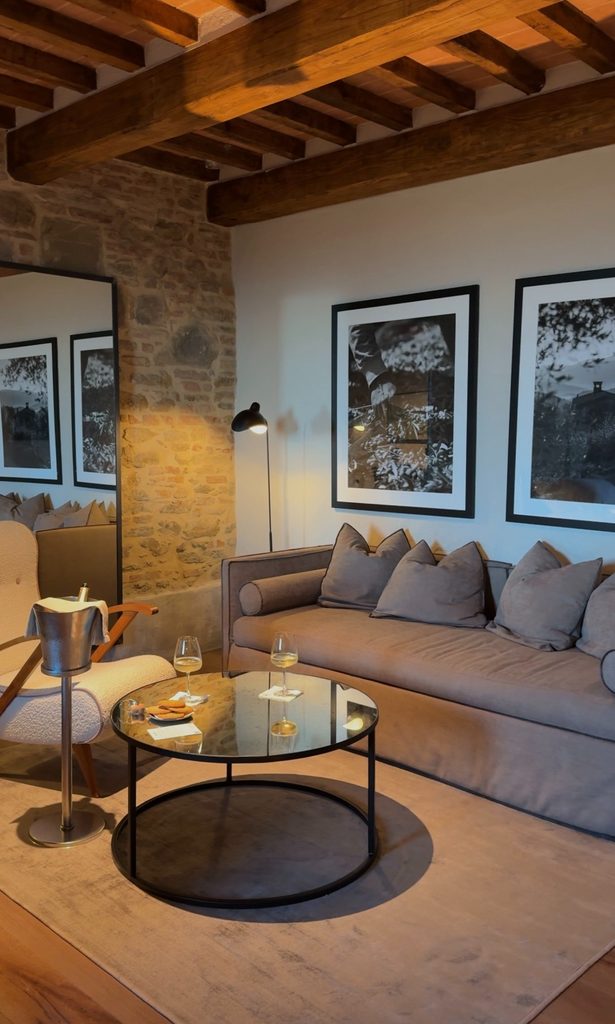
The warm, calm and elegant interiors are by Pelizzari Studio. Guest rooms are simple, with beds dressed in white linens. Walls are decorated with art and black and white photographs of the olive harvest. Bold pieces are few, and so they have real impact. A chain of frosted glass lights drops through the full height of the stairwell beside a gilded antique mirror, while a sculpted horse’s head watches over the pool. Everything feels curated, yet natural and relaxed.
The Room
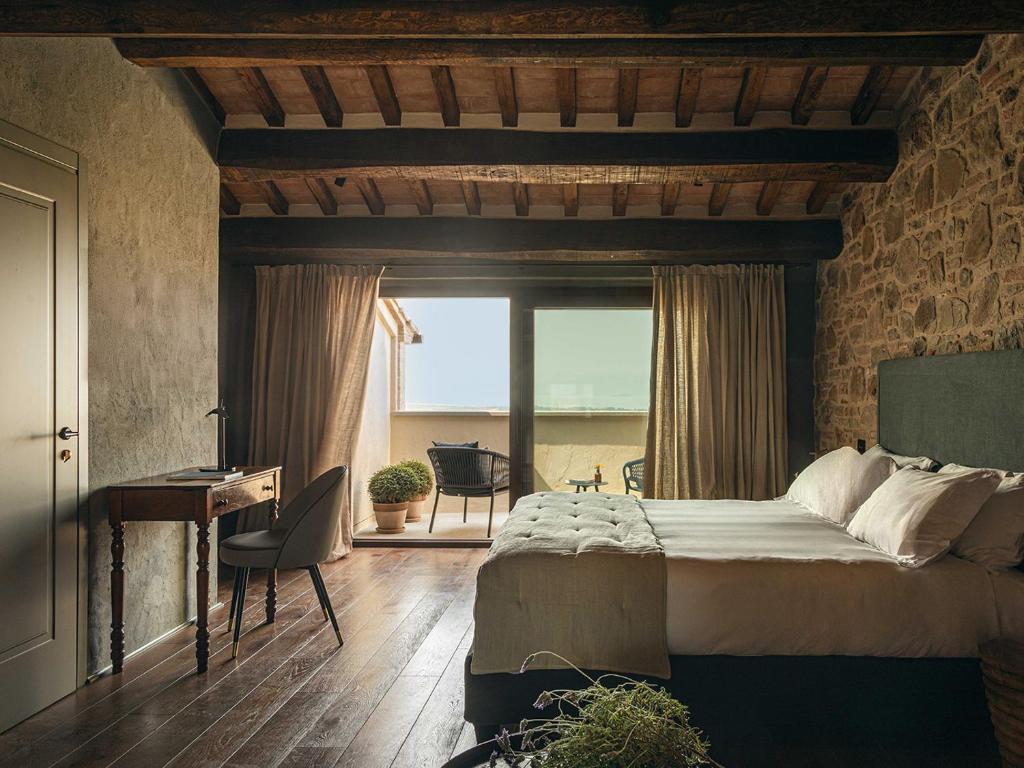
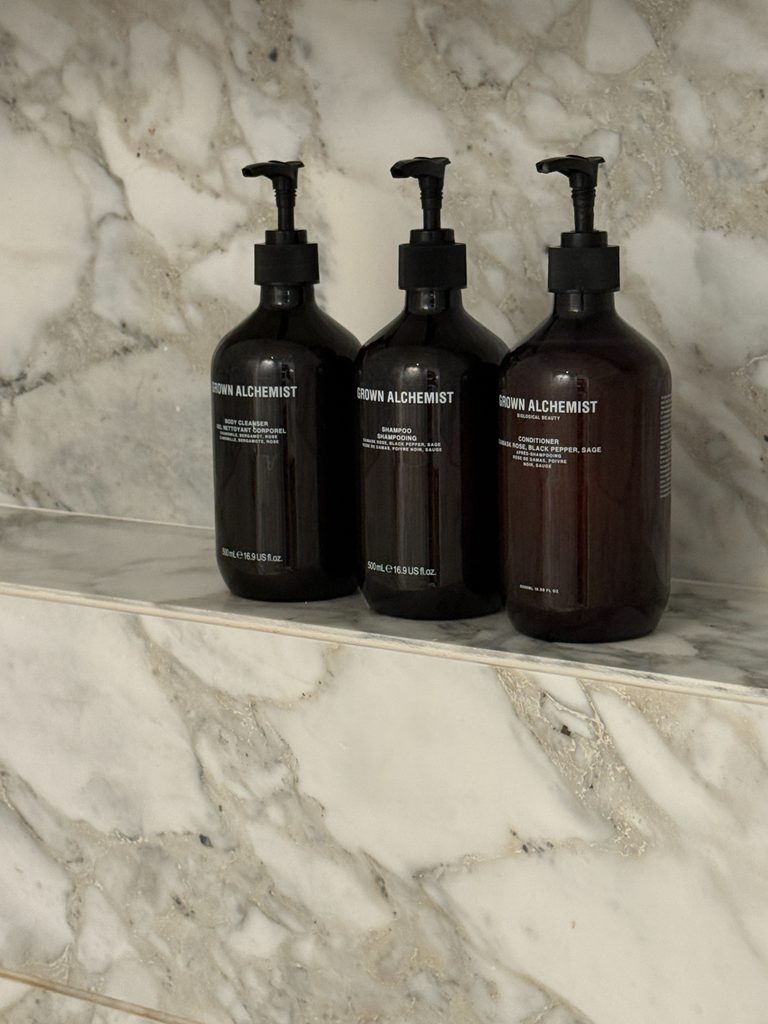
We stayed for two nights in Borgiona, a suite in the Garden Annex that takes its name from one of Umbria’s old olive varieties. It is on the upper ground floor. Yet the hill drops away so steeply that from the window it feels like a high first floor, with a wonderful view over the valley to Lake Trasimeno. The room is spacious, with a high beamed ceiling and a wall of bare stone behind a king-size bed. There is a bouclé armchair, a deep sofa, an antique desk beneath an oil painting of Panicale, and brass lamps that give a soft, golden light in the evening. The bathroom is modern, finished in veined marble and stocked with Grown Alchemist products. I particularly liked the amount of wardrobe space, because being able to put everything away, and not live out of a suitcase, is a luxury.
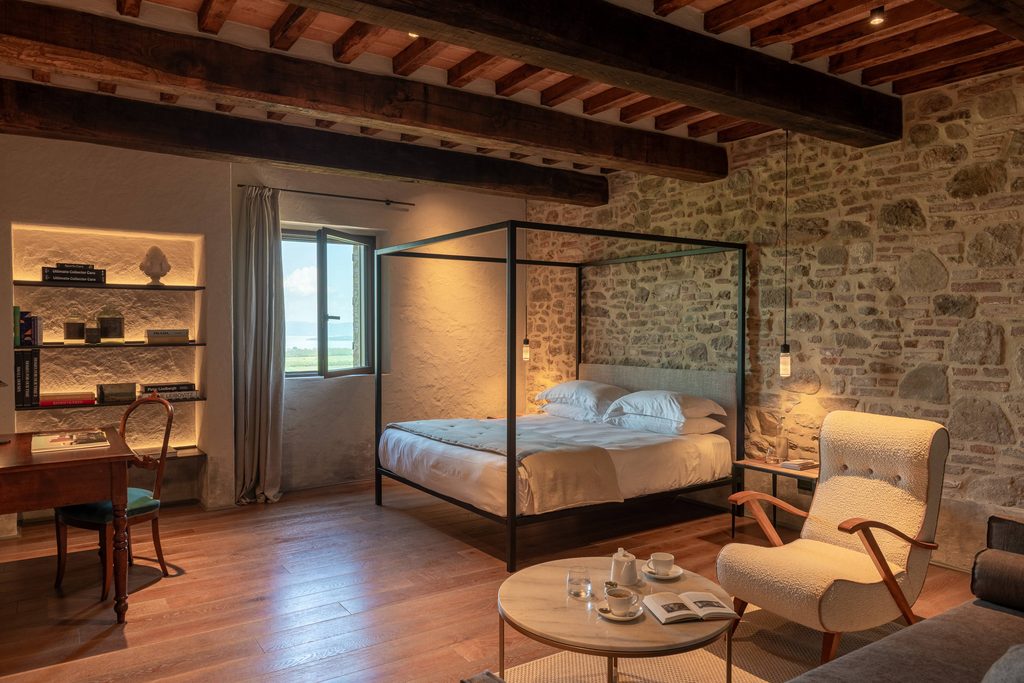
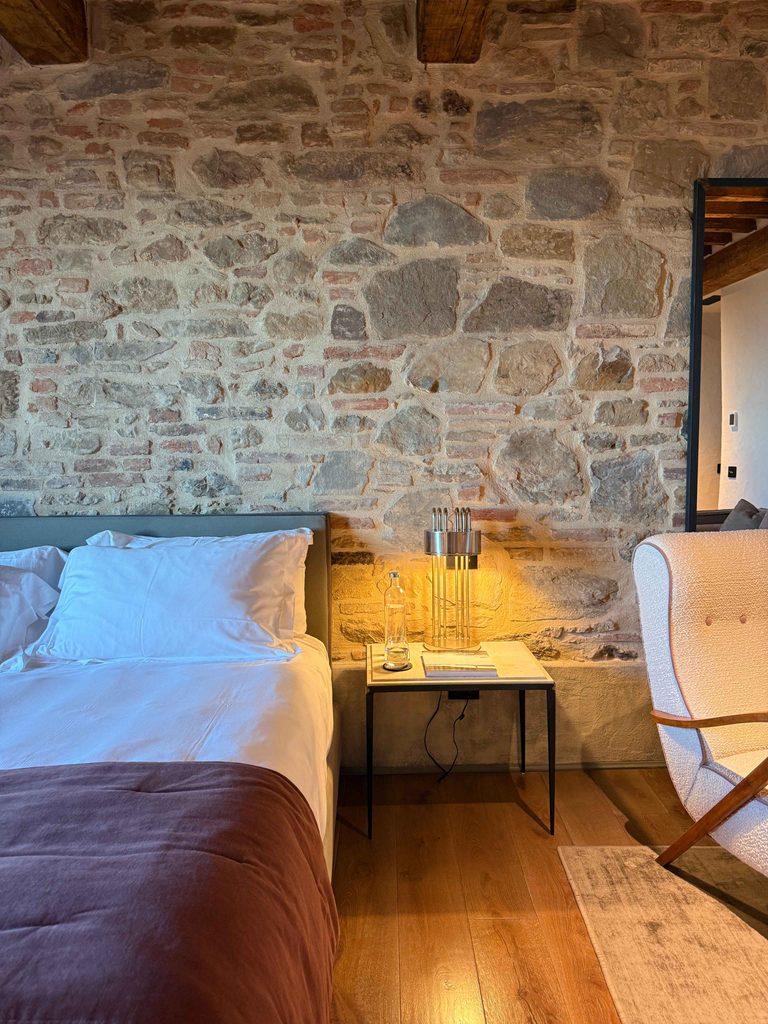
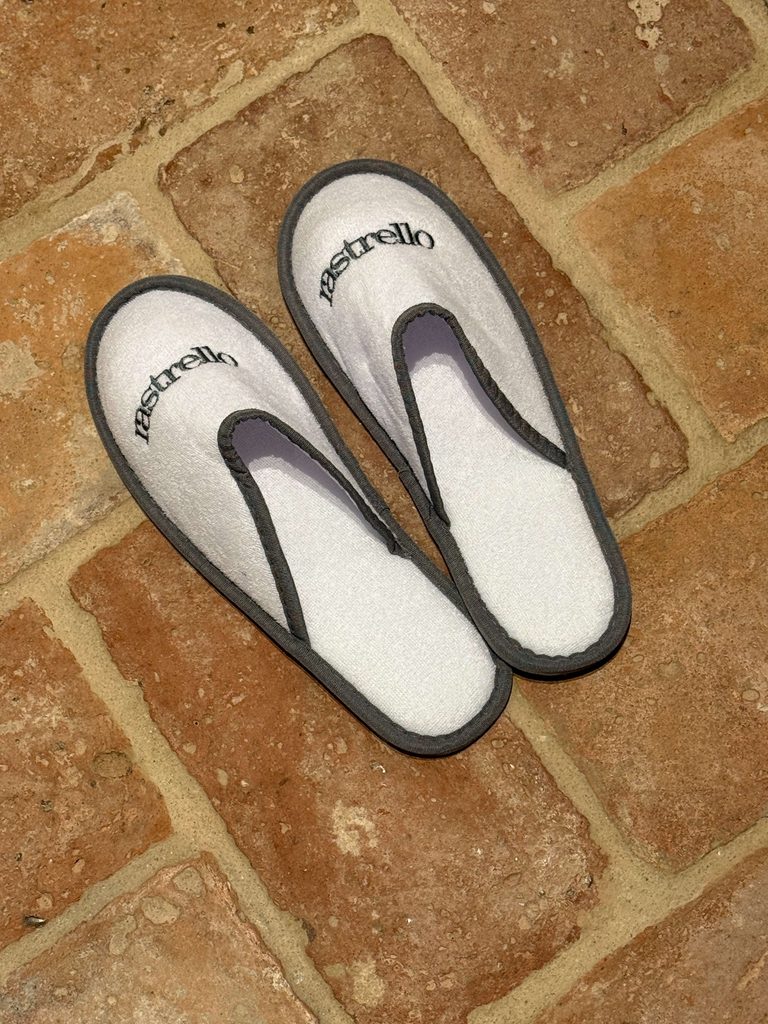
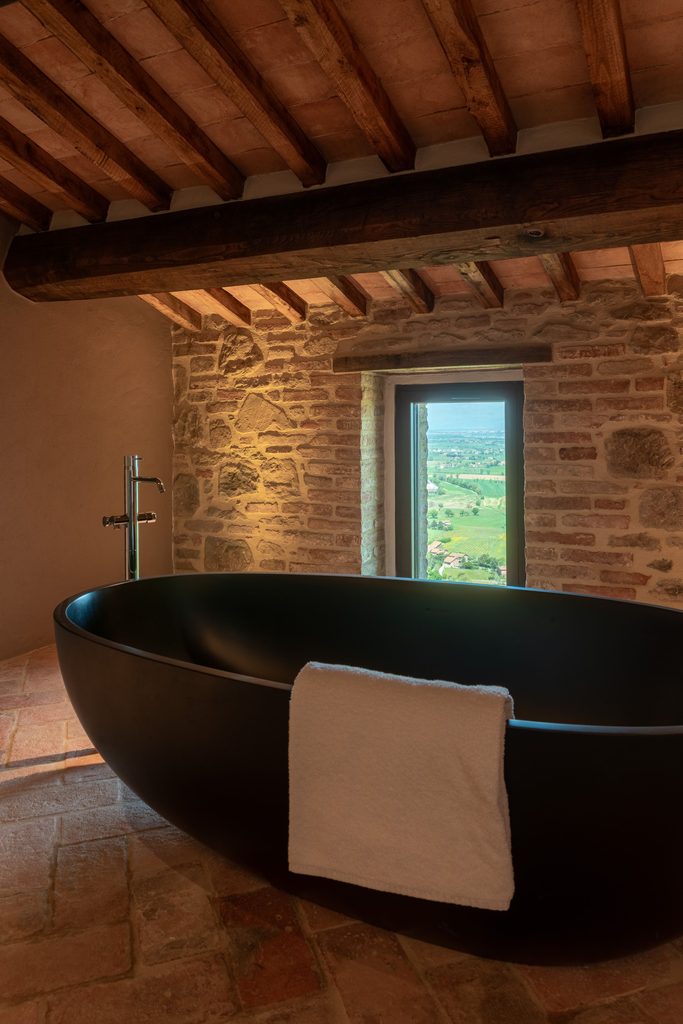
The window is modest, as the restoration has respected the original openings, and so the room can feel a little dim during the day. It doesn’t really matter as one is out exploring, and the lighting has been well planned for the evening. I did miss having a coffee machine in the room though. On both mornings I put on my dressing gown and slippers and walked to the guest lounge to make an espresso. This feels like being a guest in someone’s house, but I would have enjoyed my first espresso in bed. The minibar, on the other hand, is full of tempting things.
In the Garden Annex is a suite with a balcony facing the countryside, the lake and the village rooftops.
The Lounge and the Garden
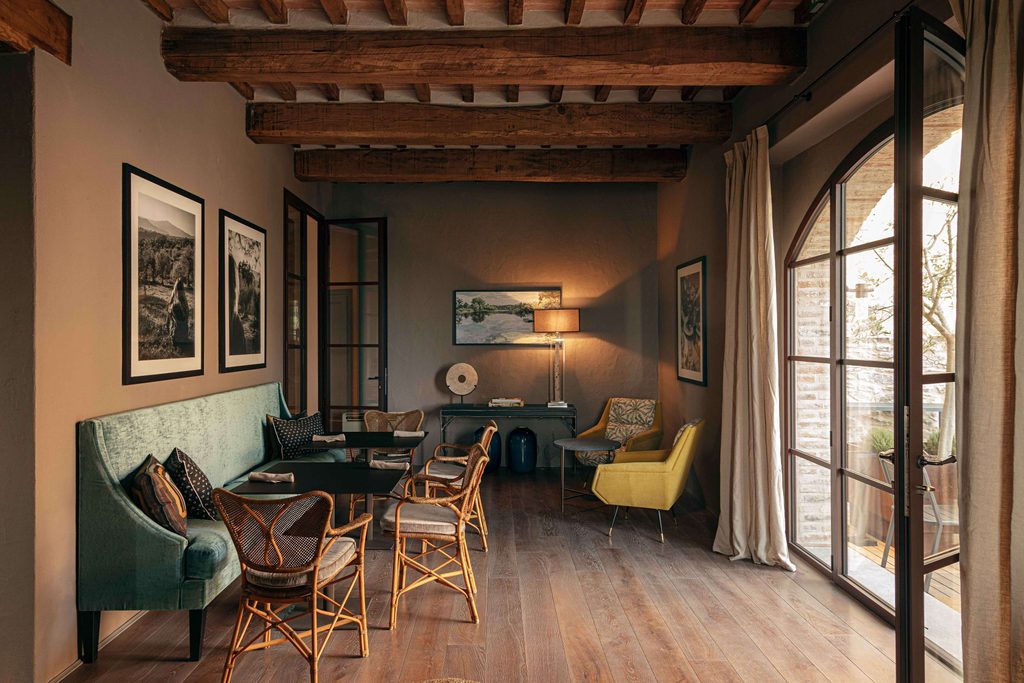
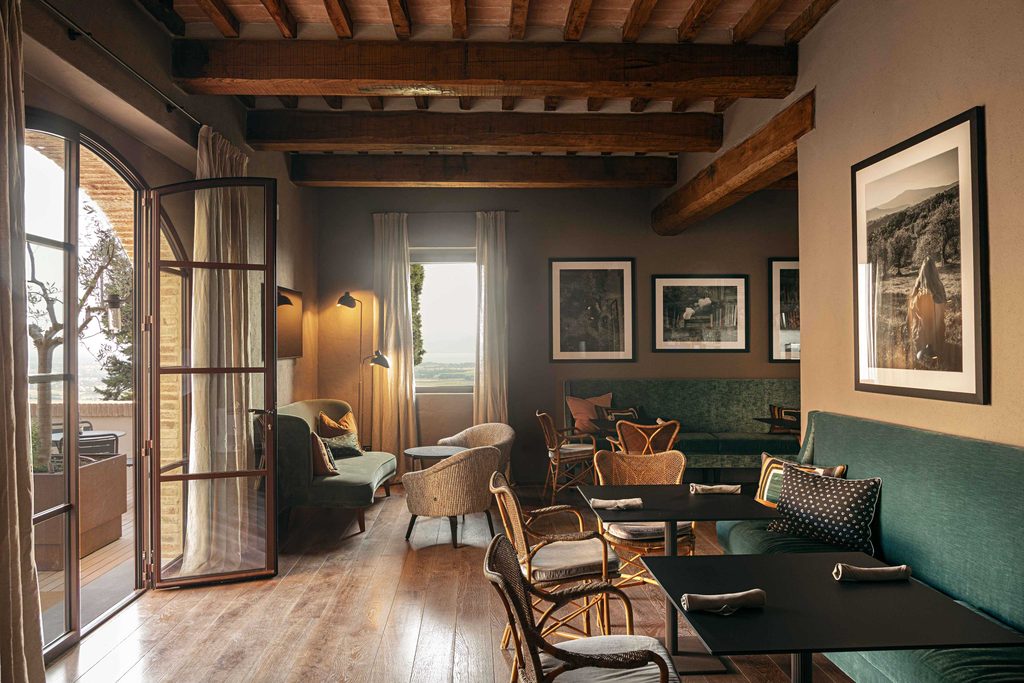
Each house has its own guest lounge, and ours had a wall of painted cabinetry and marble shelves. There was a professional coffee machine, a wine fridge and a tap that pours chilled, sparkling or almost boiling filtered water for tea. There are velvet banquettes, rattan chairs and deep armchairs, the perfect place to eat a snack or browse the collection of thick coffee table books on Italian style, travel and design.
In the late afternoon, guests can help themselves to an aperitivo of house wine, craft beer and soft drinks. The drinks are generous, although the food was limited to a few little muffins.
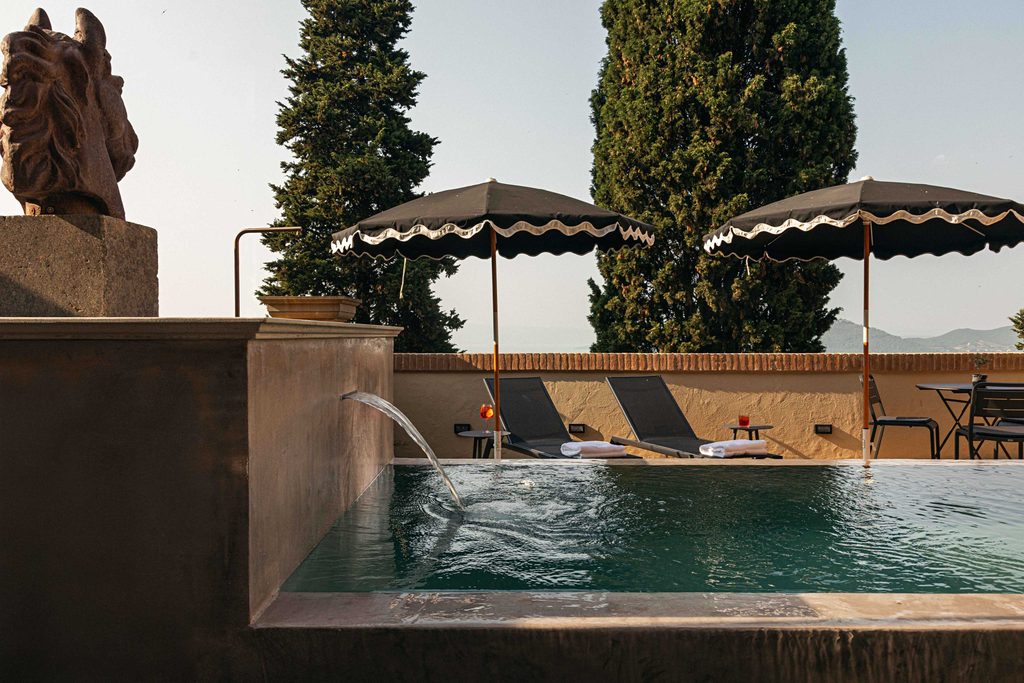
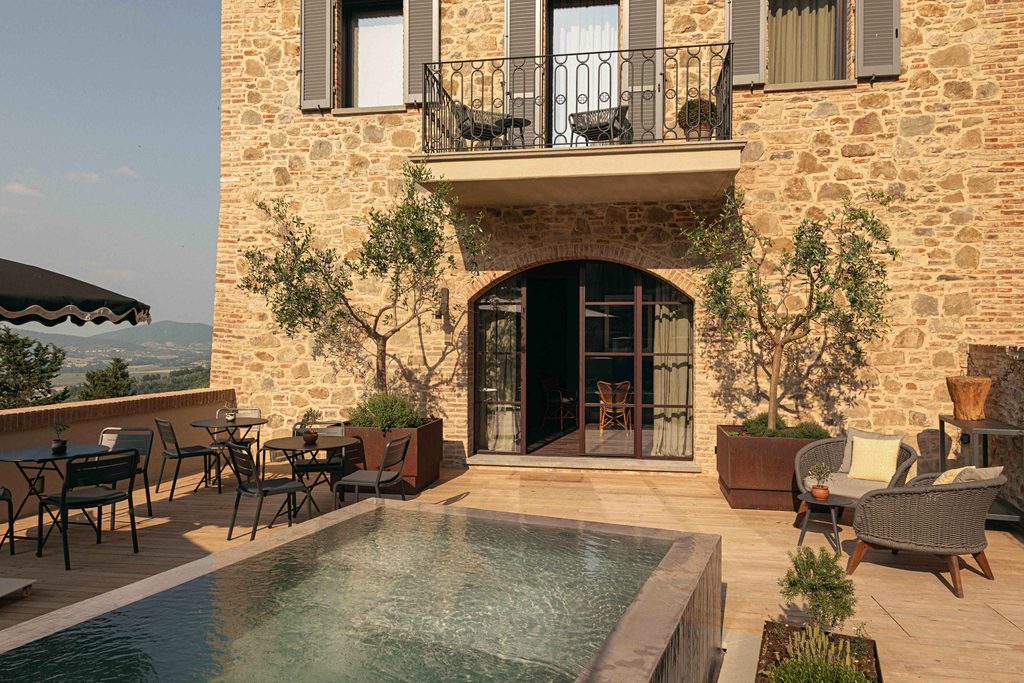
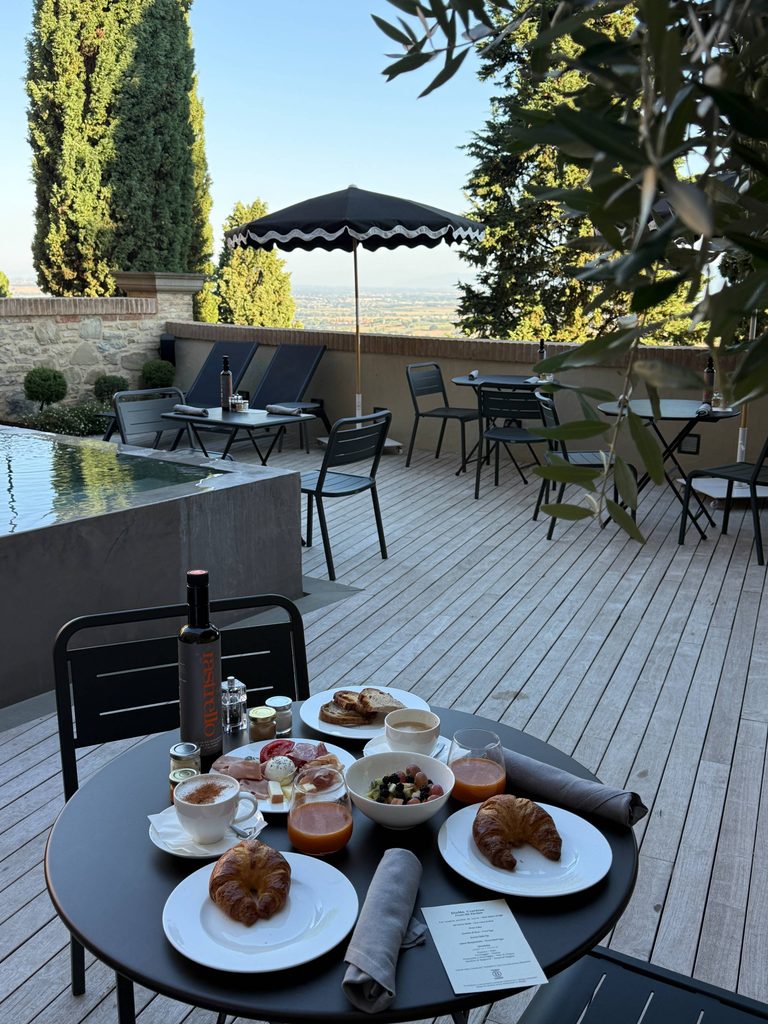
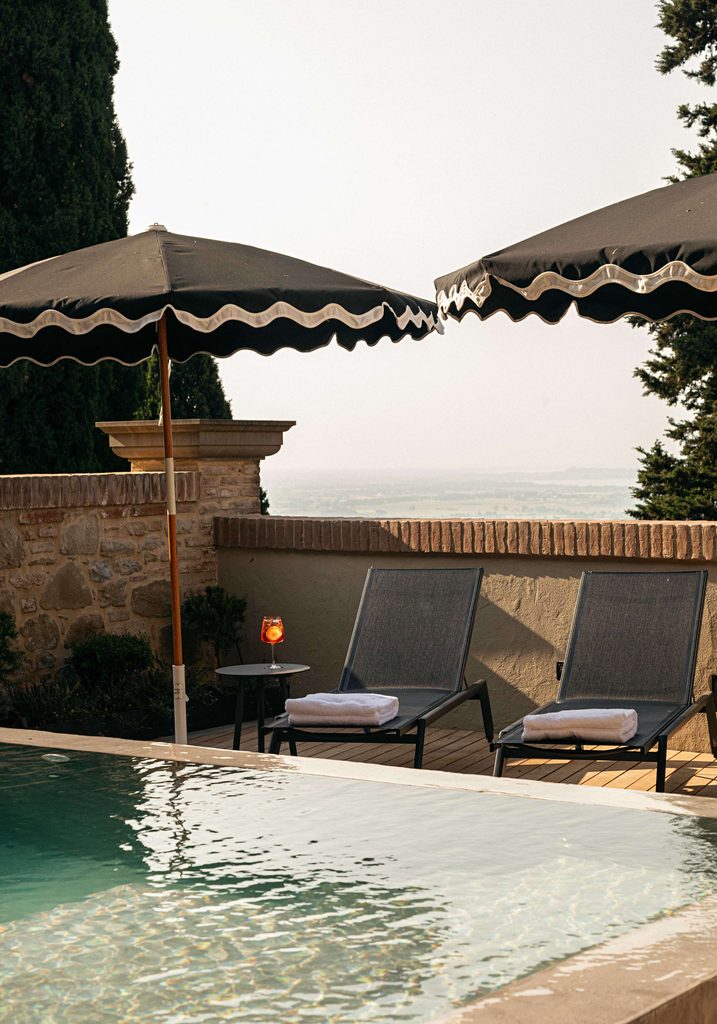
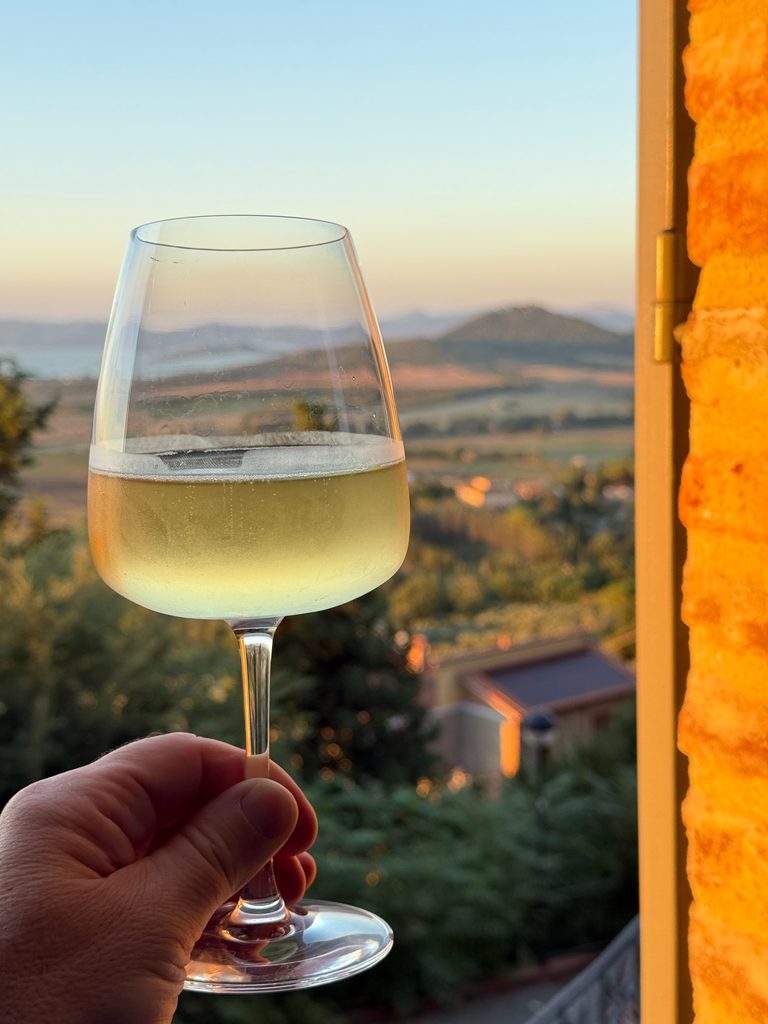
A glass door leads from the lounge to the guests’ own garden, a deck of silvered timber with black parasols trimmed in white, and a pair of sun loungers. In the centre is a small plunge pool, made for cooling off, and it was popular with the younger guests. Tall cypress trees frame the quintessential Umbrian view of rolling fields and olive groves, leading down to the lake. At golden hour, with a glass of cold white wine, it’s a dreamy place to be.
The Garden Annex also has a small sauna room on the lower level, which guests reserve by the hour for private use, and a quiet meditation room where massages and facials are given using the family’s olive oil.
Cucina & Giardino
The hotel’s restaurant, Cucina & Giardino, is open to the public. In the warmer months meals are served on the gravel terrace between the two houses, reached by old stone steps from the lower lane or through an iron gate from the alley above. Lunch is served here in season, and dinner each day, under large cream parasols and strings of festoon lights, with glimpses of the lake through the cypress trees. In the cooler months, the restaurant moves indoors to a brick-vaulted room on the lower ground floor with its floor-to-ceiling windows to the view.
Our September evening here was a joy. The sky over the lake warmed as the sun set and then turned to a gentle pink before nightfall. The menu, by chef Nicola Fanfano, draws on the hotel’s own organic farm a few kilometres away. Dishes include Trasimeno beans, handmade pasta and a chocolate brownie served with olive oil ice cream. The wine list is a pleasure too, sharing the distance of each winery from your table, beginning at one kilometre.
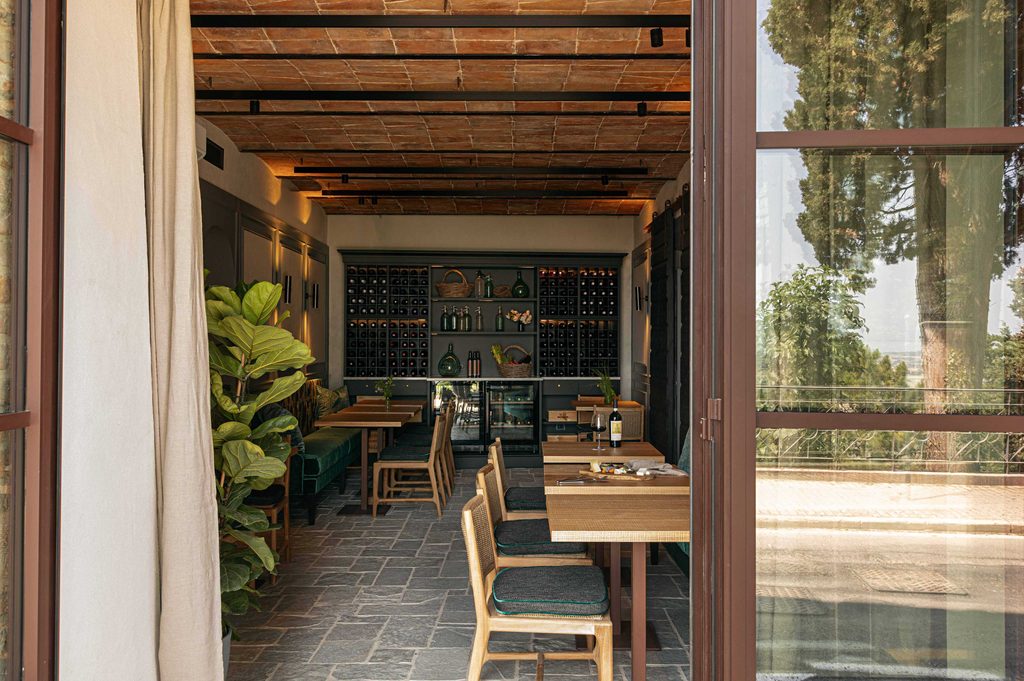
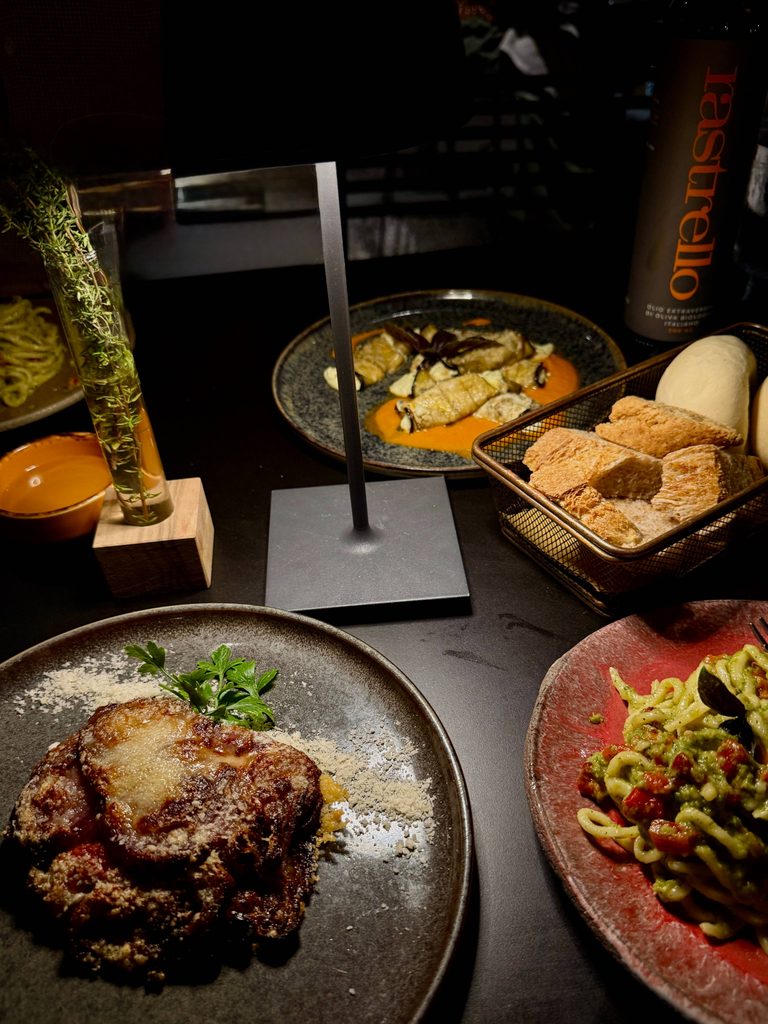
I would describe the food as simple, comforting and seasonal. Our waitress urged us to try the onion parmigiana, made with red Cannara onions grown on the farm. She was right. It was the dish of the night. The chunky homemade Parmesan sticks that came with the bread were delicious too. We also shared aubergine cannelloni filled with ricotta, and spaghetti alla chitarra with courgette pesto and roasted peppers.
The Breakfast
Breakfast is laid out in the lounge by two friendly women from the village, who also cook eggs to order. It is a simple spread with croissants, bread, jams and cakes as well as cheeses, cured meats, and fresh juice. The best thing was the fruit salad, with tiny wild blackberries, aromatic peaches, grapes and apples. You make your own coffee, collect your cutlery wrapped in a linen napkin, and carry your plate out to a table on the deck beside the pool.
The Team
That informality runs through the whole stay. This is a family hotel, and the team is young and friendly, offering relaxed and natural service, without the polish and anticipation of a grand hotel. Nobody contacted us before arrival to ask about our plans or preferences, which might be a positive addition to the experience.
Exploring
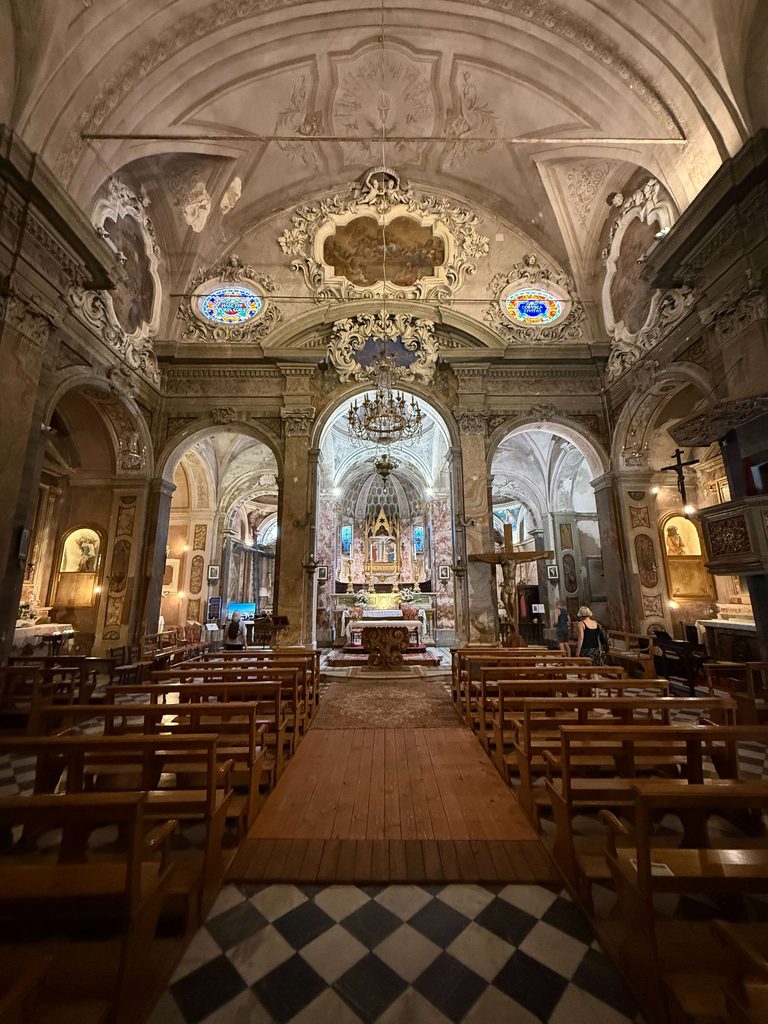
The village has a tiny period theatre, the Teatro Cesare Caporali. So ask the front desk about tours, as it can be visited by arrangement. The Collegiata di San Michele Arcangelo is the main church. Take a euro with you, so you can switch on the lights to showcase the frescoes. Beyond the walls, Rastrello makes an excellent base for a road trip. Assisi, which I had always wanted to see, is an easy drive. So too are Perugia and Orvieto, with its extraordinary cathedral. Then there is the lake, and the countryside to enjoy. And the seasonal food too, which in autumn means truffles and the grape harvest.
Good to Know
I imagine most guests will arrive as we did, in a hire car, and luckily the hotel has parking. You can pull up at a door on the lower lane, Viale Guglielmo Marconi, where the team will be happy to take your bags. There are a few parking spaces along the hotel wall. If they are all taken, I was told that a member of the team will valet park your car in the village car park
Final Thought
Rastrello is a hotel for travellers who value style and a sense of place rather than formal service. It is beautifully designed, well located and immerses you in the life of an authentic Umbrian village.
The Luxury Editor stayed as a guest of Rastrello.