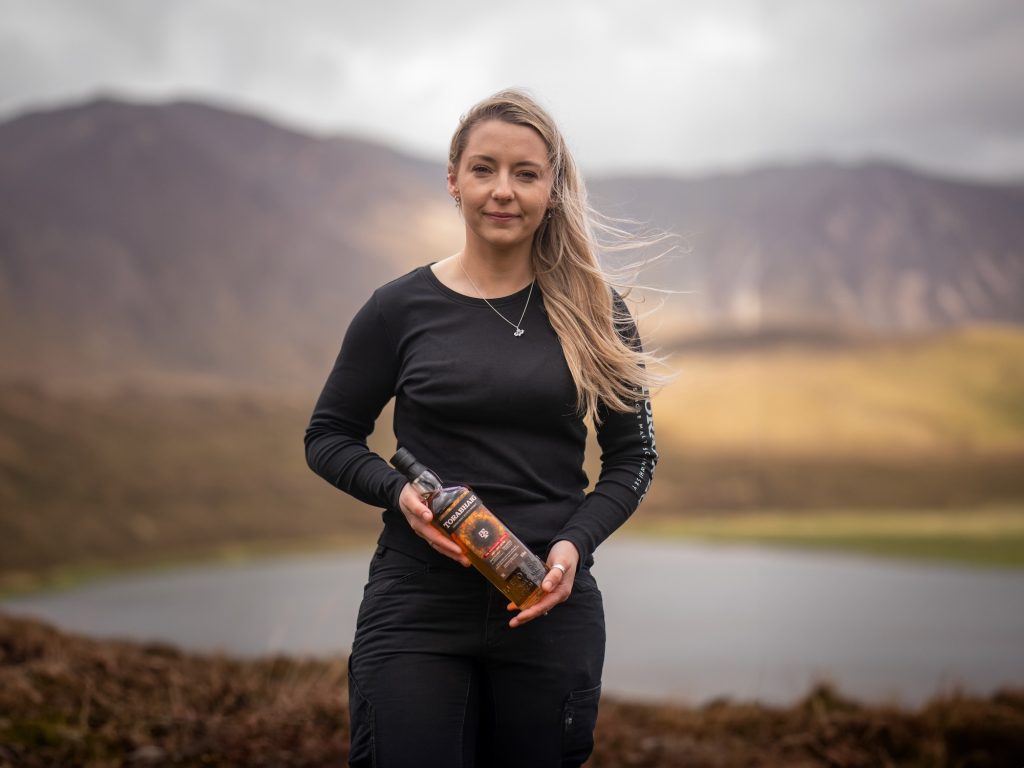
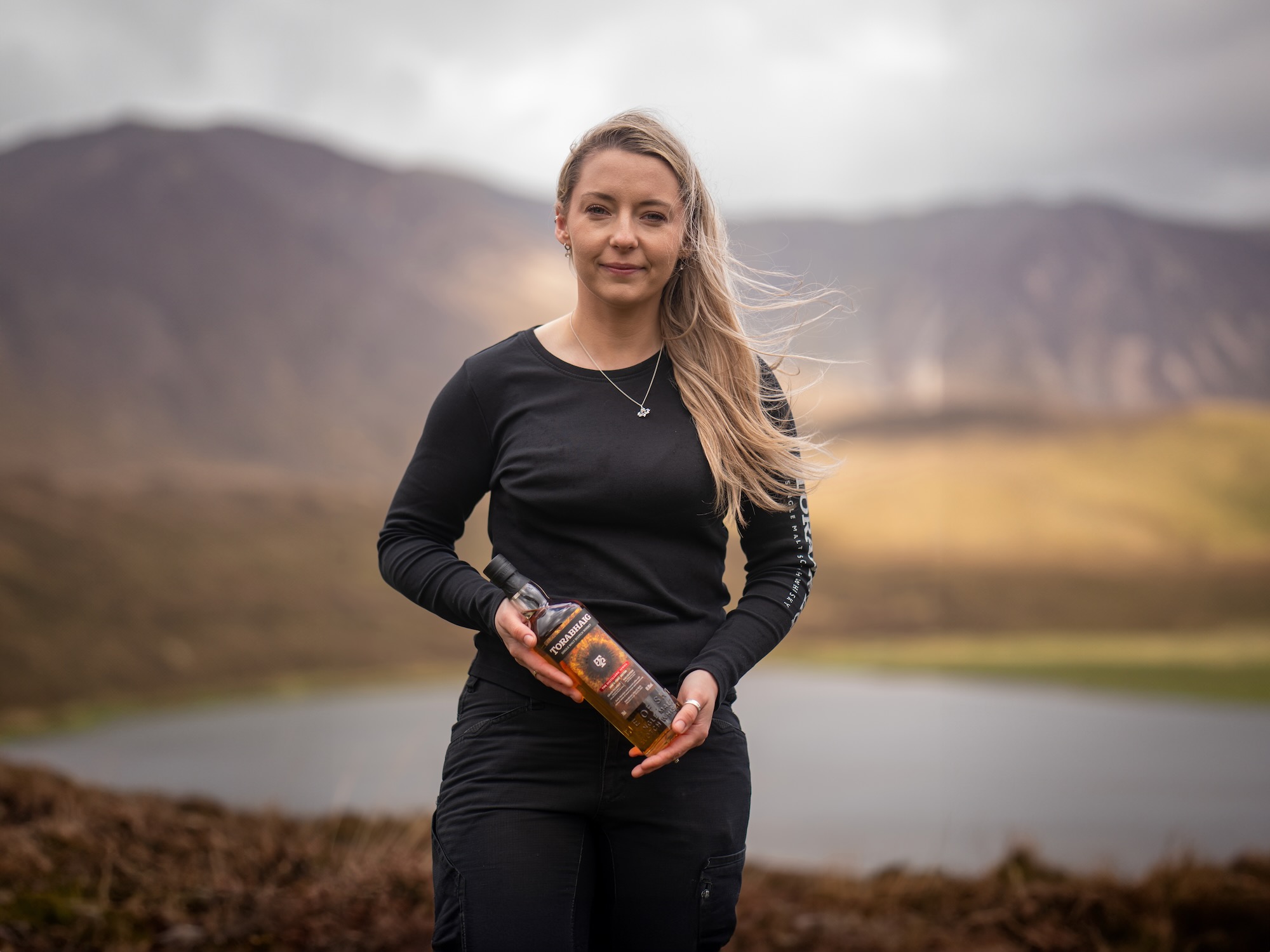
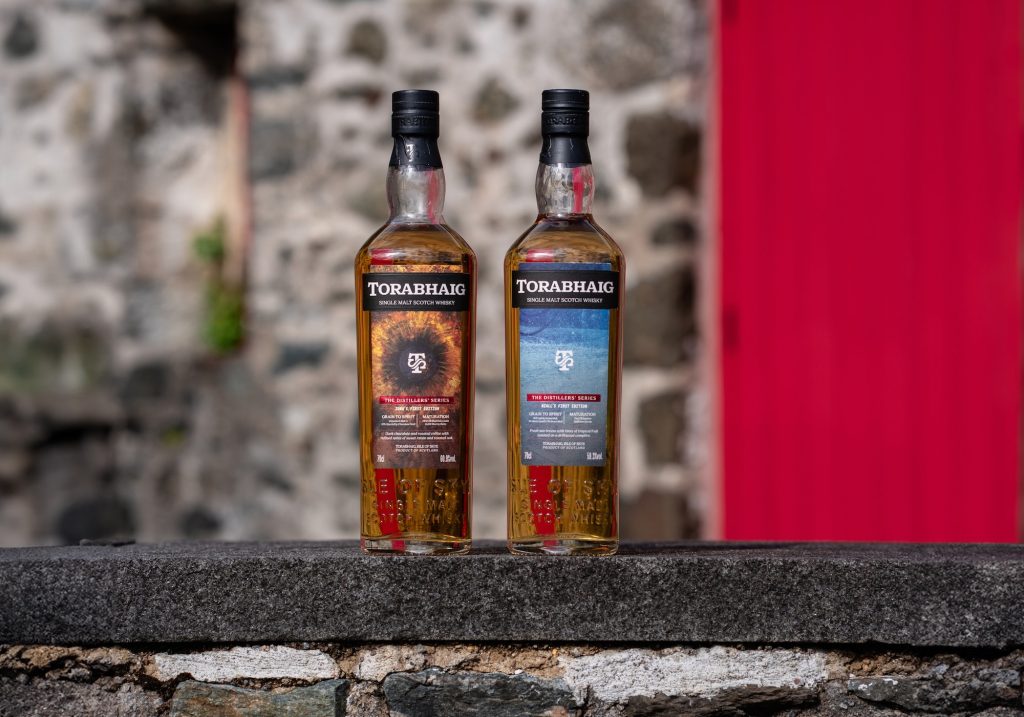
Torabhaig, the Isle of Skye single malt distillery, recently launched The Distillers’ Series, handing its own stills over to individual distillers for a month at a time, with no brief and no house style to fall back on, just their own idea of what a whisky should be. First up was Iona Macphie, part of the team of nine local distillers Torabhaig trained from scratch when it became the first new distillery on Skye in 190 years. She joined at 21 and distilled her own whisky at 23, making her the youngest distiller to go through the process. Her expression is built around chocolate malt, a grain she loved before she’d ever worked with it, and turned into a whisky rich enough that the wash ran black as stout. Here we speak to Iona about learning the craft on Skye, what the job actually involves, and how her whisky came together.
You joined Torabhaig at 21, as part of a team of local distillers trained from scratch rather than brought in from elsewhere in the industry. How did you come to whisky in the first place, and was it ever something you’d pictured yourself doing?
My interest in whisky really started when I got a job as a seasonal tour guide at Talisker. That was the spark for me. I fell in love with the process and realised my dream job was to actually be a distiller. Back then, it felt like just a dream. I honestly didn’t think it would ever become a reality for me. When Torabhaig came along looking to train local folk from scratch, I jumped at the chance. I could hardly believe it when I actually got the job. Getting that opportunity at 21 completely changed things for me. Looking back now, nearly ten years on, it’s wild to think how far I’ve come from where I started. I’ve learned the craft from the ground up and having the opportunity to create my own whisky has been the best learning experience I could have asked for.
Torabhaig took a deliberate decision to train its own people on Skye rather than hire experienced distillers. What was that training like, learning the craft from the ground up, and who did you learn most from?
Learning from the ground up means you learn every stage properly, from milling and mashing through fermentation and distillation, with nothing taken for granted. We’re a team of nine local distillers and we all learn from each other, but our whisky maker Neil MacLeod Mathieson as well as our mentor Kenny Gray has been a huge influence. Neil presented me with the opportunity to take my learning further and understand the science behind whisky through the Institute of Brewing and Distilling. Kenny supported me through the courses and was very patient with me when sharing his knowledge. Because none of us came in with old habits, there’s a real openness to asking “why do we do it this way?”, which I think is exactly what made something like The Distillers’ Series possible.
For readers who only ever see the finished bottle, what does a distiller’s day at Torabhaig actually look like?
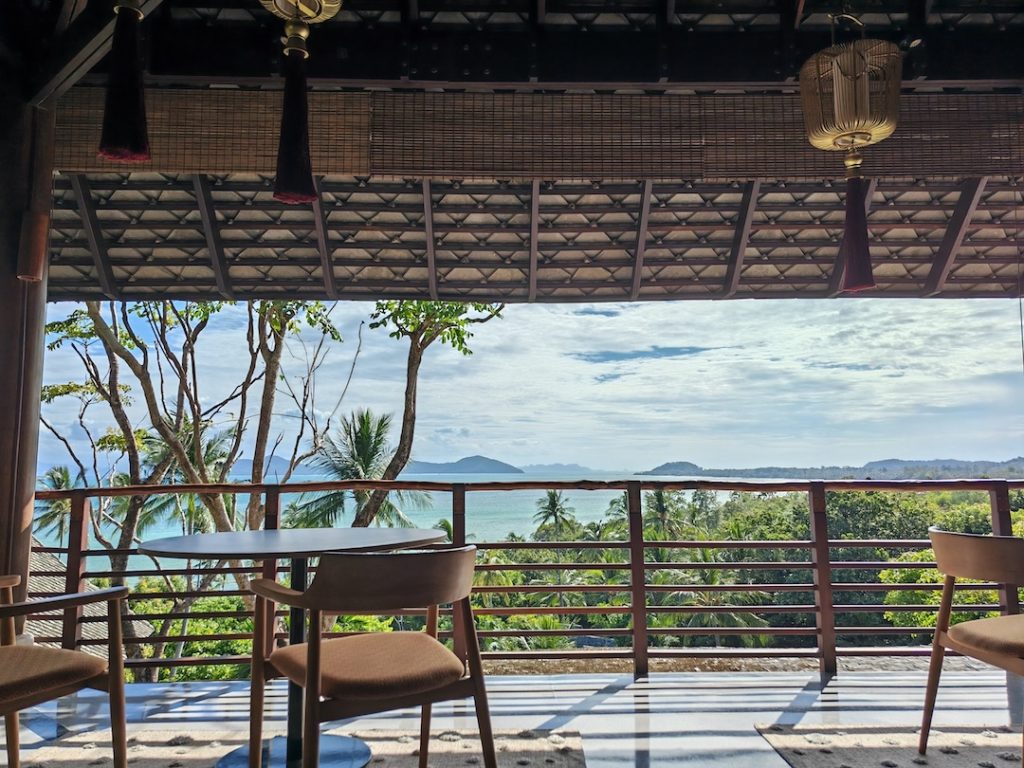
It’s very hands-on. We work various shifts, including night shifts, so I could, for example, start at 6 am-2 pm, 2 pm-10 pm or 10 pm-6 am. A typical shift includes checking on the fermentations, running the stills, watching and nosing the spirit to make the cut at the right moment, and keeping detailed records of everything. There’s cleaning, there’s heavy lifting, and there’s a lot of tasting and smelling. Then you step outside, and you’re looking out over the Sound of Sleat – it’s hard to beat as an office.
Two years into the job, you were handed the stills for a month with complete freedom over malt, yeast, fermentation and maturation. When that came up, where did your mind go first?
Straight to chocolate! I adore chocolate, so I always knew I wanted to incorporate that in some way. Once that was the starting point, everything else – the yeast, the fermentation, how I ran the stills – was about getting the most out of that richness. It was a bit daunting being trusted with that much freedom at 23, but mostly it was just really exciting.
Your whisky is built around chocolate malt, a speciality grain you first came across at Crisp Maltings in Portgordon and, by your own admission, liked enough to eat by the handful. At what point did that turn from a personal taste into the whole idea for a whisky?
Pretty much the moment I tasted it. On a visit to Crisp Maltings in Portgordon in early 2018, I tried chocolate malt straight from the bag and kept going back for more – it’s rich, a little bitter, almost like cocoa nibs. So when The Distillers’ Series came along, it was the obvious place to start. I wanted to see whether that flavour I loved eating could carry all the way through into a single malt.
Chocolate malt isn’t a typical starting point for single malt, and it behaves very differently from the Concerto malt you’d normally be working with. What was it actually like to distill with?
It was a learning curve! I used 10% chocolate malt alongside a Concerto base, and it turned the wash black as stout – which is quite something to see in the washbacks. I went for a long, warm fermentation (90–120 hours, up to 30–34°C) with Distillamax MG yeast to build depth. On the stills, I could taste the chocolate character coming through after just 15 minutes, so I adjusted my timings – a longer foreshots run and a long spirit run of around three and a half hours, with a low cut point at 64% – to capture the deepest, richest flavours.
The finished whisky is entirely unpeated and leads with cocoa and dark chocolate, a long way from Smoke with Taste. Did that ever feel like a risk, or did the series give you permission not to worry about it?
That’s really the whole point of the series. Smoke with Taste is what Torabhaig is known for, and I love it, but The Distillers’ Series is about each of us following our own curiosity. Same stills, same island, same people – just a different story. It’s still very much a Torabhaig whisky; it just shows another side of what the distillery can do.
I have to admit, I was nervous about how it would mature at first. I’d put all the new-make into first-fill bourbon casks, but when I sampled the spirit after about a year in wood, I realised I needed to make a tweak. I decided to re-cask roughly half of it into 4th-fill sherry butts. I wanted a spirit with less heavy wood influence to make sure those rich, chocolatey notes I fell in love with in the new-make were preserved. Taking that risk paid off, and it was brilliant seeing how those two cask types balanced out in the end.
What’s the flavour profile like, and how would you recommend drinking it?
On the nose, it’s soft and inviting – vanilla, creamy cocoa butter, dark chocolate and malted cereal, with a lift of citrus and a light grassy freshness. The palate is warming, with clove and a hint of peppermint, then caramel, toffee, redcurrant and raisin, with a thread of ginger running through to a long, spicy finish of peppercorn and cinnamon, softened by vanilla. It’s bottled at 60.9%, so I’d say try it neat first, then add a few drops of water and watch it open up – that’s when the chocolate really comes through.
You’re the youngest distiller to go through this process, and seven of your colleagues are still to have their turn. What would you tell whoever goes next?
Make the whisky you’d want to drink. Don’t try to second-guess what other people will expect – start with something you genuinely love and build everything around it. And taste constantly, because the spirit will tell you when to change course. Don’t be scared if something out of the ordinary happens such as your wash turning black!
Which three words best describe your whisky?
Rich, elegant, chocolatey.
And finally, what is your life motto, if you have one?
In the words of the great and late Dolly Parton, “You’ll never do a whole lot unless you’re brave enough to try.”