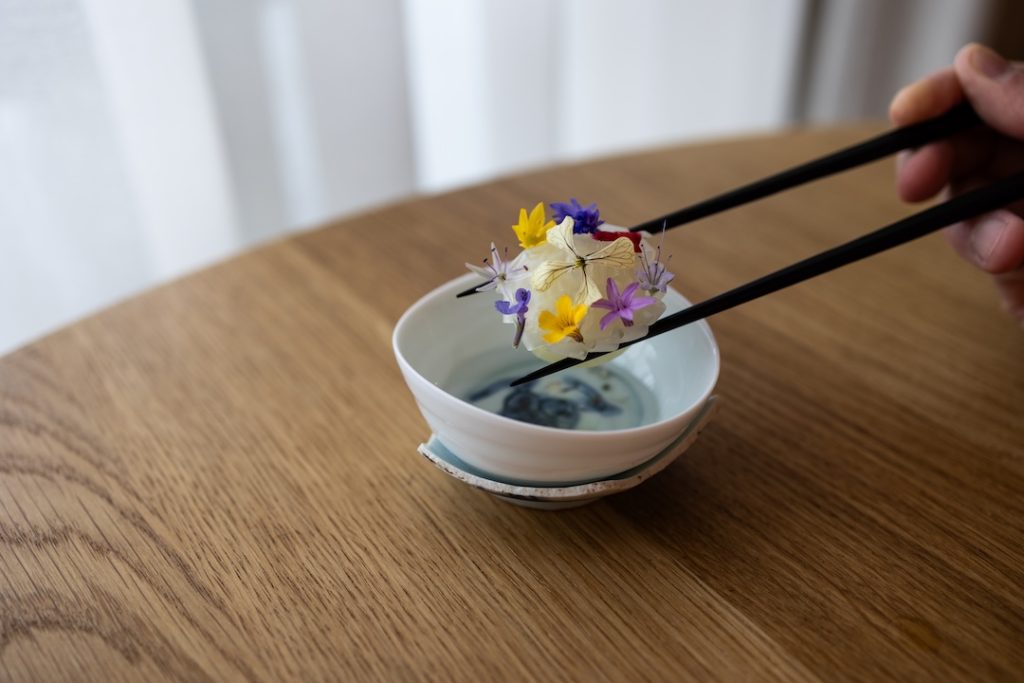
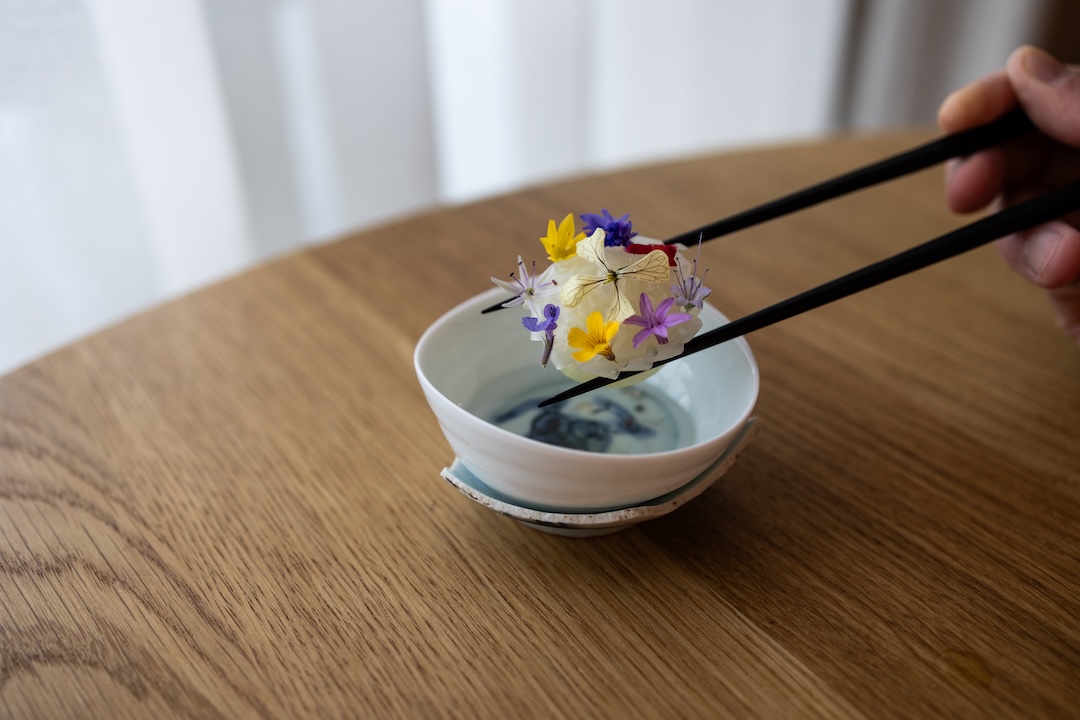
A third of the way through lunch at KOAN, the broth disappears from your bowl and something older is left behind. A dark fragment of porcelain sits at the bottom, older than anything else on the table. The bowl itself was made by a Korean artist named Lee Taxoo, who spent years travelling through China collecting broken ceramic pieces, some of them dating back to the Ming and Qing dynasties. Instead of restoring them, he built new porcelain on top of the old fragments, layering the new directly onto what was already broken. He called the series “Reborn.”
Kristian Baumann, KOAN’s chef patron, had already decided the white kimchi dish needed to exist a year and a half before the restaurant opened on this site. What he didn’t have was the vessel. He found the bowls in a Seoul gallery, at almost the exact moment he was closing his previous restaurant and starting something new. “It felt as though the sun, moon and stars had come together,” he told me. I believed him. Sitting there with the fragment in my hand, I understood why he needed that bowl and no other.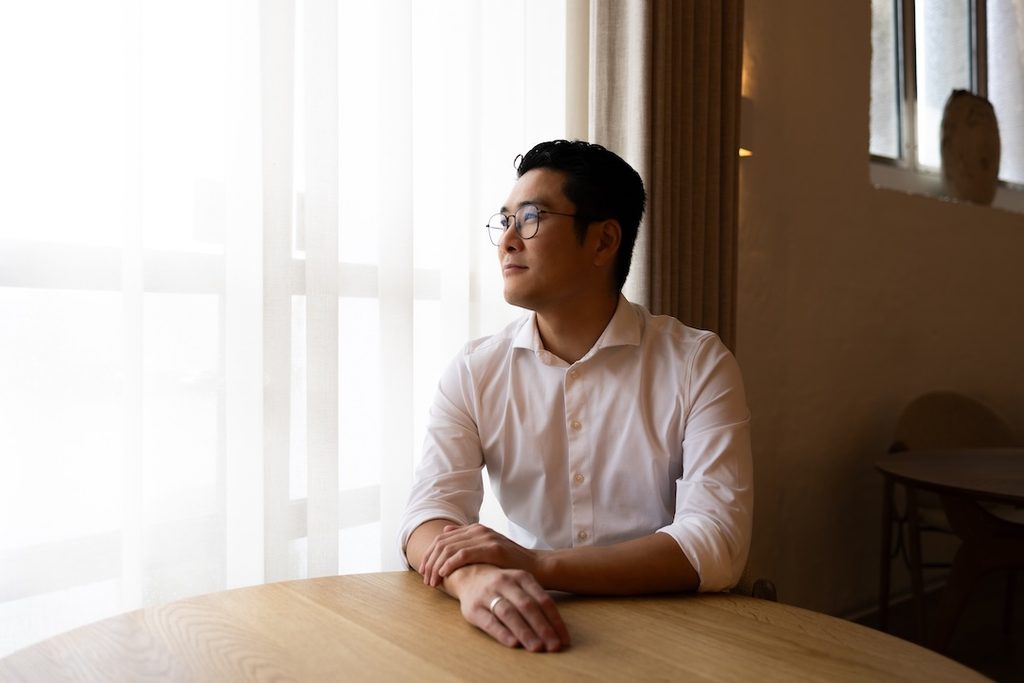
It would be easy to write about KOAN as a story of reconciliation; a chef born in Korea, raised in Denmark, finally bringing the two together on a plate. That story is true, and it’s told well elsewhere. It wasn’t what I kept thinking about on the flight home, though: a bowl that refuses to hide its own repair did, on a menu built almost entirely from things taken apart and put back together differently.
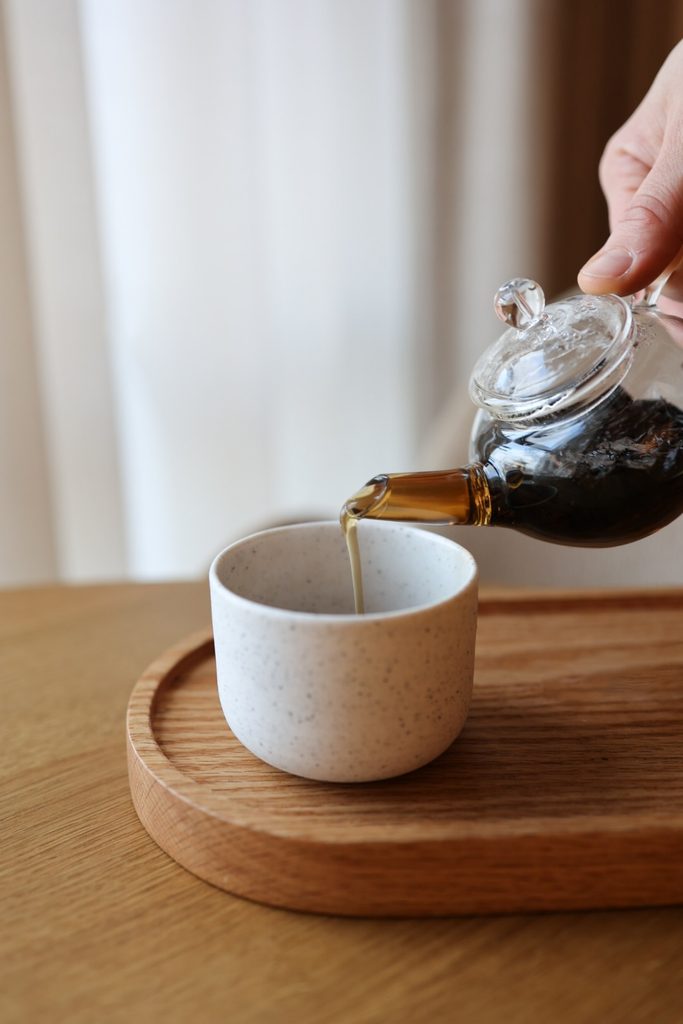
KOAN sits on Langeliniekaj, on Copenhagen’s harbour front, directly across from a memorial to the Jutlandia, the Danish hospital ship that carried doctors and nurses to Korea during the Korean War. Lunch opens with a spring mandoo pollock and cured pork fat, folded around raw shrimp from the north of Denmark, finger lime, wild rose and the first rhubarb of the season, eaten in one bite off the spoon. It’s followed by an oyster stewed in champagne sauce with gamtae, a seaweed Baumann uses for its faint truffle note, and then a lobster tail with kumquat and kalamansi that tastes brighter than anything I’d normally put lobster next to. There’s a course built entirely around the acorn, an ingredient barely used in European kitchens but deeply embedded in Korean ones, a delicate tartlet of acorn flour and acorn-starch gel, topped with fermented green strawberry and crisped kelp, served alongside a shiitake and cèpe tea. 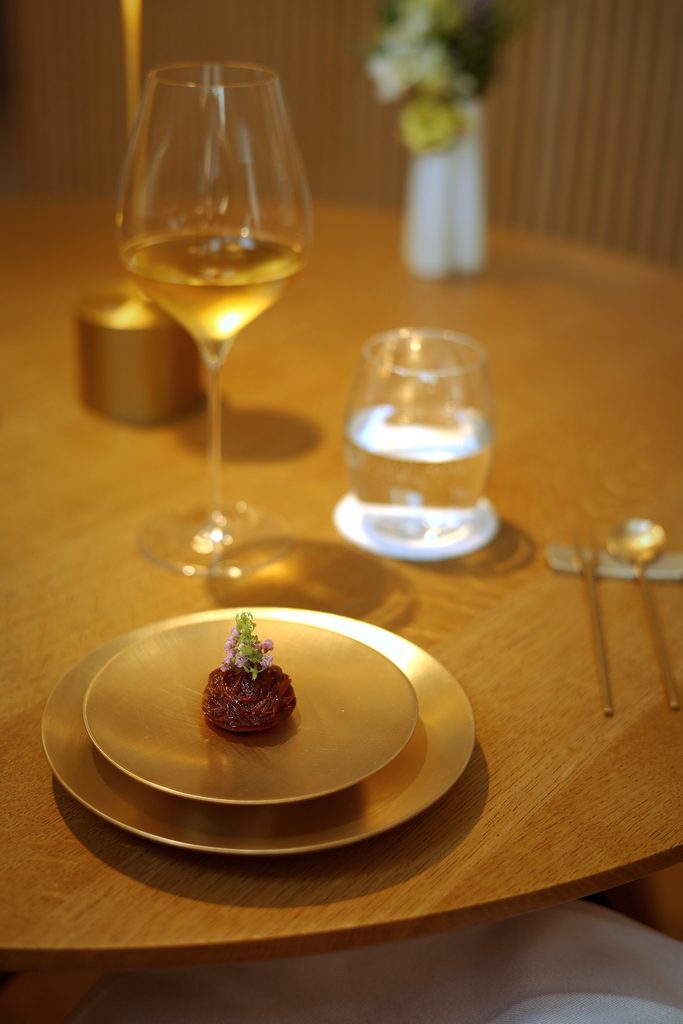
None of this was on paper in front of us. KOAN doesn’t hand you a menu until the meal is over, so every dish arrives as a surprise, revealed at the table rather than read off a card. I loved it more than I expected to, nothing to anticipate, nothing to compare against, just eating what’s put in front of you and trusting the kitchen completely.
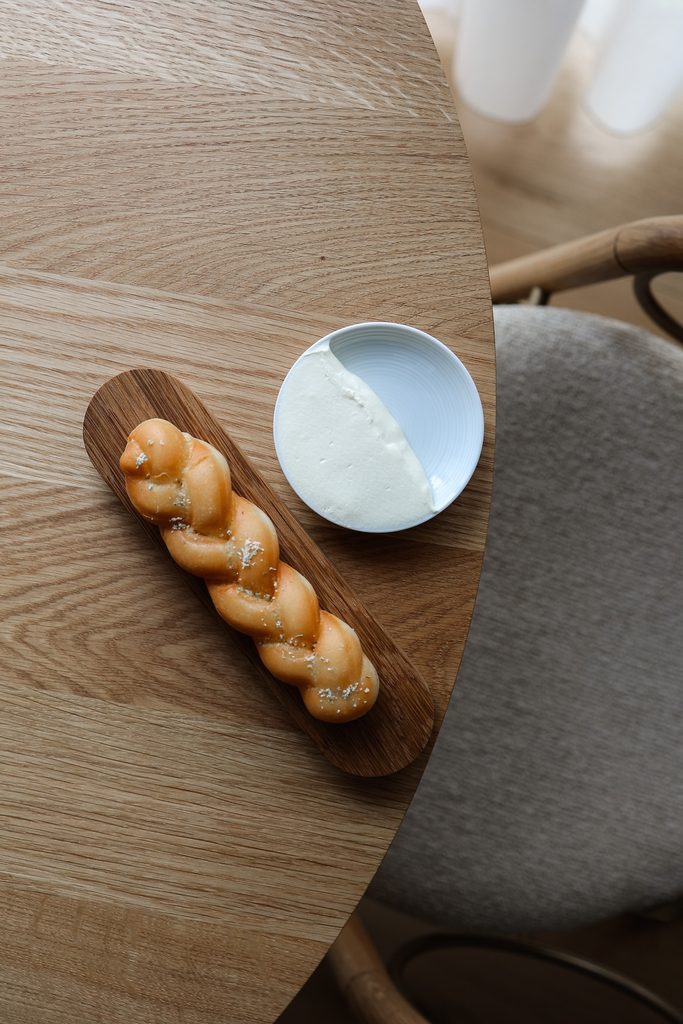
The kkwabaegi is a savoury version of a sweet Korean donut, served warm with sesame butter and honey infused with ginseng. Baumann told me it’s a memory of afternoons walking around Seoul with his wife, looking for something to eat between meals. The rice course arrives twice: once as gamasot rice, mixed at the table with a small selection of banchan, and again as nurungji, the crisp layer scraped from the bottom of the pot, traditionally turned into porridge, here paired with perilla seed and chicken skin. Even the tofu and caviar dish carries something unexpected underneath the obvious luxury: dried strawberries from a farm outside Copenhagen where Baumann worked as a child, picking fruit for a couple named Lisbeth and Torben. “The strawberries might not be the ingredient you would immediately expect alongside langoustine and caviar,” he said, “but that is exactly what I find interesting.” It’s a small thing. It’s also the whole restaurant in one sentence.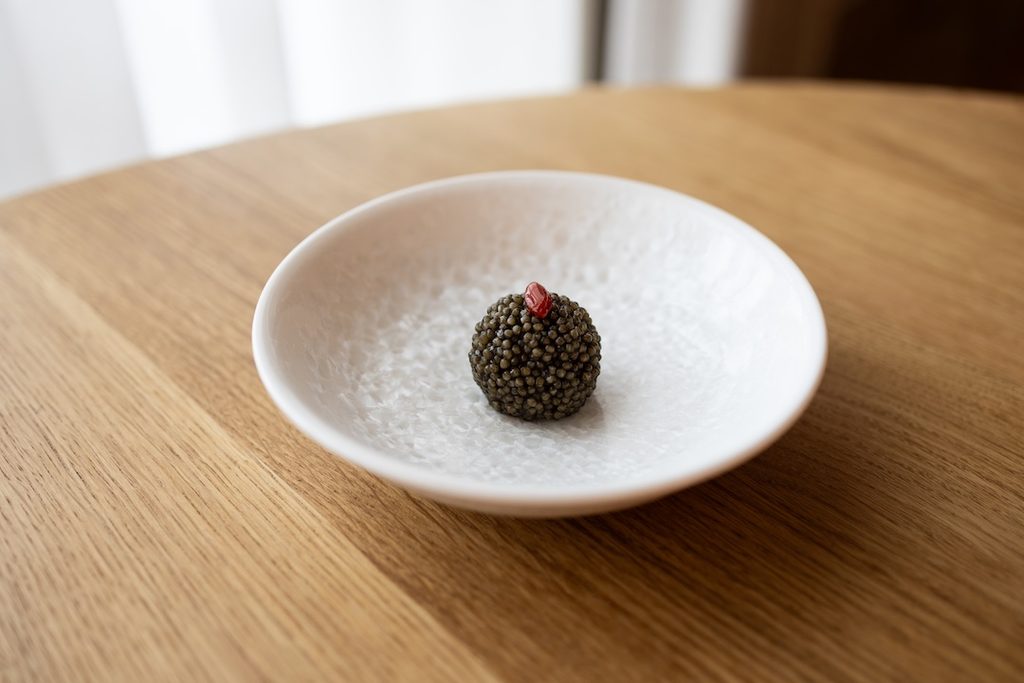
None of this would land the way it does without the room around it. KOAN is built almost entirely from warm ash wood, with carved lattice screens running the length of the walls, and so much daylight during the day that the room barely needs the lighting it’s built for come evening. The tables and chairs were designed by Hans Bølling and Nanna Ditzel and made locally in Denmark. Even the boxes the petit fours arrive in were built by the restaurant’s own cabinet maker, who made most of the wooden fittings in the building. I found myself mesmerised in between courses. 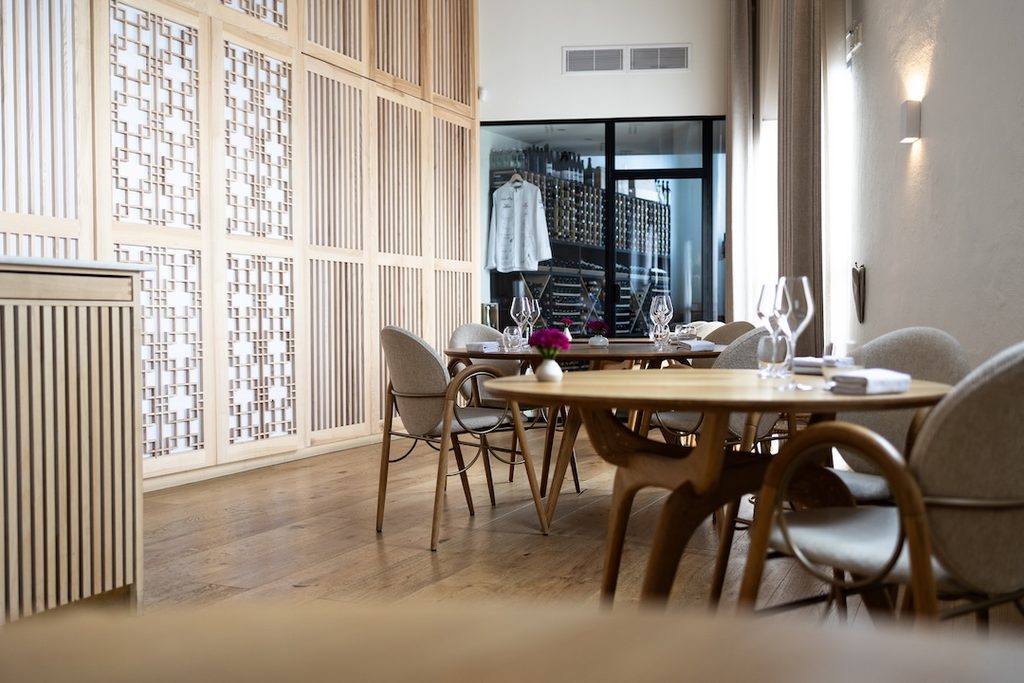
But what surprised me more than the design was the team. I’d expected precision. This is a two-star kitchen that earned both stars within ten weeks of opening its permanent site, and precision is exactly what I got. What I hadn’t expected was how warm the room felt while it was happening. The team plating at the pass were sharp and exact with every movement, and also clearly enjoying each other’s company, without ever letting that warmth slow anything down. I asked Baumann about it afterwards. “I always tell the team that they should be themselves,” he said. “I don’t want service to feel rehearsed or robotic. The guests should feel that there are real people looking after them.” He talks about the team shaping the menu too, tasting together, arguing over changes, dishes shifting because someone on the floor suggested something worth trying. “If someone suggests something that makes the food, the service or the restaurant better, I want to hear it – and I will act on it,” he said. It isn’t a top-down kitchen. It behaves like a restaurant built by a group of people who actually like working together, which is rarer than it should be.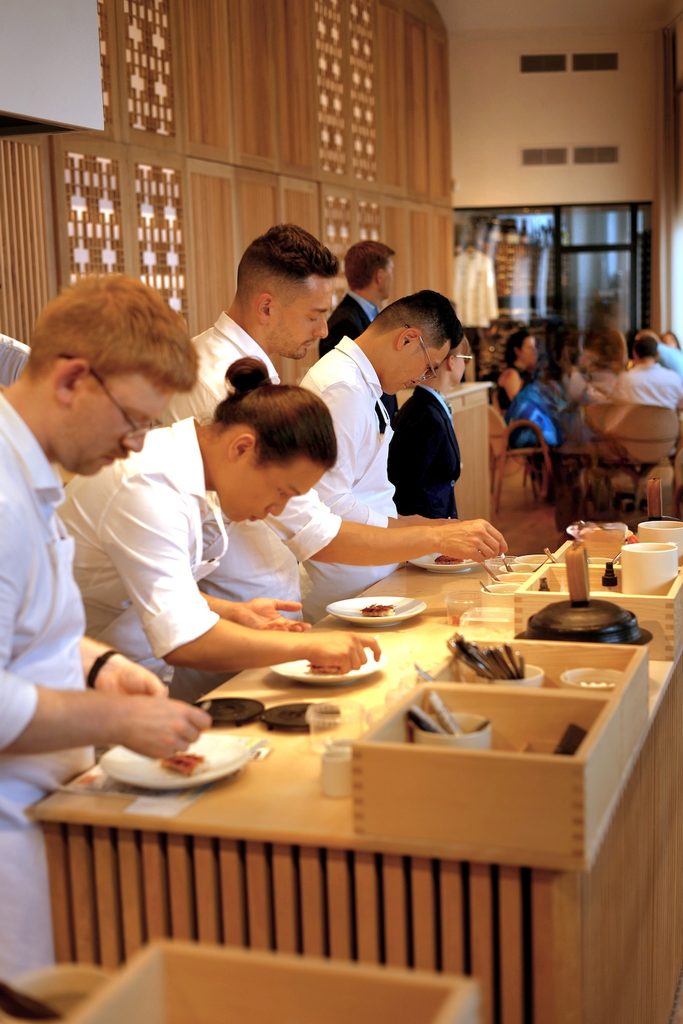
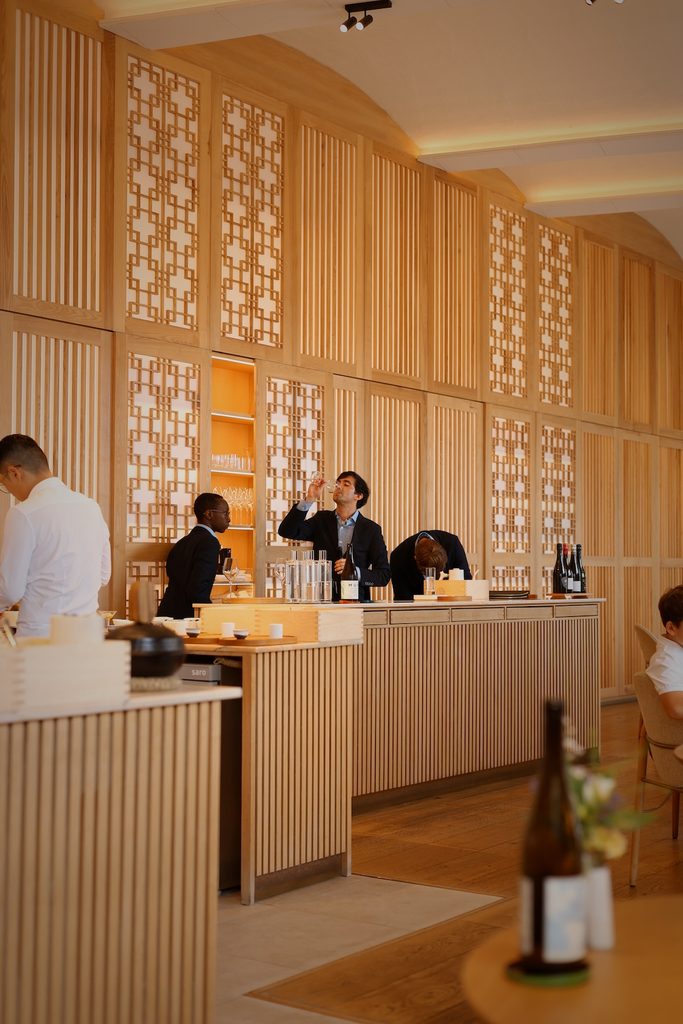
Some of the team have their own version of Baumann’s story, a few travelled to Korea together as research, eating through everything from Michelin-starred kitchens to temple food, discovering dishes as adults rather than inheriting them. Jeff Njoroge Njehu, our sommelier, arrived in Copenhagen by a longer route still, training and working across several countries before landing at KOAN. When I asked whether that showed up in how he thinks about pairing, he didn’t hesitate: “Experiencing different cultures and flavour preferences has helped me a lot throughout my career, and it’s also improved how I communicate with guests.” The soju pairing alone took real work to get right: an in-house cocktail built on Hwayo X Premium, fat-washed with brown butter, infused with jujube and omija berry, finished with a touch of sakura blossom vinegar. Nobody rushes a drink like that.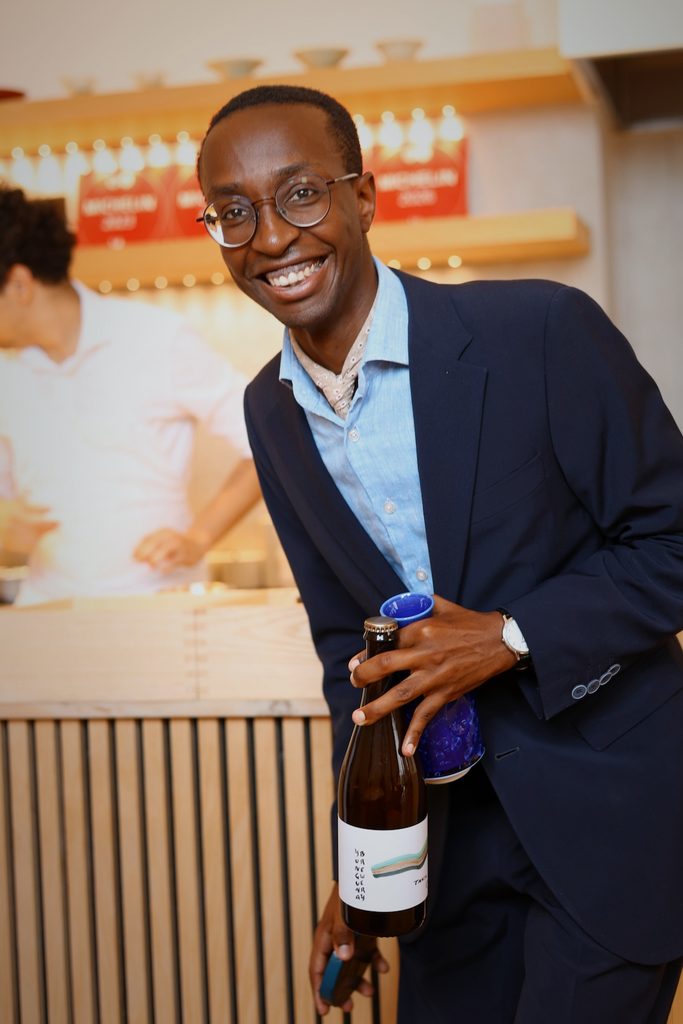
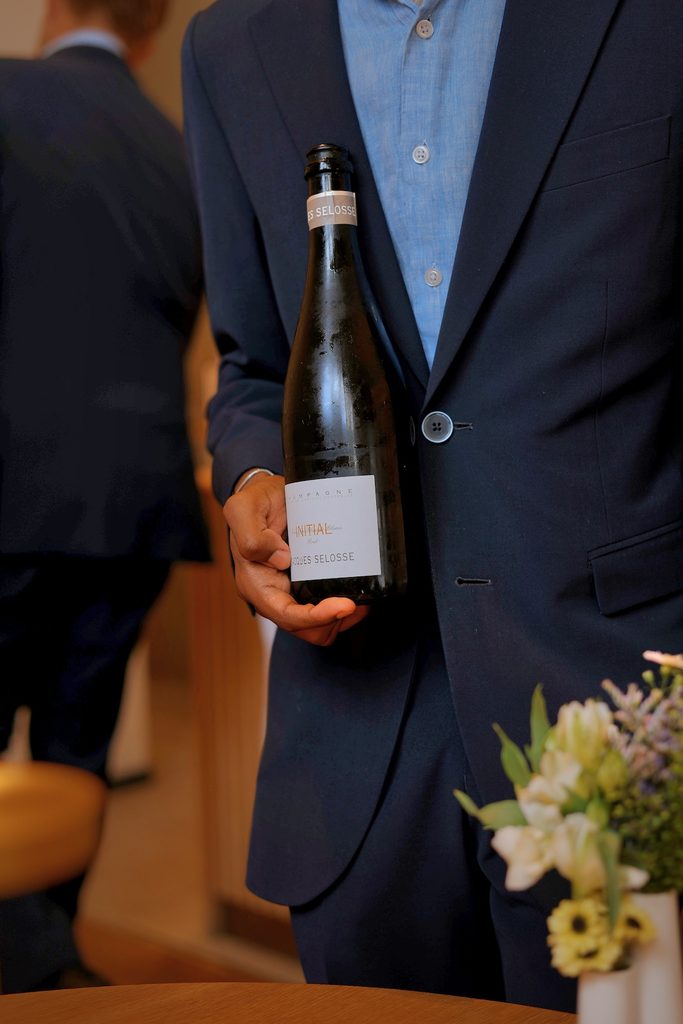
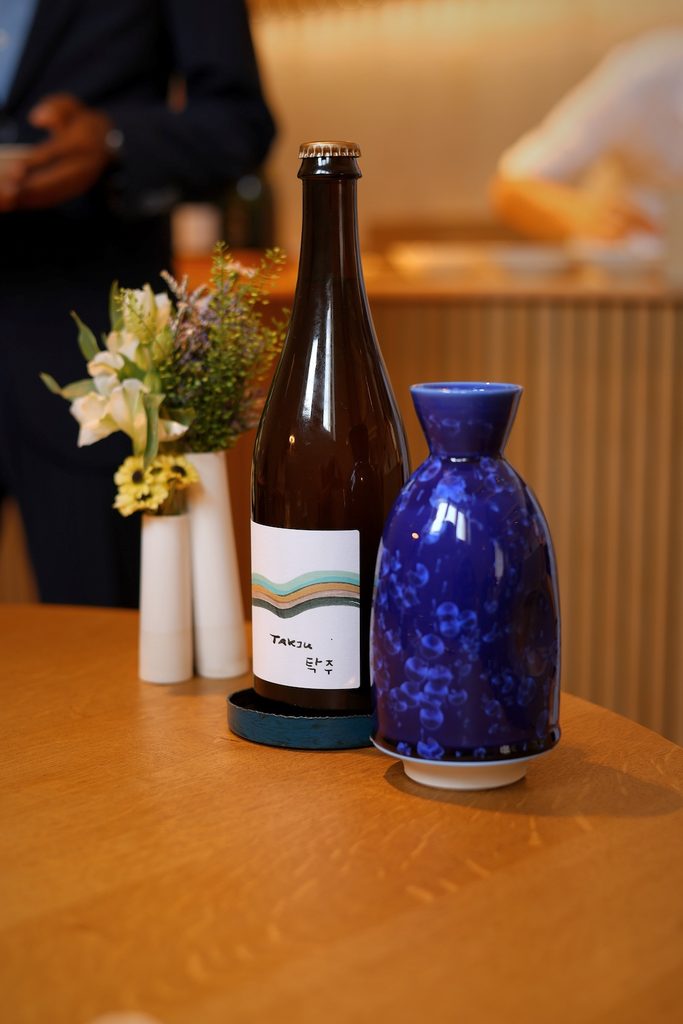
The wine list itself is built around producers rather than regions, a shift he says has happened across Copenhagen more broadly in the last few years, away from famous names and scores and toward people whose work he can actually stand behind. He mentioned Pierre-Gabriel Diarra, a Senegalese-born winemaker working six small parcels in Hautvillers on land he inherited from his grandmother, as someone he’s particularly excited about right now. Several of the producers he’s proudest of are women: Emily at Yunguna Brewery, who introduced him to Korean sool in the first place; Bona Kim, who taught him to make his own rice wine; Fiona Beeston, who runs a small domaine in the Loire and shaped how he thinks about wine early in his career. Copenhagen’s food-first instincts show up in the glass too, he said: acidity, texture and salinity over heavy oak, bottles that move with the meal. Guests know more than they used to, and the conversation has got more nuanced along with them.
The non-alcoholic pairings are where the kitchen’s patience shows most. Jeff starts in the same place for both programmes: does a dish need more acidity or sweetness, can it handle spice, and from there they diverge. Wine is often the more straightforward call, since the team tastes constantly through the year and already knows what will work. Non-alcoholic pairings come together more spontaneously, built from a running library of ingredients preserved through the year: a smell, a taste, a memory left over from an earlier tasting, chosen for whatever still fits the restaurant’s philosophy. The drinks taste considered rather than convenient.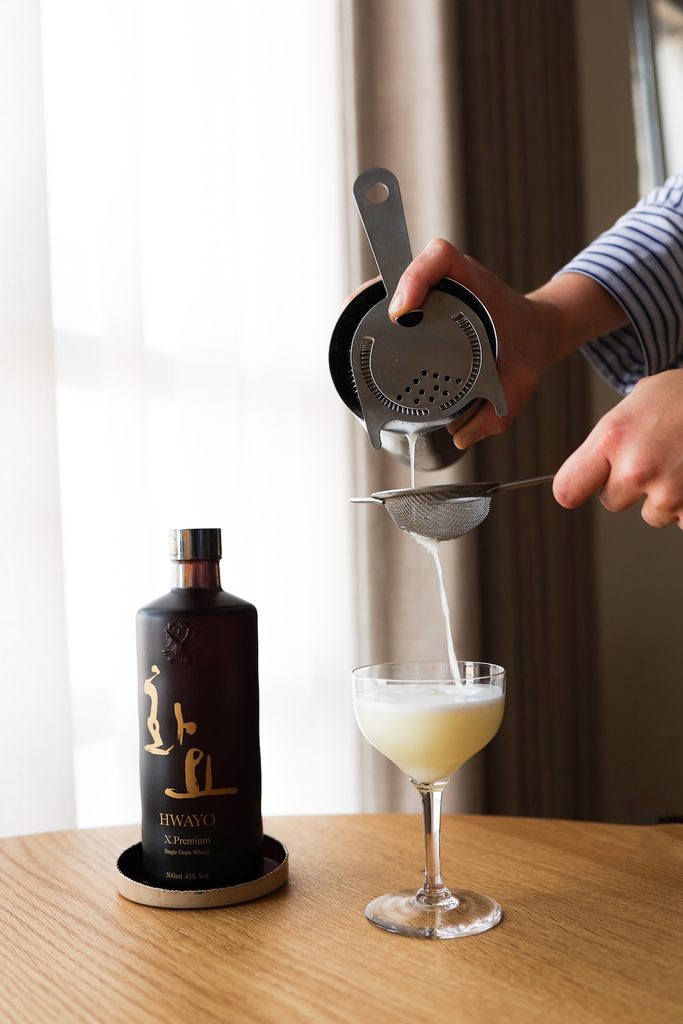
Dessert is where the menu allows itself a small joke at its own expense. A rose sorbet made from Danish wild roses arrives first, meant purely to clear the palate, before a soufflé built on milky oolong tea and the restaurant’s own 2017 signature: roasted seaweed ice cream with hazelnut oil and caviar – a dish old enough now to count as heritage in a restaurant this young. The petit fours that follow are eaten in a specific order, ending on a sesame dasik, a traditional Korean pressed cookie, which felt like the right note to leave on: something old, made new, handed over last.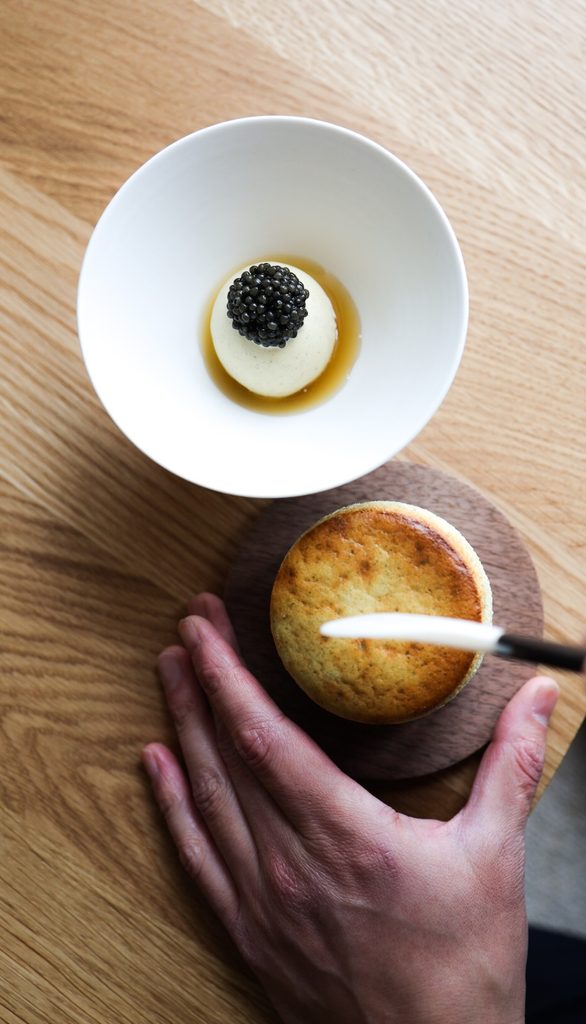
Baumann isn’t chasing more covers or a second site. When I asked about growth, he told me the focus right now is staying present for the team, the ingredients, whoever’s at the table that day. He’d consider growing only if it didn’t cost him that connection. The same instinct shapes how he talks about Copenhagen more broadly: not competing with the city’s other kitchens, just glad that so many different identities can sit next to each other and push the whole scene higher.
Baumann was born in Korea and adopted as a baby by a Danish family. He trained in traditional French and Danish kitchens for the best part of a decade before he let himself cook anything that felt like his own. That part of his story is worth knowing, and I won’t pretend it isn’t the reason KOAN exists at all. But by the time I sat down to write this, it wasn’t the adoption story I kept returning to. It was the bowl. Something broken, given a new layer, made whole in a way that still shows the break. Baumann didn’t design KOAN to be a neat metaphor for his own life. He found a bowl in a gallery in Seoul that already was one, and built a restaurant around the fact that he recognised it.
Contact Details
Website: koancph.dk
Address: Langeliniekaj 5, 2100 København, Denmark