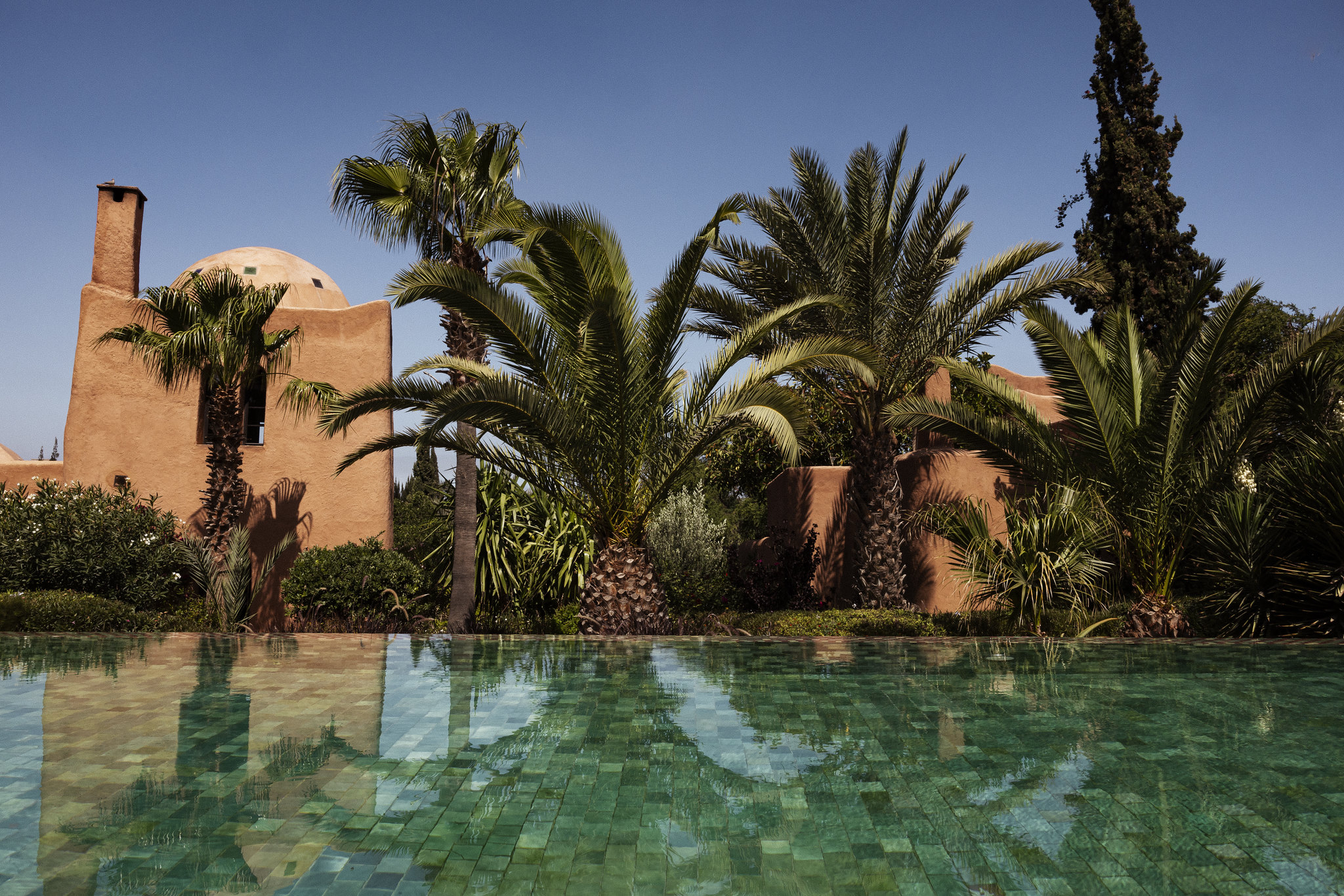
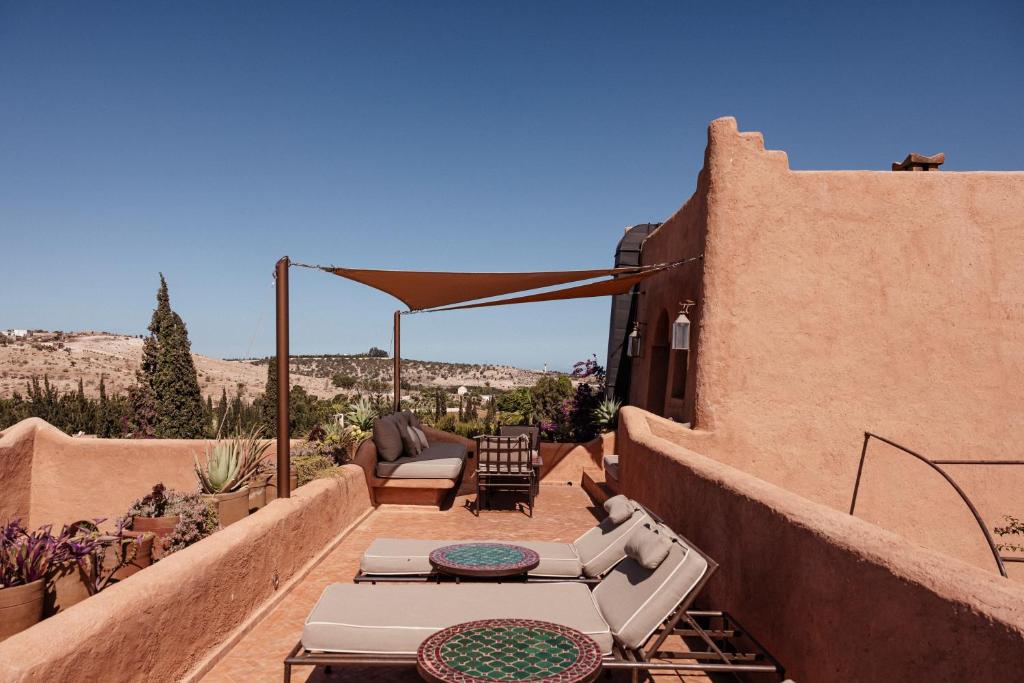
A private botanical estate in the hills above Essaouira is the setting for the delightful boutique hotel of Le Jardin des Douars, featuring private villas, spa and padel club. The architecture, with arches, domes, and richly textured adobe walls, is evocative of an old kasbah. The buildings spread throughout the gardens offer 19 rooms, 6 suites and 6 private villas. It’s authentic, soulful and family-friendly without losing its grown-up tranquillity. It’s the kind of hideaway to escape to for sun-drenched relaxation with your loved ones.
Marrakech-Safi, Ghazoua
Le Jardin des Douars
The Arrival
The hotel will collect you at Essaouira-Mogador airport, just fifteen minutes away by transfer. Or, like me, pair the stay with a few nights in Marrakech and then take the N8 highway west for two and three-quarters hours. The straight road passes through dusty terracotta-coloured villages, golden meadows, and argan groves where goats balance almost impossibly in the gnarled branches of the trees as they feast on the fruit. At the end of the journey, you leave the main road, and take a stone track, reaching the bougainvillaea-clad entrance of Le Jardin des Douars.
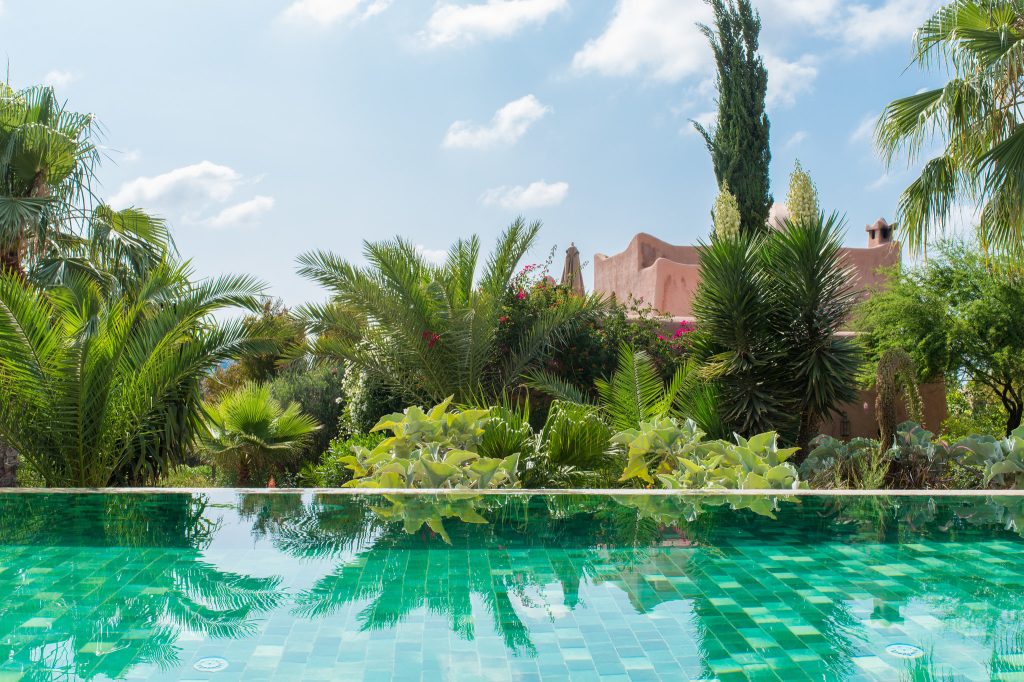


Abraham was at reception offering a warm welcome. After a swift check in I was taken to the shaded terrace beneath the towering palms for mint tea and handcrafted Moroccan treats. Then, after settling into my Babel Suite, set in a stand-alone cottage, I headed for the adults-only pool, where Mohammed at the bar mixed a Caipirinha with plenty of fresh lime. I was quickly embraced by the magic of this alluring destination.
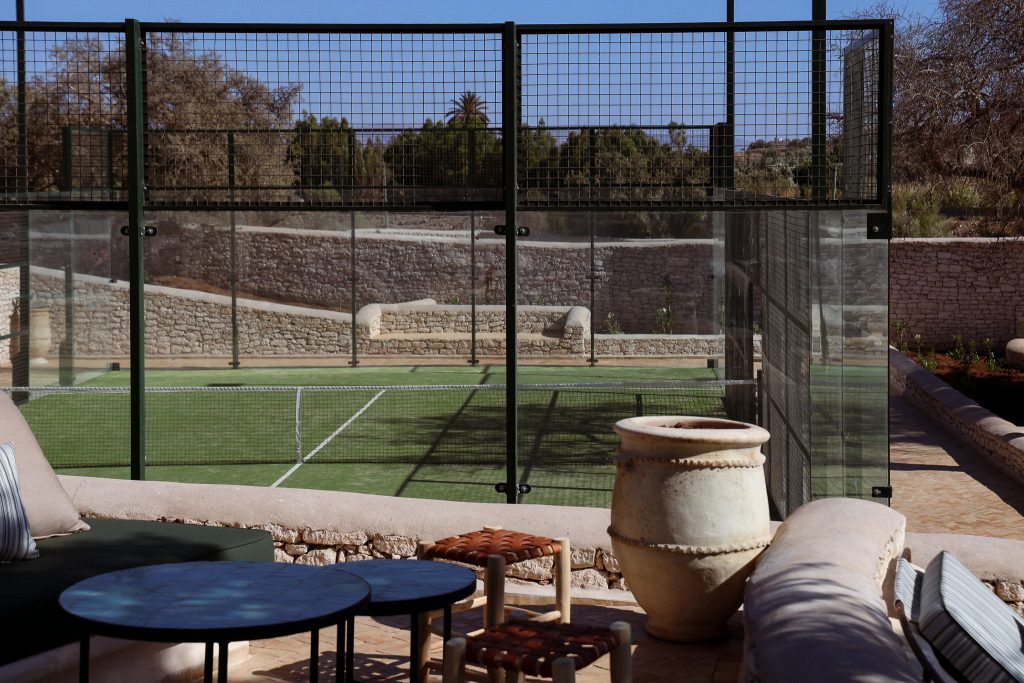
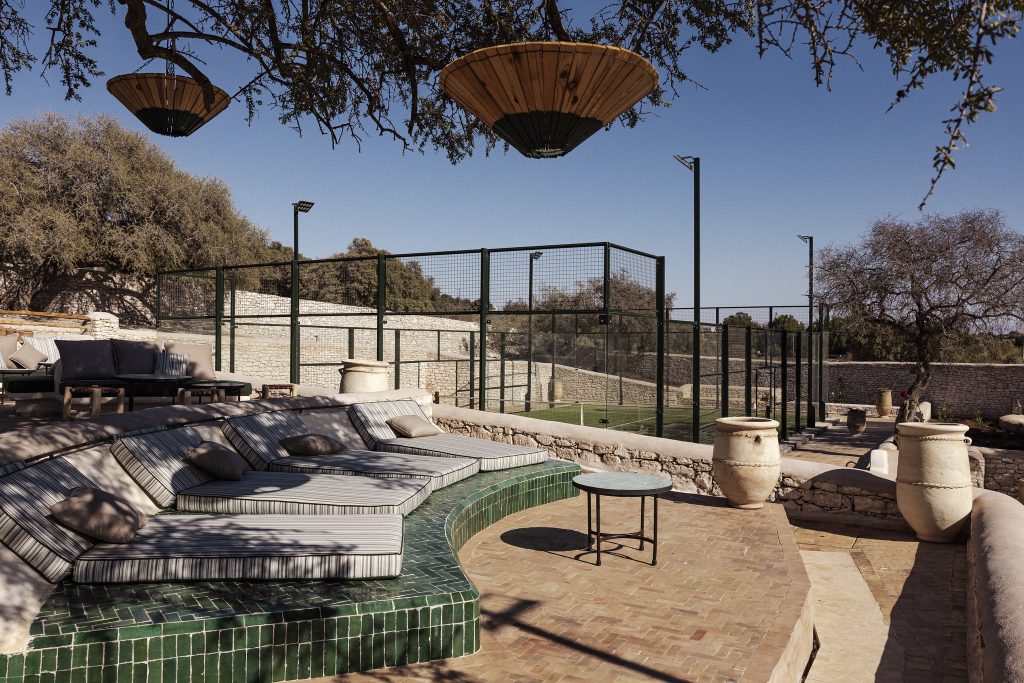
The hotel describes itself as a ksar style. A ksar is a fortified Berber village, and that’s exactly how it feels. The thick adobe walls in earthy reds and terracottas, towers with domed roofs, low pavilions clustered around intimate courtyards are truly evocative of the county’s rural architecture. Spread across seven and a half acres of botanical gardens above the Oued Ksob River, the whole property is a private hamlet with a kasbah at its heart housing the bar, the restaurant and a selection of rooms over two floors. Around it are more suites in charming pavilions, as well as two heated pools, al fesco dining terraces, a pétanque pitch and a smart padel club. The spa is in a standalone building close to the adults-only pool.
The Rooms
Over four nights, I tried different categories of room. The Choukran Room in the main kasbah, close to the dining and bar was lively and central. A good choice for families. It had a beautiful terrace.
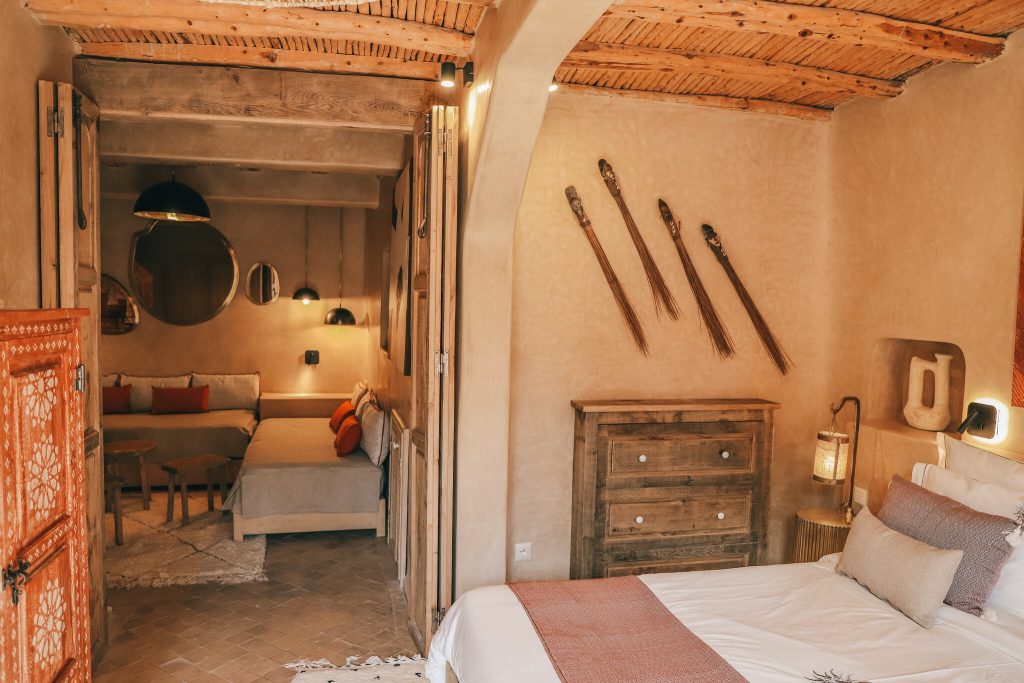

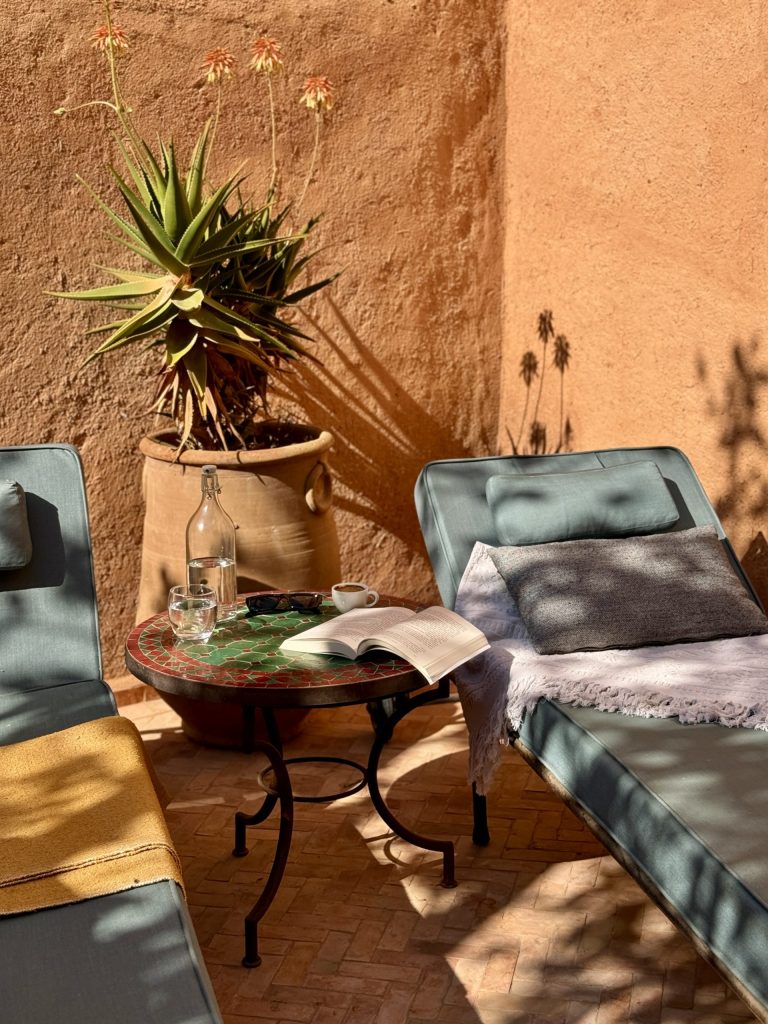
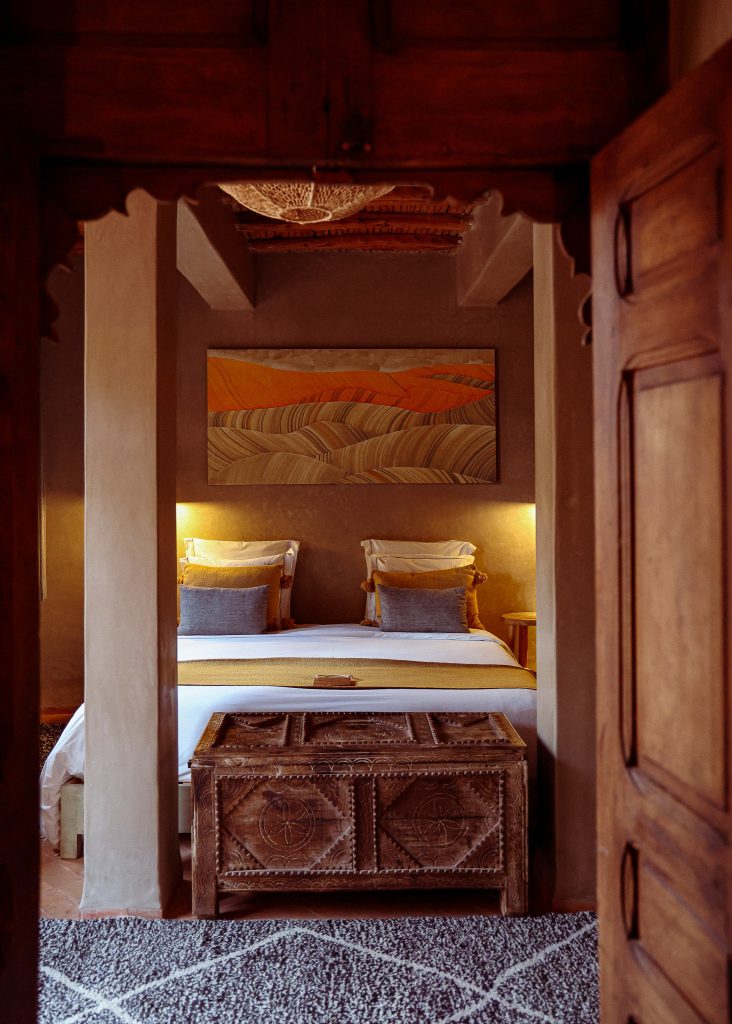
The first night, in the two bedroom Babel Suite, set further out among the palms had a private terrace, had a living room with day beds that could be made up for children, as well as a fireplace and shelves decorated with north African ceramics and artefacts. The terrace was furnished with two sun loungers, a Moroccan mosaic table and a pair of cast-iron chairs.
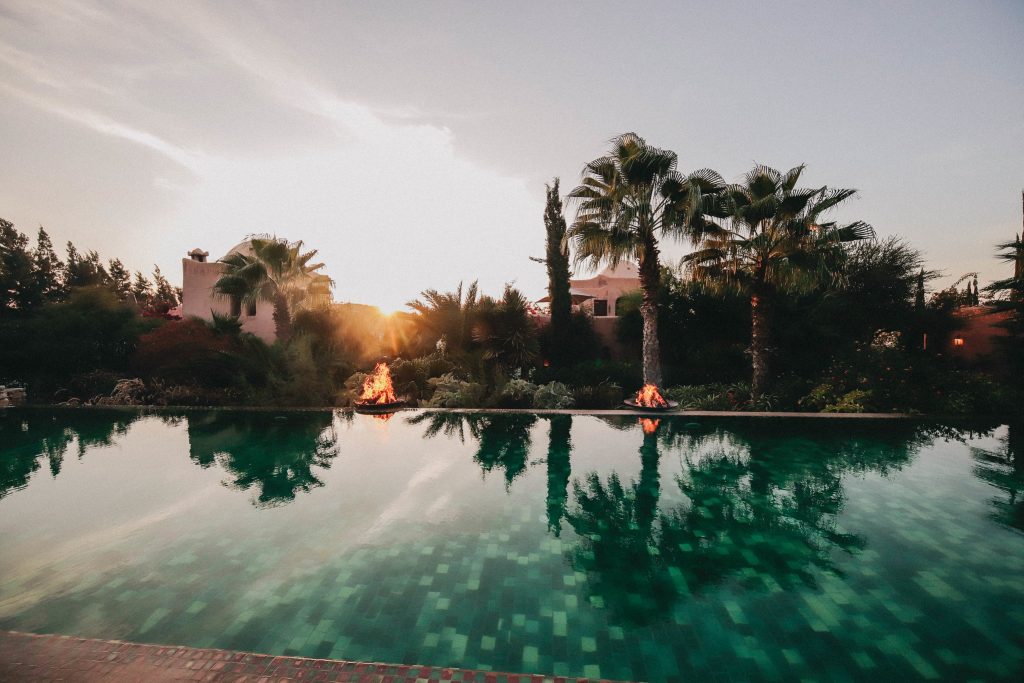


The Pacha Room on the ground floor of one of the garden tower buildings was close onto the adults-only pool and was amongst the most elegantly furnished.
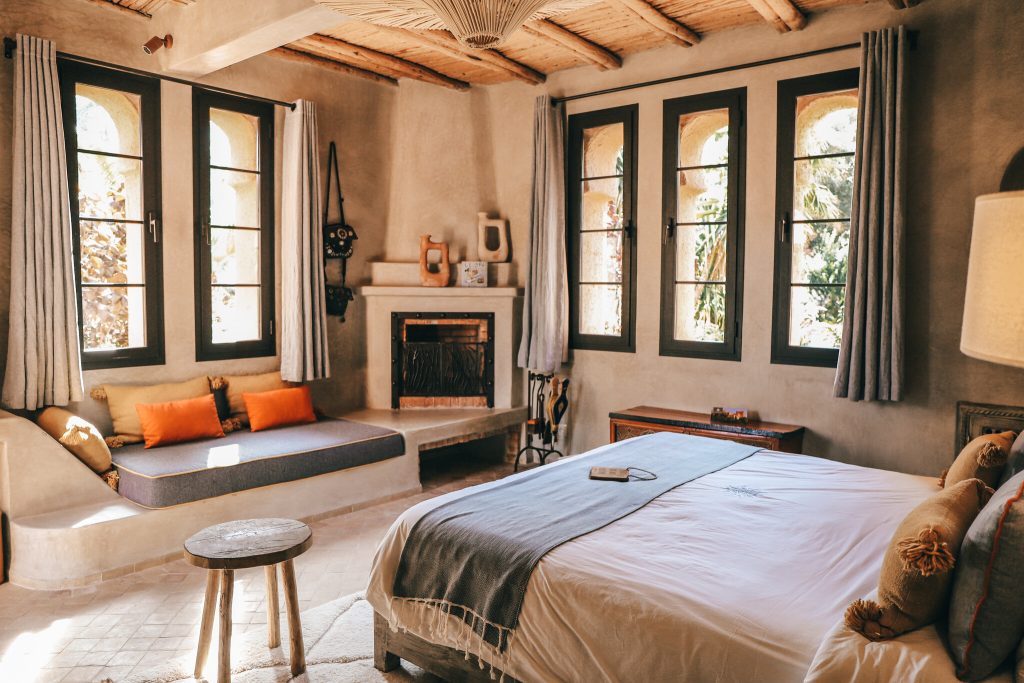
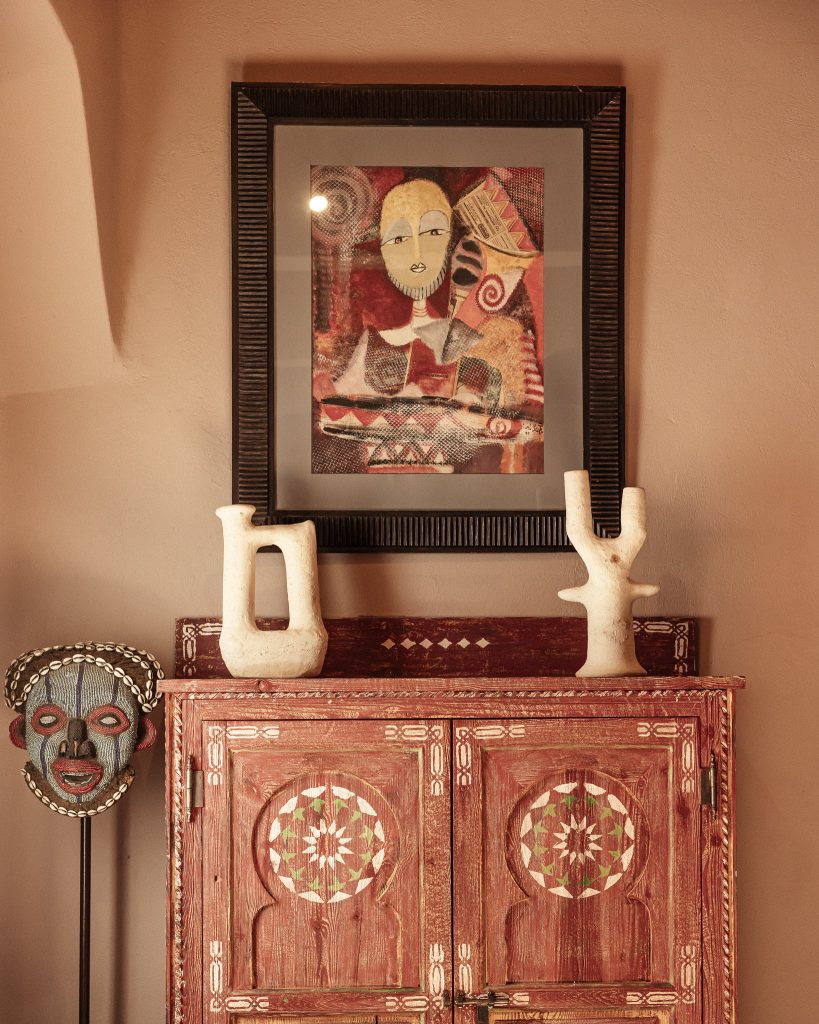

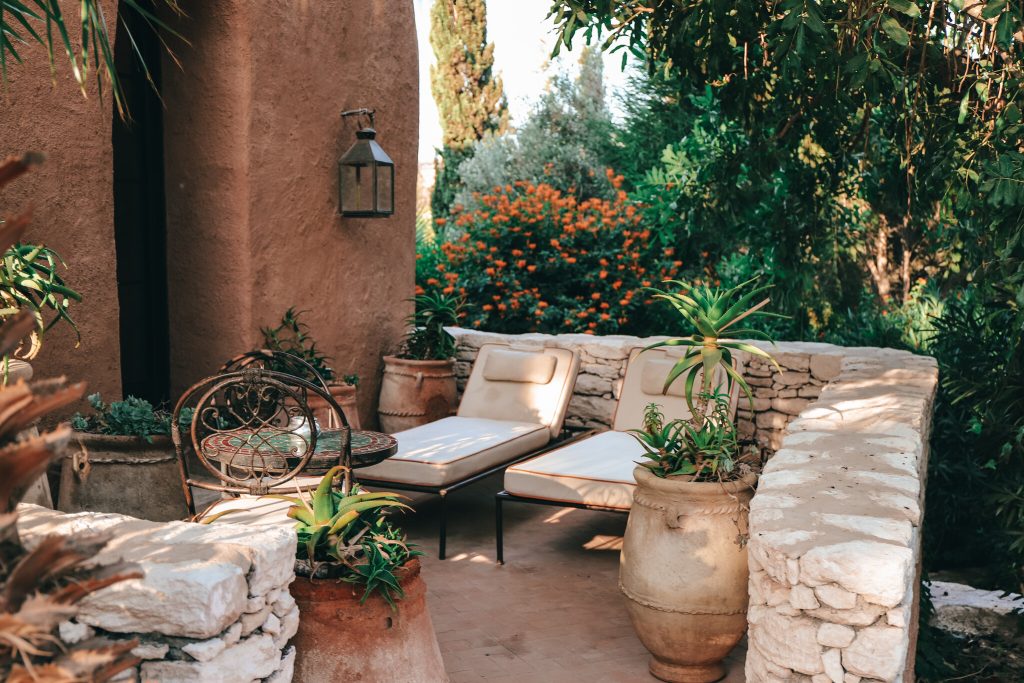
Each room has smoothly plastered walls in rich ochre, saffron, or light clay with bespoke features like wardrobe doors made from reclaimed wood. Each has a tadelakt bathroom in warm tones, and a private terrace. Most rooms have a fireplace. Berber rugs underfoot, hand-thrown ceramics displayed in niches, as well as antiques and old black-and-white photographs of Morocco hung against the walls. The aesthetic is authentic and softly styled.
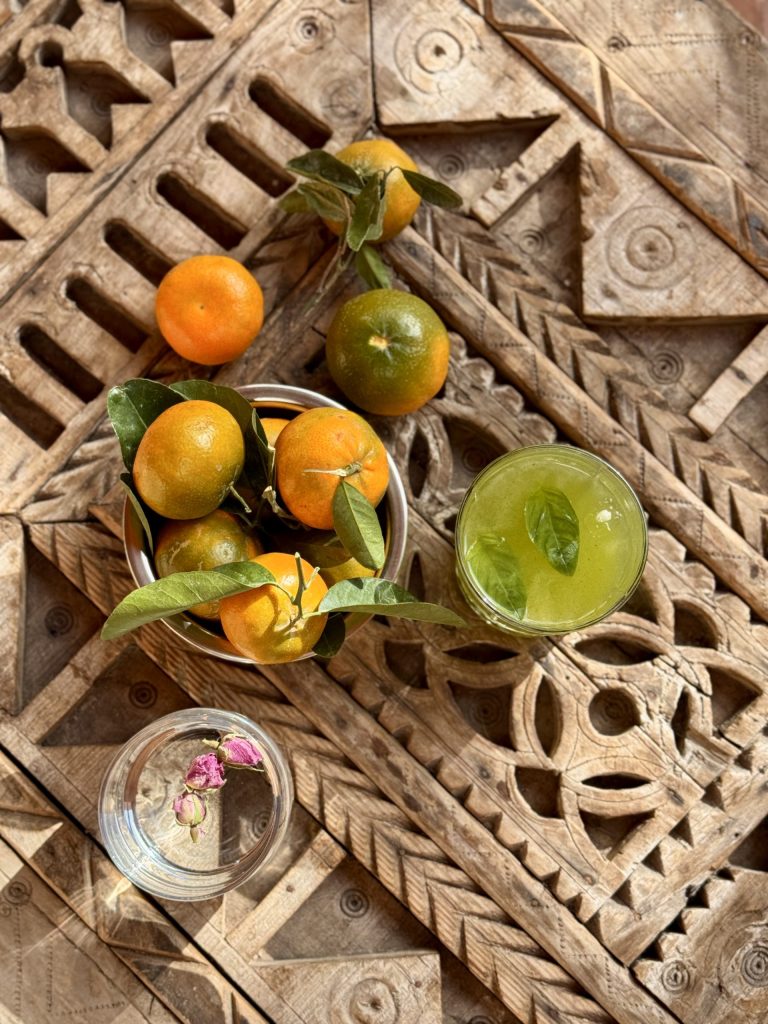
In the bathroom, a welcome amenity. A M’hekka kit for the hammam. A palm- disc bound with lambswool for exfoliation, alum clay fired ‘pumice’, a bar of fragrant orange-blossom soap, rhassoul clay and a small silver dish of rose buds. A thoughtful piece of provenance that connects the guest to the place.
The Garden
You wake to wood pigeons cooing in the cypresses, the warble of songbirds, and the cry of a cockerel from a neighbouring farm. By night, the soundtrack is pond frogs and the comforting sounds of crickets. Tortoises wander amongst the shrubs, butterflies flutter past the bougainvillaea blooms.
Beyond a stone wall is a kitchen garden of flowers, vegetables and aromatic plants including verbena, mint, sage, and rosemary. I wandered through it early one morning and met one of the young chefs picking what he needed for the day. Ahmed, the gardener, runs free tours that start under the argan tree at the bottom of the property. Beyond the wall, more argan trees stand among wildflowers, purple thistles and delicate daisies, with the dry hills falling away towards the river.
The Hammam
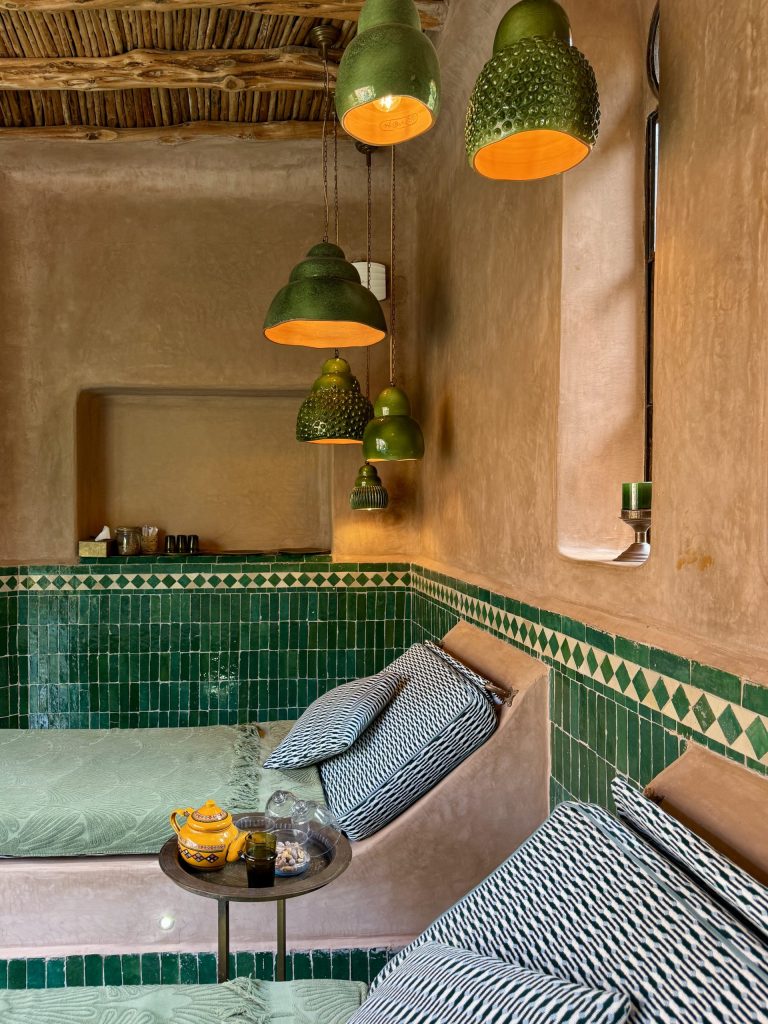
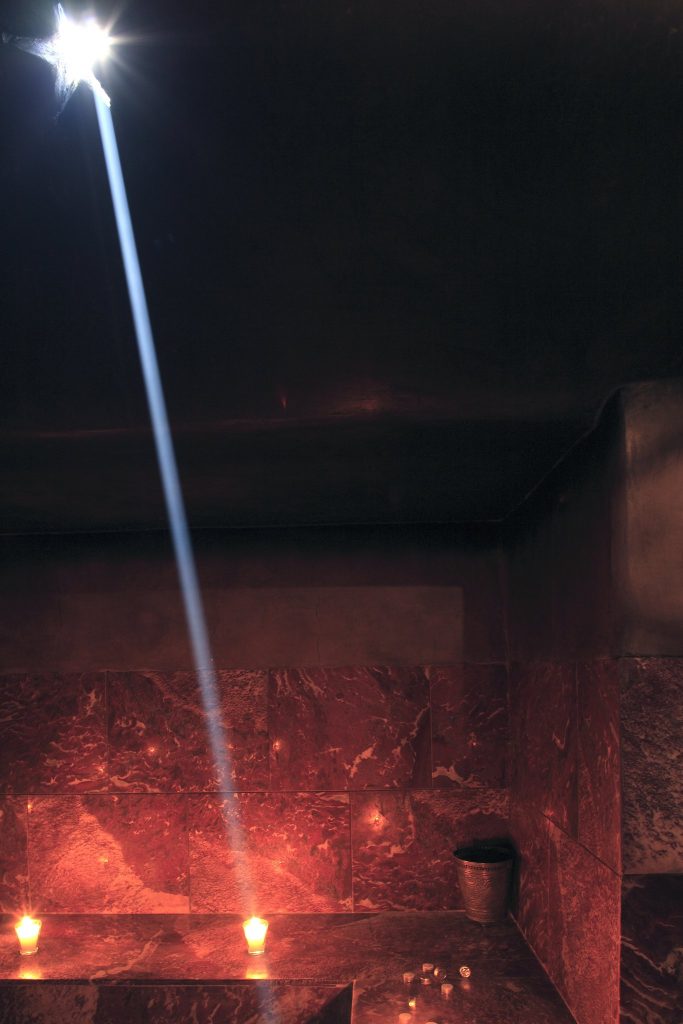
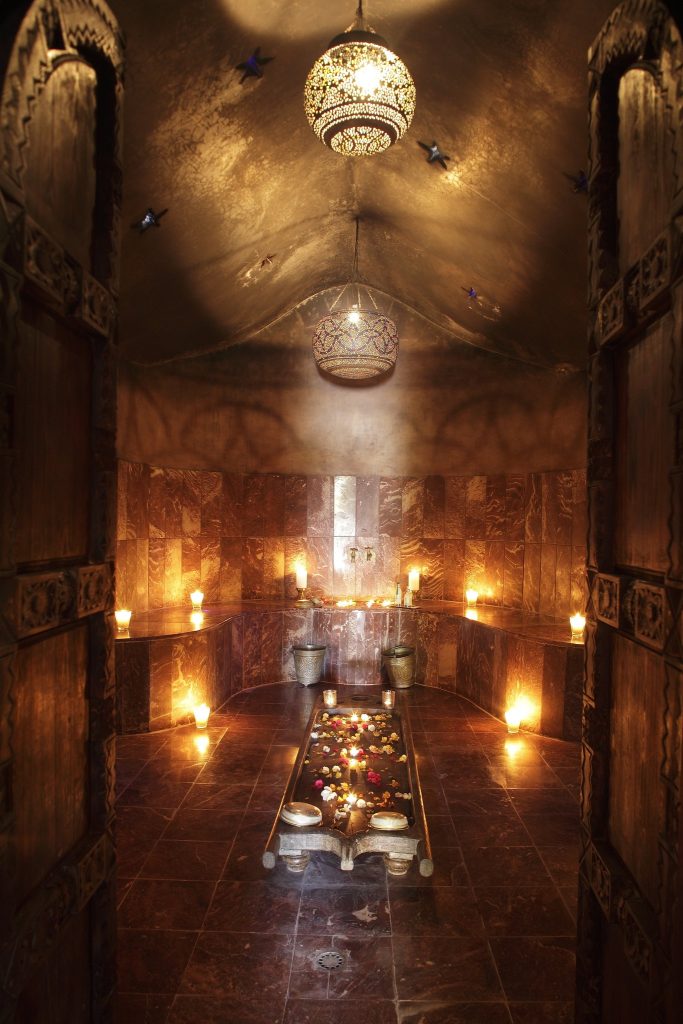
The spa sits at the heart of the property. The hammam ritual begins with exfoliation by M’hekka, then peaceful moments in the second steam chamber, then a final cleansing scrub. Afterwards, you are led to a relaxation room beautifully done in Moroccan ceramics, with bold green wall tiles and bespoke ceramic shades over the day beds. The room opens onto a courtyard where a fountain runs. It is truly relaxing.

Dining
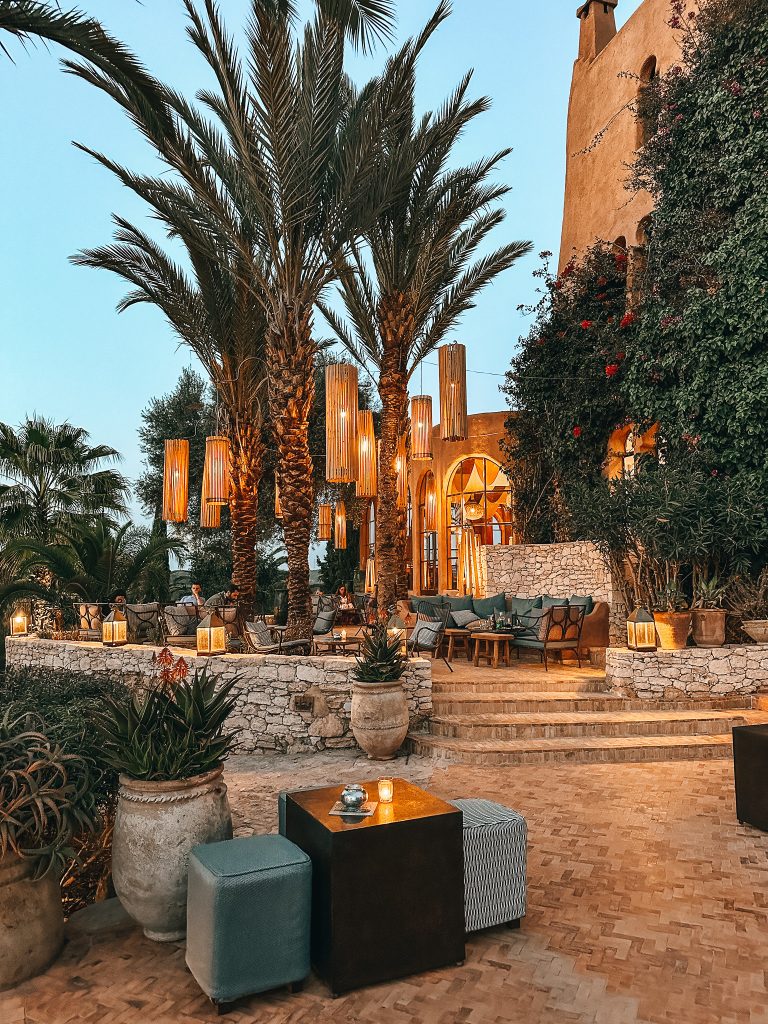
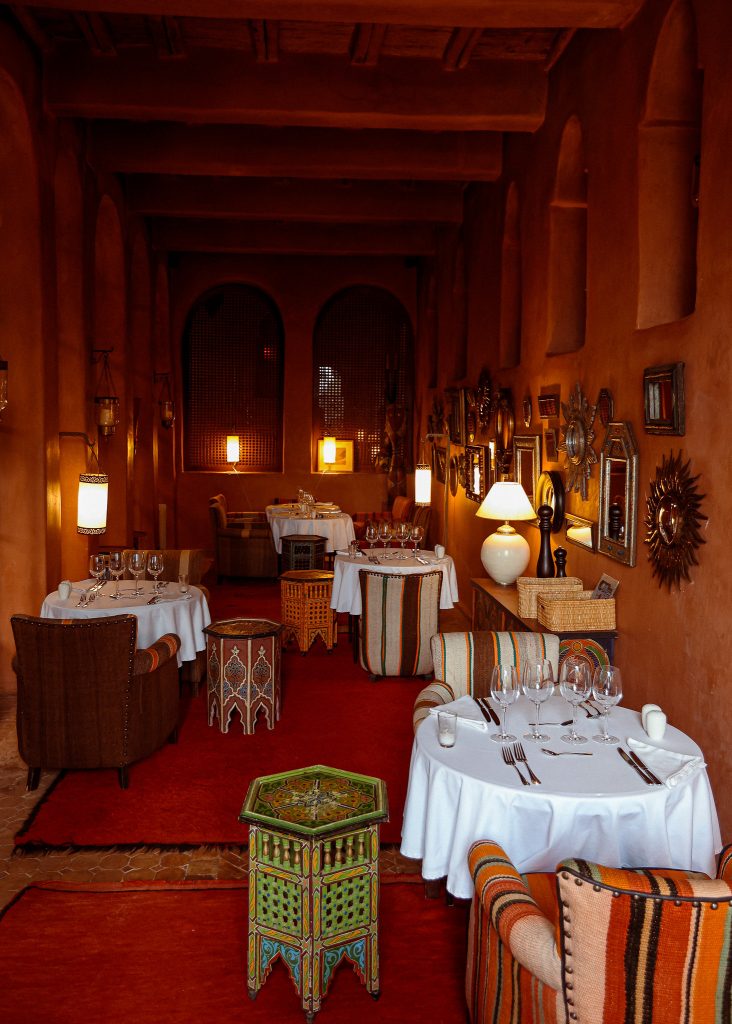
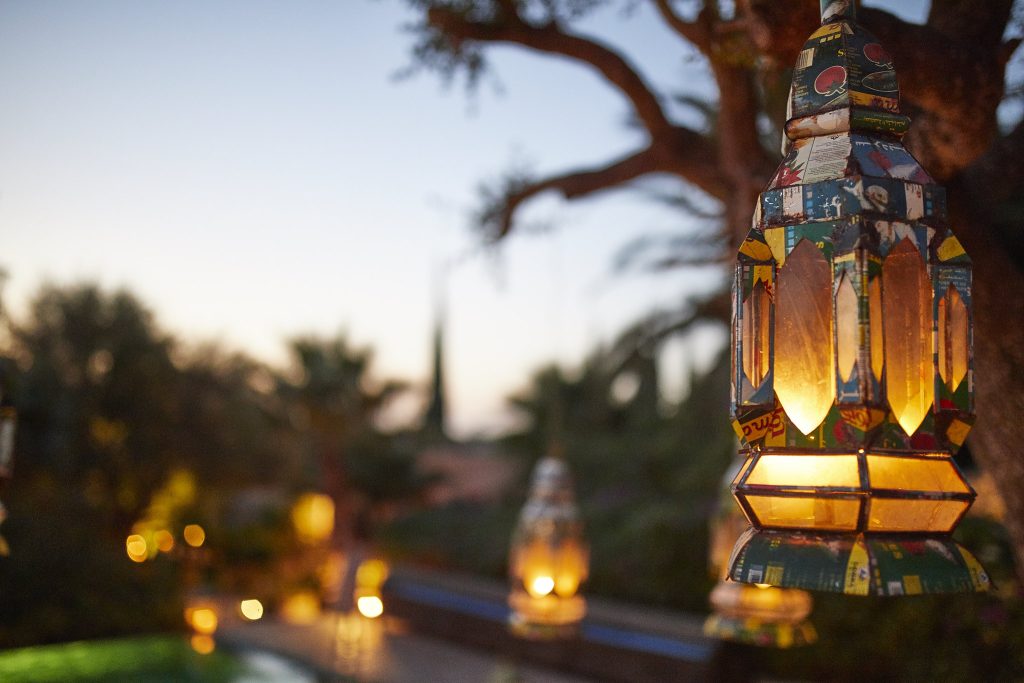
There are two dining rooms inside. On one side of the internal courtyard with fopuntain is an intimate adults-only space with tables dressed in linen tablecloths and votive candles, the walls hung with small decorative mirrors that catch the candlelight. On the otherside is a larger family room with a sunken-seating area by the bar and an open fireplace. Often you can enjoy live music here- Outside, the terrace is lit by architectural lamps hung from the palms, swinging in the Atlantic breeze. The Moroccan kitchen has a French influence with a curated menu for lunch and dinner, as well as a menu of the day.


We had the Meskala goat cheese plate to start, the chicken tagine with olives and preserved lemons, the lamb tagine with apricots and dates, and the chocolate fondant with orange-blossom cream. The wine list is Moroccan, including Domaine Ouled Thaleb and Domaine du Val d’Argan, the biodynamic estate in the hills behind Essaouira.
During the day the menu includes tasty mezze, fresh local Atlantic fish and a really tempting chocolate mousse.
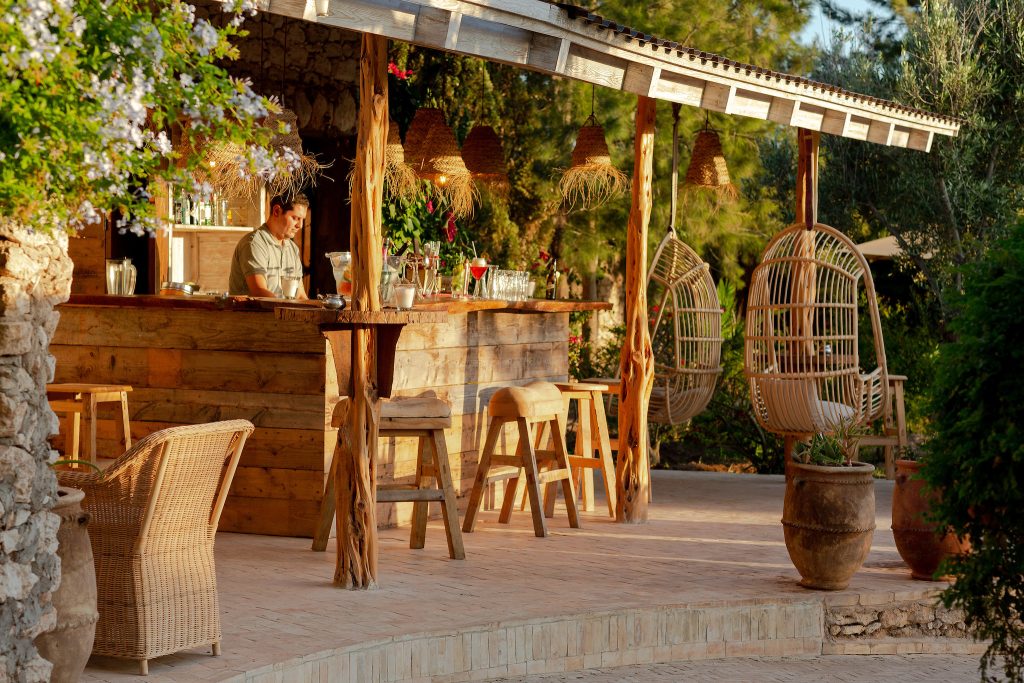


Breakfast is relaxed and self-service, offering crepes, French toast, fresh fruit, eggs to order, the famous baghrir (1,000-hole pancake) and msmen flatbread, with butter, jam, honey and amlou, the velvety almond-and-argan paste from the Souss valley. The traditional pieces are all there. The presentation could be slightly improved to convey more charm and elegance.
Activities
The hotel runs daily classes at the Club des Douars, the padel and wellness facility set just beyond the gardens. Pilates with Pascale on Mondays, body training with Abdel on Thursdays, yoga on Saturdays, plus padel courts and group lessons.
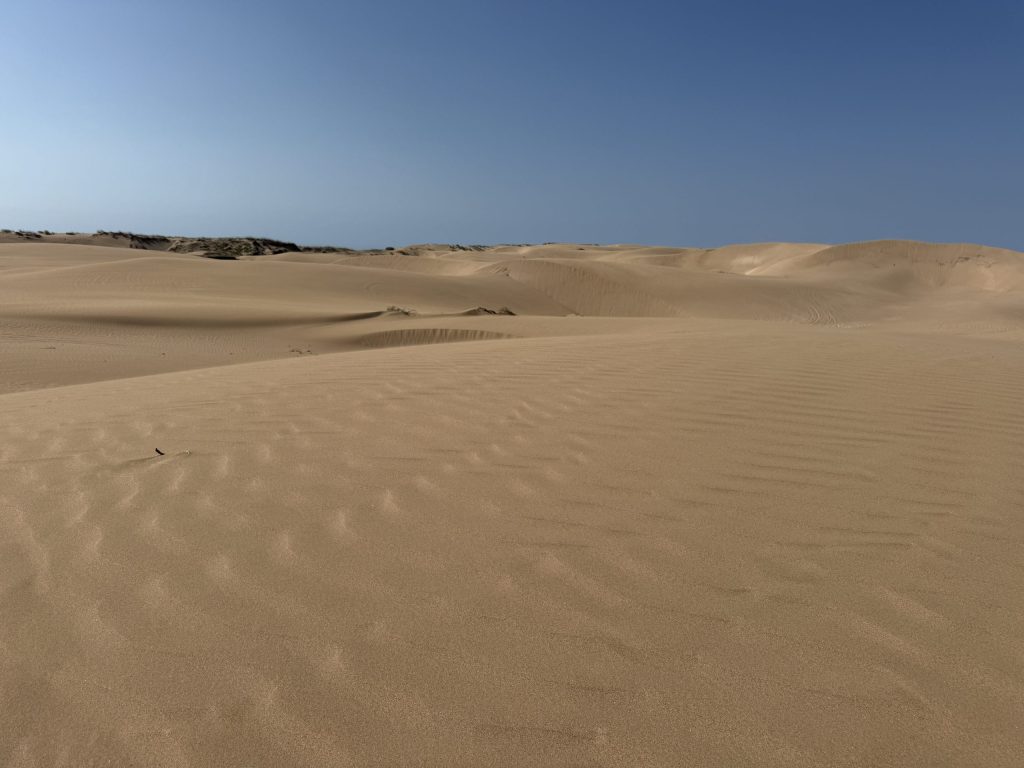
Beyond the property, the team works with the best of the local operators. Cooking at L’Atelier in the medina, surf and kitesurfing with the Ion Club, horse riding with Equievasion. We did quad bikes through the dunes with a private guide. Not the most sustainable activity, I know, but the route was thrilling, the steep, wind-sculpted dunes were extraordinary up close, and the Atlantic visible from every ridge, stretching to the horizon.
Essaouira
A quarter hour by hotel shuttle takes you to Essaouira itself. The town is less like a typical Arab Morocco destination and is instead more like a sun-bleached Atlantic port with a Berber sense of welcome and a relaxed style. White walls, blue shutters, the Portuguese and Spanish history evident is every stone doorway. The medina is laid out on a clear grid, not the labyrinth of Marrakech, and are filled with artisan workshops and galleries.
I enjoyed mint tea at Cafe Verra on Place Moulay Hassan with views to the honey-coloured Skala du Port tower in the middle distance, gulls wheeling above the ramparts, the call to prayer drifting over the chatter of the square. One of the iconic scenes of Morocco’s Atlantic coast.


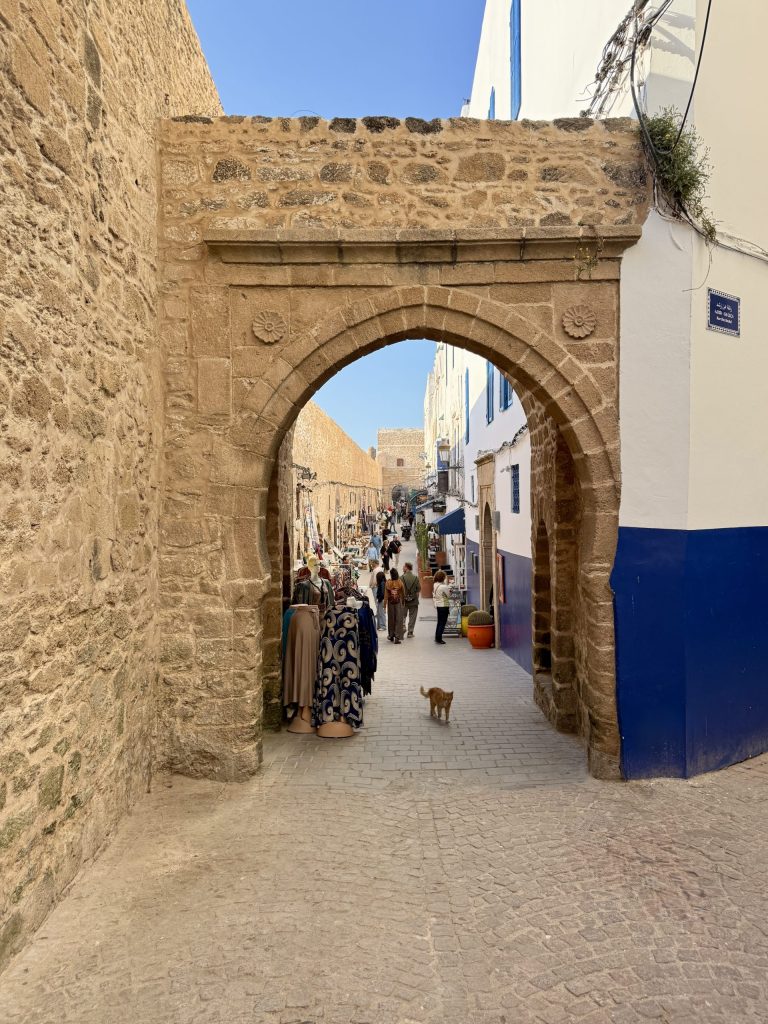
A walk down to the working port takes you out through the old Portuguese gate, where the ramparts look over the fleet of iconic blue fishing boats of Morocco, part of the city’s living history that dates back to Phoenician times, and Essaouira as a source of sought-after Phoenician purple blue dyes. Here you see nets being mended, and fish grilled to order outside the market hall.
The medina is home to a vibrant food scene. Several restored riads double as restaurants and bars. Villa Maroc, an 18th-century merchant’s house and reputedly Morocco’s first riad-hotel, is the classic. Salut Maroc, with its distinctive contemporary, bold decoration has more stunning Atlantic views from its rooftop restaurant. Le Jardin des Dours also recommends La Table de Madada for refined seafood, and Triskala for vegetarian.
We devoured a seafood tagine with prawns on Salut Maroc’s rooftop, then walked back to Place Moulay Hassan as a live band busked, much to the enjoyment of the relaxed crowd. This is Berber culture and it makes for a very inviting ambience.
The Coast
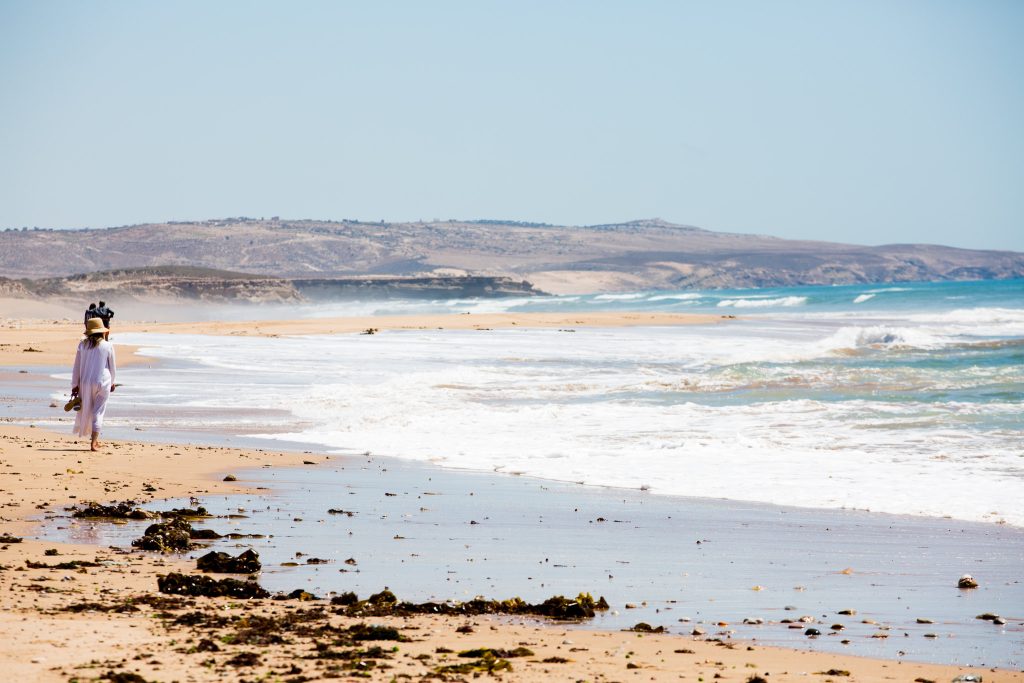
The town and corniche are well-maintained. The coastline beyond is patchier. Wind and Atlantic currents wash rubbish from inland rivers back onto the sand, so don’t expect pristine Atlantic shores.
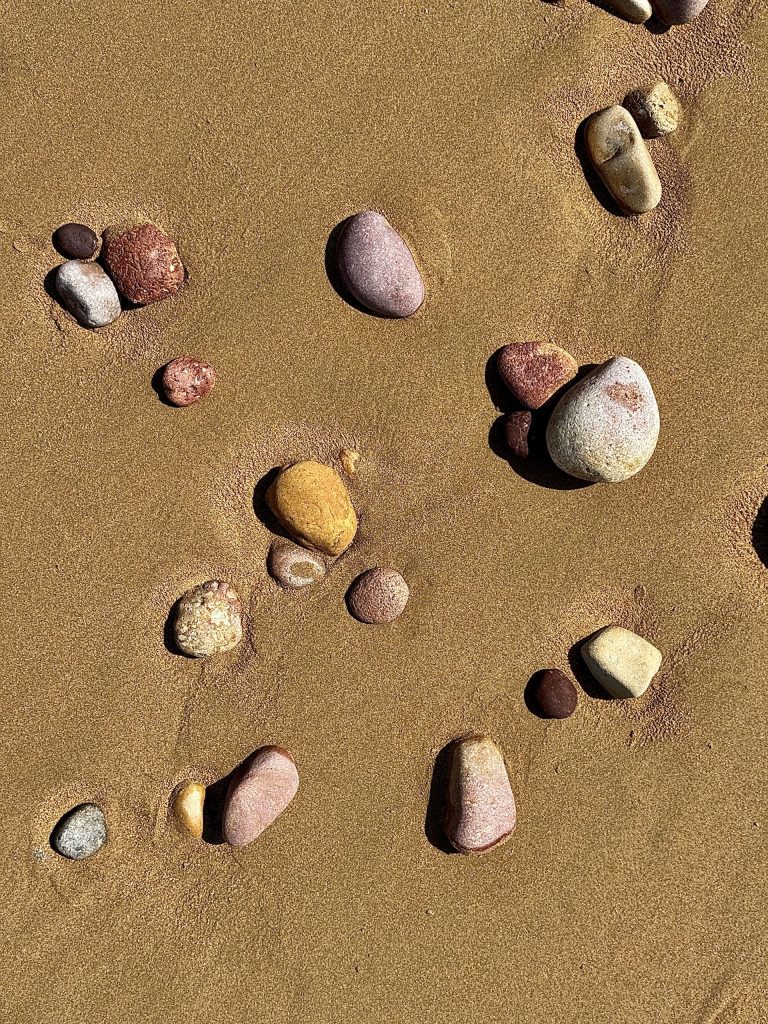
For a wild, cleaner alternative, drive thirty minutes south to Sidi Kaouki, the long crescent of golden sand below a small Berber village of low whitewashed houses. Here you find surf and kite schools, and on the beach the offer of a camel or horse ride. A gentle stroll is rewarding, as you feel the golden sand between your toes, and catch sight of the smooth river stones, pinks and rose, scattered around.


The Had Draa Market
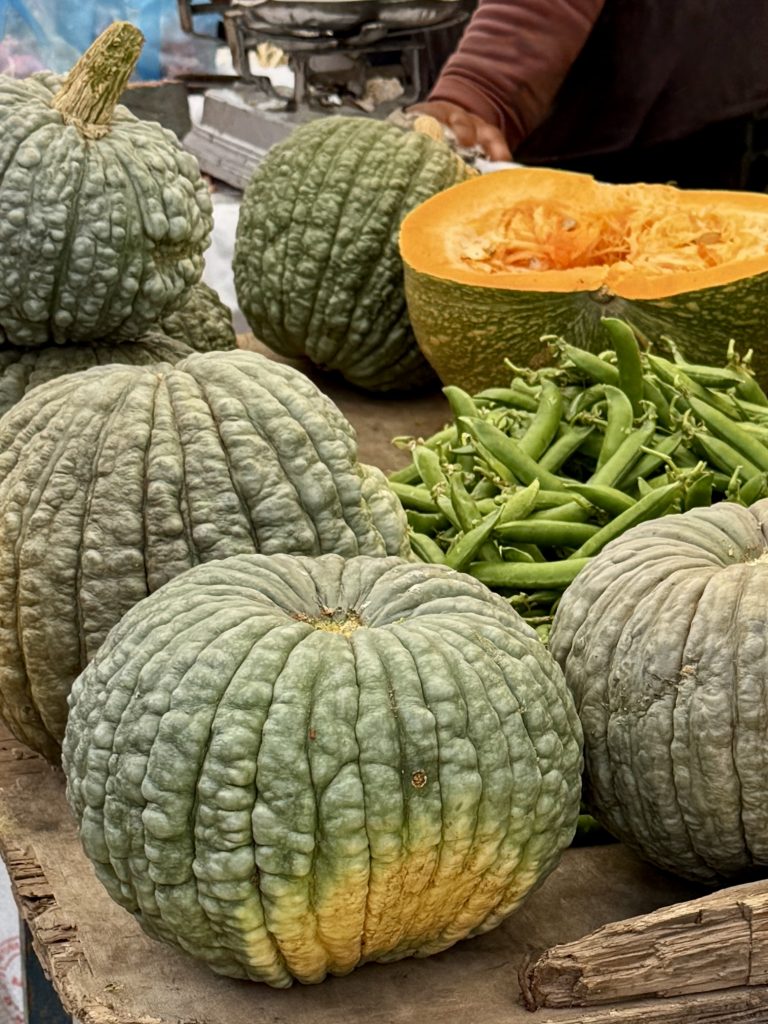
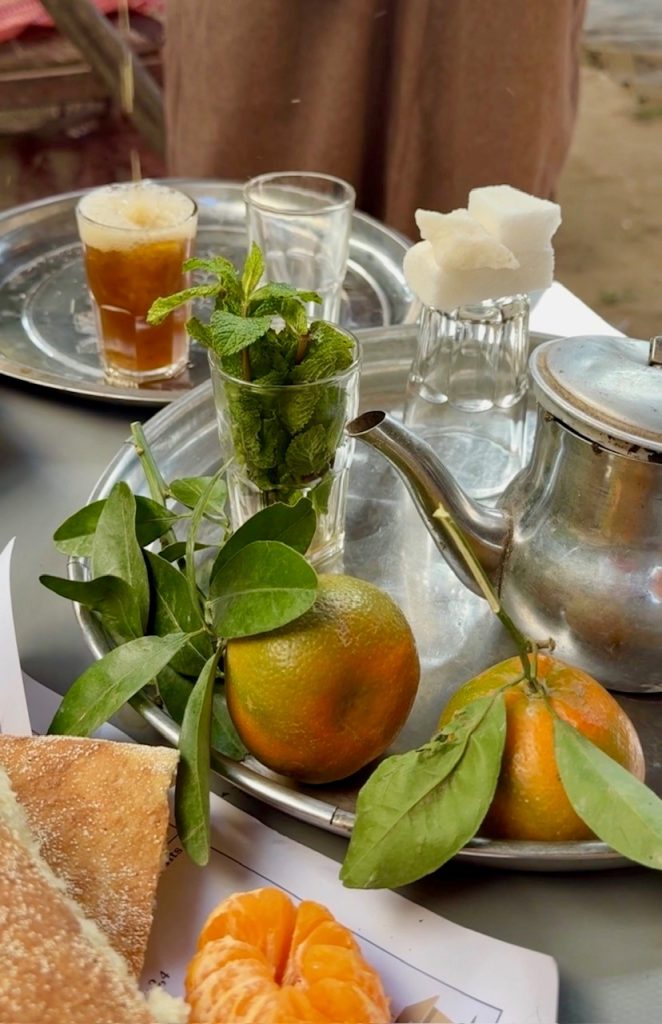
On Sunday morning we drove inland to the Berber market at Had Draa, thirty minutes from the hotel. Almost no Europeans visit in low season. Fruit sellers with pyramids of mandarins, vegetable stalls laden with the season’s produce, and the butchers’ quarter that might be too much for some. There are tents pitched for tea, and the air is thick with smoke from charcoal grills preparing chicken ready to be enjoyed with freshly baked bread. We sat in a tent and drank mint tea, chatted in our limited French with a couple at the neighbouring table, and were offered the tasty grilled chicken. The people are curious and friendly.
Final Thoughts
Le Jardin des Douars is a captivating Moroccan hideaway with a great deal of style. The rooms are impeccably maintained, new linens and sparkling new fixtures in the bathrooms. The gardens, the architecture, the hammam, the food and the team are all on point. Essaouira itself was a joy to discover, relaxed, youthful and sporty, and with one of the kindest and most welcoming destinations I have visited in Morocco.