By Albina Sharapova, founder of Via Privata, a luxury travel advisory
Koh Samui is the island people think they already know, and that is exactly why it rewards a second look. Yes, there are crowded corners. There are also headlands where the only sound is the Gulf of Thailand against the rocks, coconut plantations that run down to private coves, and a food culture that moves happily between fine dining in the treetops and grilled fish eaten while your feet feel the sand. The trick, as always, is knowing exactly where to start.
I should say that Samui is an island we know by heart not just the spreadsheet. My husband and I have stayed at Six Senses Samui more than once, at Kamalaya on the south coast, at both SALA houses, and at Vana Belle above Chaweng Noi, so what follows comes from first-hand experience as much as from my clients’ verdicts.
One practical note (before the good part), because it is the question I answer most often as an advisor. Samui runs on its own monsoon. While Phuket and the Andaman coast are at their best from November to April, the Gulf islands are driest from roughly January to April and wettest in November. Book the wrong coast in the wrong month and no hotel can save the trip. Book the right one and you’ll see that Samui in late winter is about as close to perfect as tropical Asia gets.
Eat
Dining on the Rocks, the signature table at Six Senses, is built on teak decks stepping down the headland, and dinner here at sunset is the single most requested reservation I make on the island, and the one we return to ourselves. Much of what reaches the plate starts in the resort’s own garden. Go at golden hour, stay for the dark.
Tree Tops at Anantara Lawana in Chaweng seats you in private salas up in the tree canopy, lanterns below, sea somewhere beyond the leaves. It is theatrical in the best way, and the kind of dinner people are still talking about on the flight home.
2 Fishes, on the beach in Bophut, a few minutes from Fisherman’s Village, is where the island’s Italian heart beats: handmade pasta, the morning’s local catch, and a chef-driven kitchen that treats imported ingredients and Gulf seafood with the same respect. Ask for a table toward the sand and settle in; this is an essential Samui evening, not a quick dinner.
The Shack has been the island’s steakhouse since 2003, a charcoal grill in the heart of Fisherman’s Village working through Australian tenderloin, ribeye and tomahawks, and a wine cellar that takes itself seriously. When a week of seafood asks for a correction, this is where the island goes.
Sabeinglae is the counterweight to all that polish: a seafood institution on the rocks south of Lamai where the fish is whole, the curries are southern Thai and unapologetic about it, and the bill is a fraction of what the view alone should cost. Every island has a restaurant the drivers recommend. On Samui, this is it.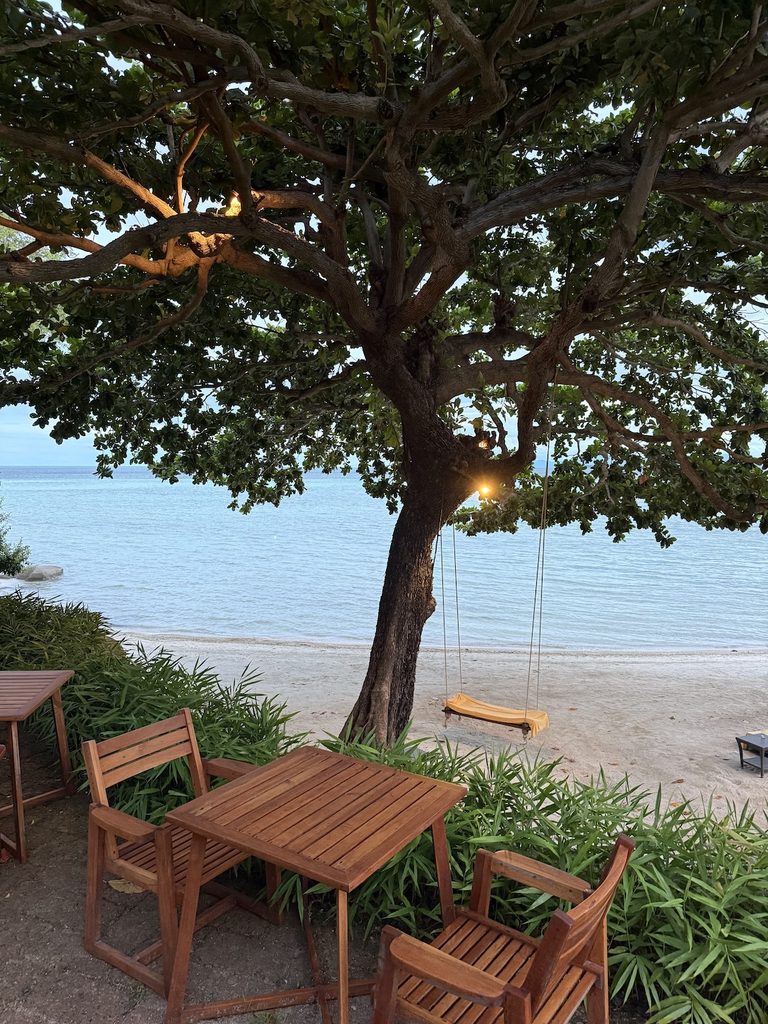

Drink
CoCo Tam’s in Bophut’s Fisherman’s Village is barefoot Samui at full volume, swing seats at the bar, boats blinking out on the bay, and the nightly fire show on the sand that has become the island’s essential spectacle. Build the evening around it: dinner at The Shack a few steps away or 2 Fishes just beyond the village, then the fire dancers with something cold in hand. Shows run at 7pm and 9pm every night. Time it with the walking street market, Friday is its biggest night, and the whole evening wraps around you.
Air Bar at the InterContinental on the south-west coast is the island’s definitive sunset: a long terrace hanging above the Five Islands, cocktail in hand, the sky doing all the work. Time your arrival forty minutes before the sun goes.
Jungle Club, in the hills above Chaweng Noi, is the one to save for your last night: a clifftop bar with the whole east coast below you and a breeze the beach never gets. Arrive by songthaew, leave slowly.
Do
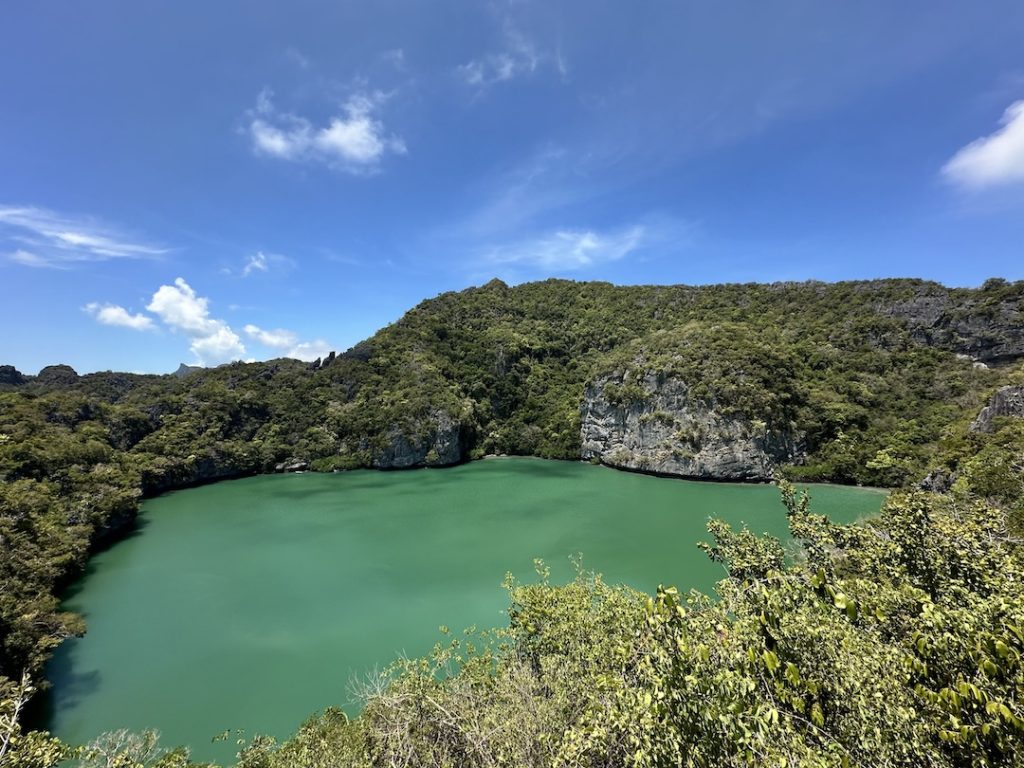
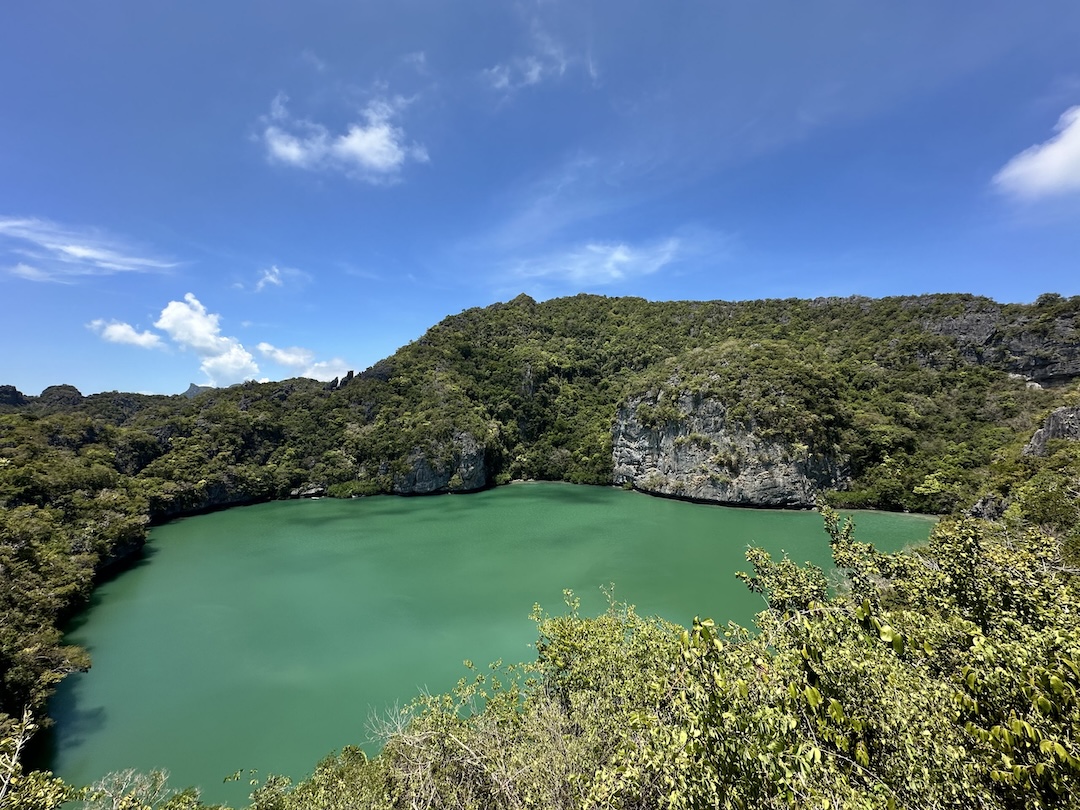
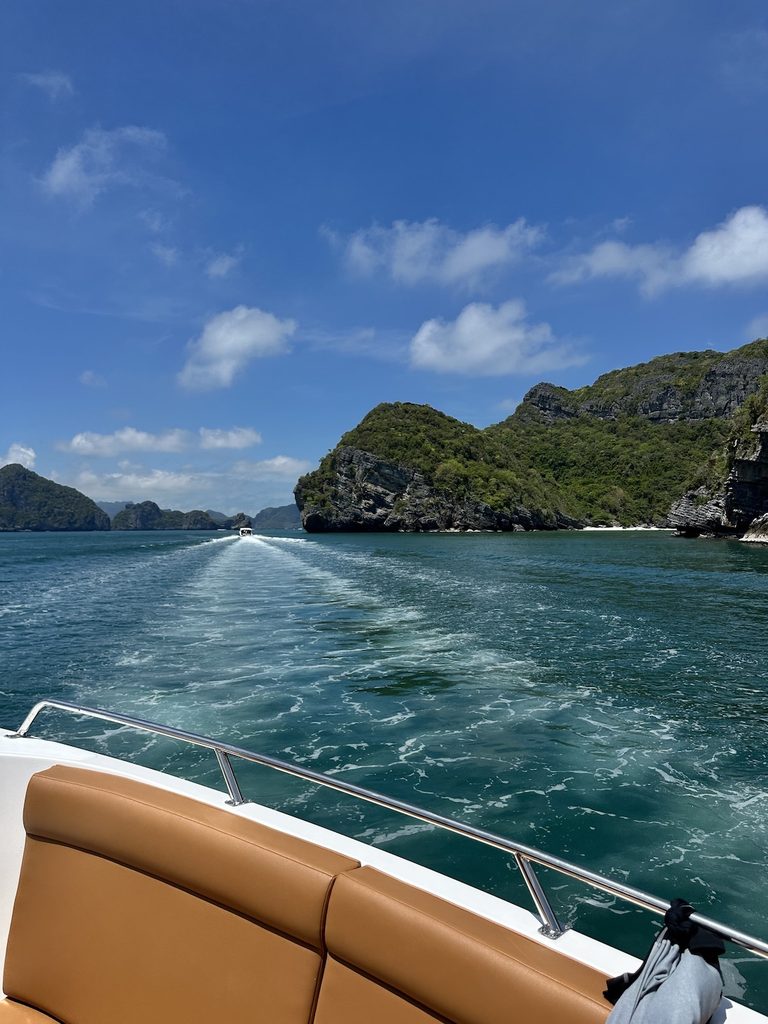
Ang Thong National Marine Park is the day to plan your stay around: forty-two limestone islands scattered across the Gulf, about an hour west of Samui by boat. Go private and go early; you will have the Emerald Lagoon viewpoint largely to yourself before mid-morning, and lunch happens at anchor in a bay the group boats never reach. Book the full day with kayaks and snorkelling; a half day shortchanges it.
Samui Elephant Sanctuary is the island’s ethical answer to Thailand’s elephant question: rescued animals, no riding, observation and feeding at a respectful distance. Take the earliest slot, before the heat settles in. It is the excursion I recommend most readily to families, and nobody comes back unmoved.
The Jungle Interior is Samui’s forgotten half. Take a 4×4 up to the Secret Buddha Garden, a sculpture garden a local farmer began building in the hills in 1976, and come down past the Na Muang waterfalls. Two hours is enough, and it is a different island up there, cooler, greener and quieter than the coast.
Sleep
Six Senses Samui sits on a headland at the island’s quiet northern tip, and it remains my first answer for Samui. We have stayed more than once and reviewed it in writing and on film, and it earns the loyalty: the resort helped pioneer the sustainability-meets-luxury formula in Southeast Asia long before it was fashionable, and it shows its age only in confidence, an organic garden supplying the kitchens, an ice cream parlour making small batches on site, villas angled so the Gulf fills the whole view. Nothing shouts. It does not need to. Our full review is here.
Four Seasons Resort Koh Samui takes the island’s north-west corner, a steep coconut grove of pool villas dropping to a private cove, and it owns the sunset side. This is the polished, full-service end of Samui, the one I book for families and for anyone who wants the sleek operation of a great resort humming quietly underneath a barefoot week. One point to note: it sits away from everything, the island’s restaurants and villages are a proper drive away, so you hand yourself over to the resort’s own rhythm, which is rather the point.
Kamalaya is the island’s serious wellness address, and I say that first-hand: we have stayed, and it is the one hotel on this list that changes how you feel a month after you leave. The sanctuary spreads through jungle on the south coast around a cave where monks once came to meditate, and the programs are run by naturopaths, Chinese-medicine practitioners and therapists who talk to each other about you. Come for a reset rather than a party; that is the whole idea.
Cape Fahn is the wild card: a private-island hotel on a pair of islets a few hundred metres off Choeng Mon, close enough to see the main island’s lights, far enough that you feel pleasantly marooned. Pool villas, a short boat hop to shore, and the particular luxury of a beach with nobody on it.
A Note from the Advisor
Samui pairs beautifully with three or four nights in Bangkok on the way in, and January to April is the window I protect for clients. If you would like the island arranged properly, from the right villa category to the tables above, my team and I at Via Privata, plan Thailand trips end to end and our full guide to the country’s finest stays is here. Booking through an advisor costs nothing and tends to follow you around the trip in the form of upgrades, breakfasts, and problems you never hear about.

Enquiries via privata.travel, [email protected] or WhatsApp +971 58 557 9169