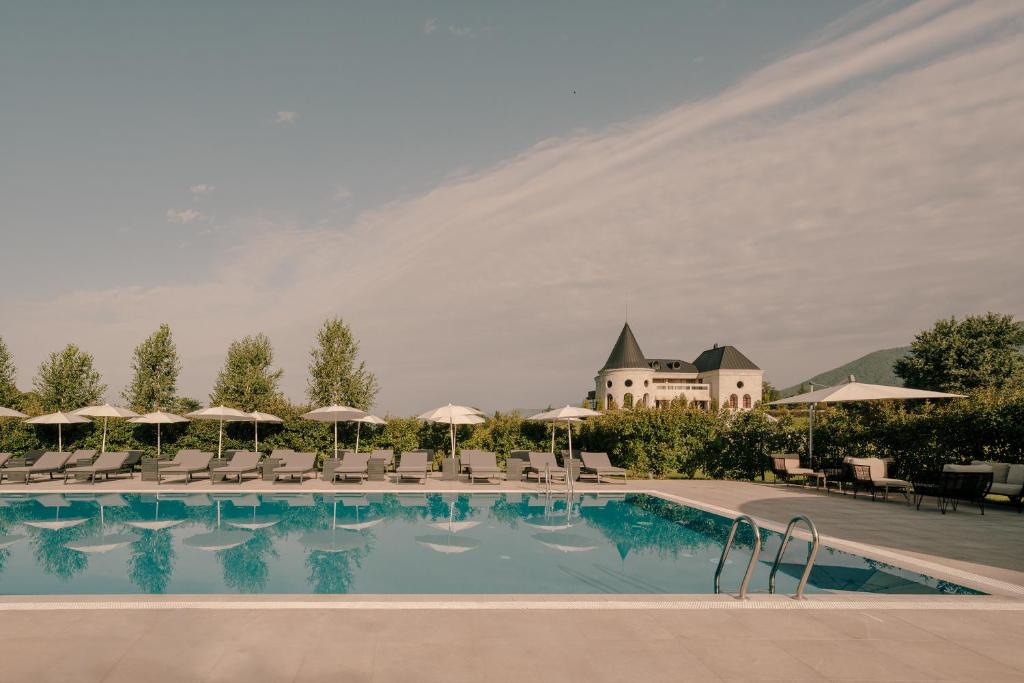
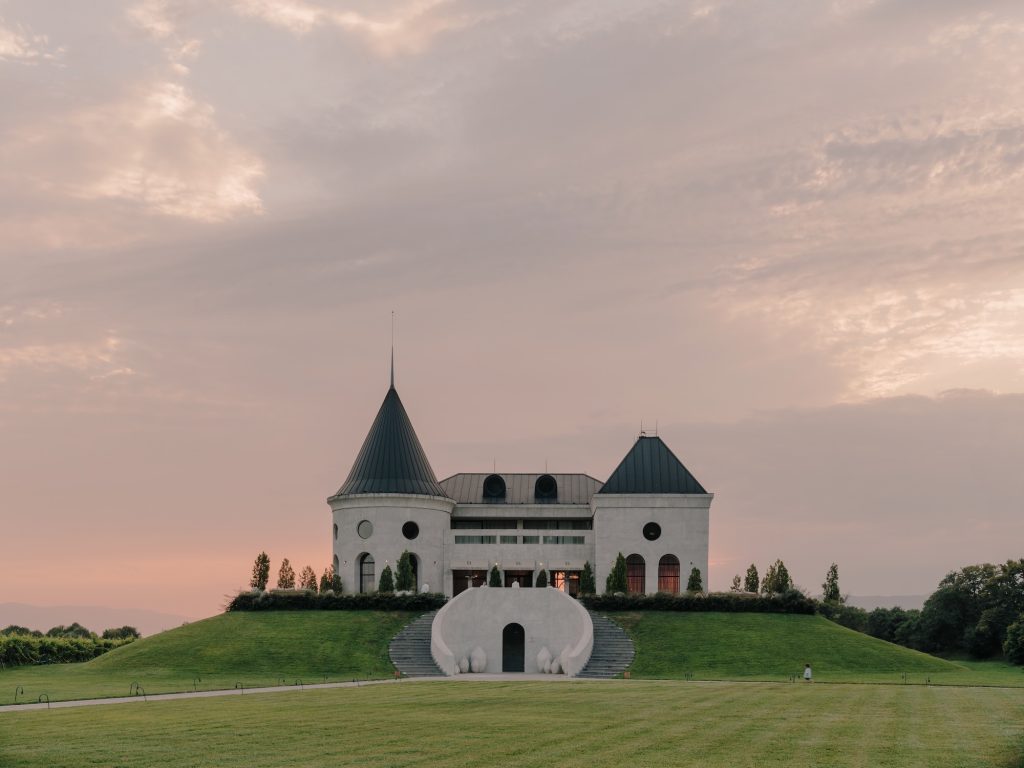
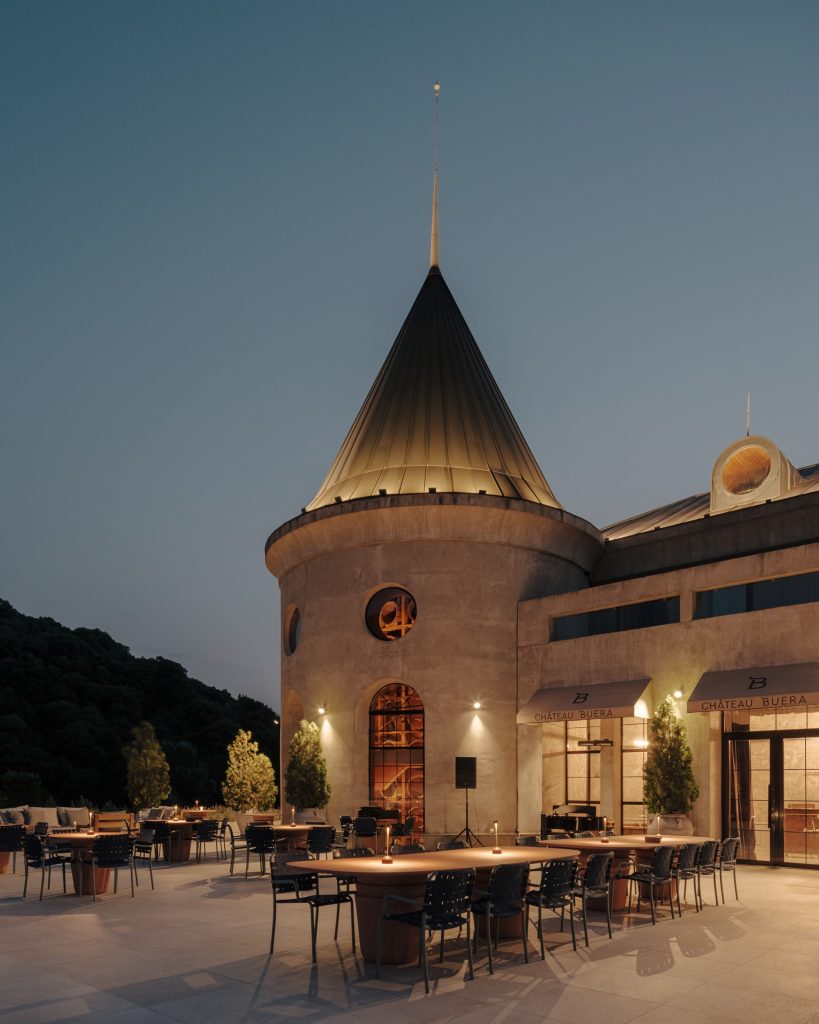
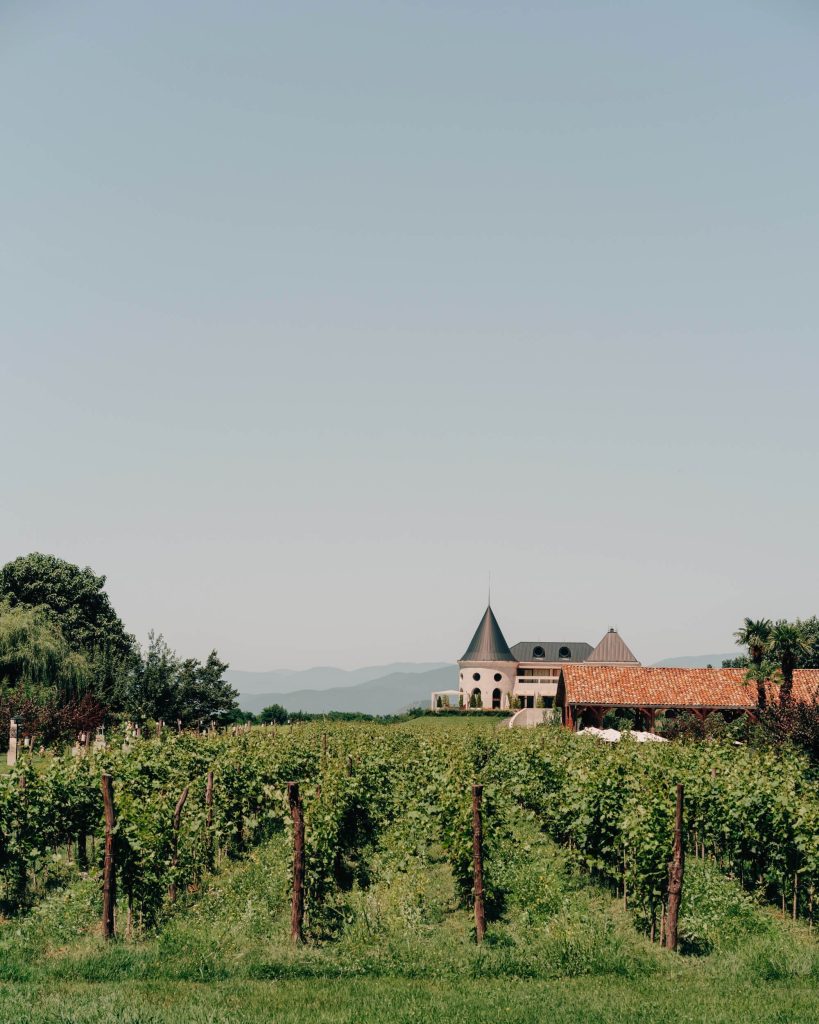
Lopota Lake Resort & Spa sits in the Napareuli microzone of Kakheti, in Georgia, which is believed to be one of the oldest winemaking regions in the world. Château Buera, Lopota Lake’s winery, was founded by Goga Maisuradze and is now run by his family and a new generation of winemakers, with fully bio-certified vineyards and a deliberately small, organic production.
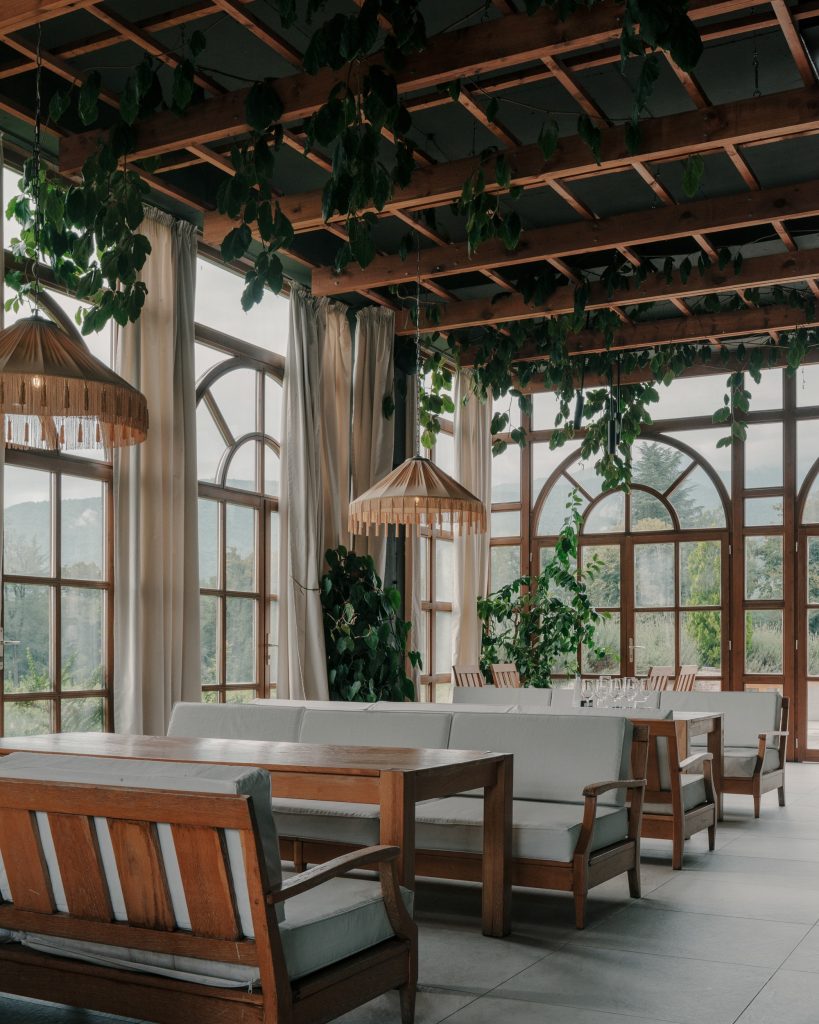
Above the winery, in the hotel’s signature restaurant that looks out directly over the vineyards and the Caucasus, Chef Meriko Gubeladze creates contemporary interpretations of classic Georgian dishes with flavours drawn from across the country’s regions, paired with the château’s own wines. Beneath the restaurant is the working cellar, and that is where, during a recent stay at Lopota, Ross from The Luxury Editor tasted a collection of the wines produced here.
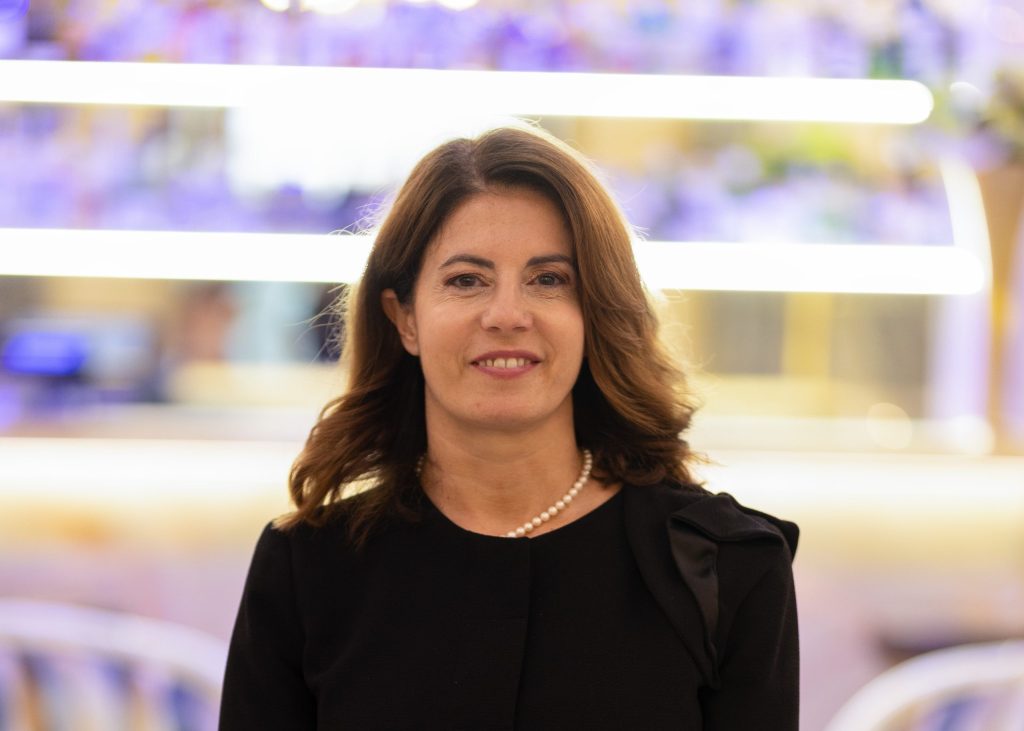
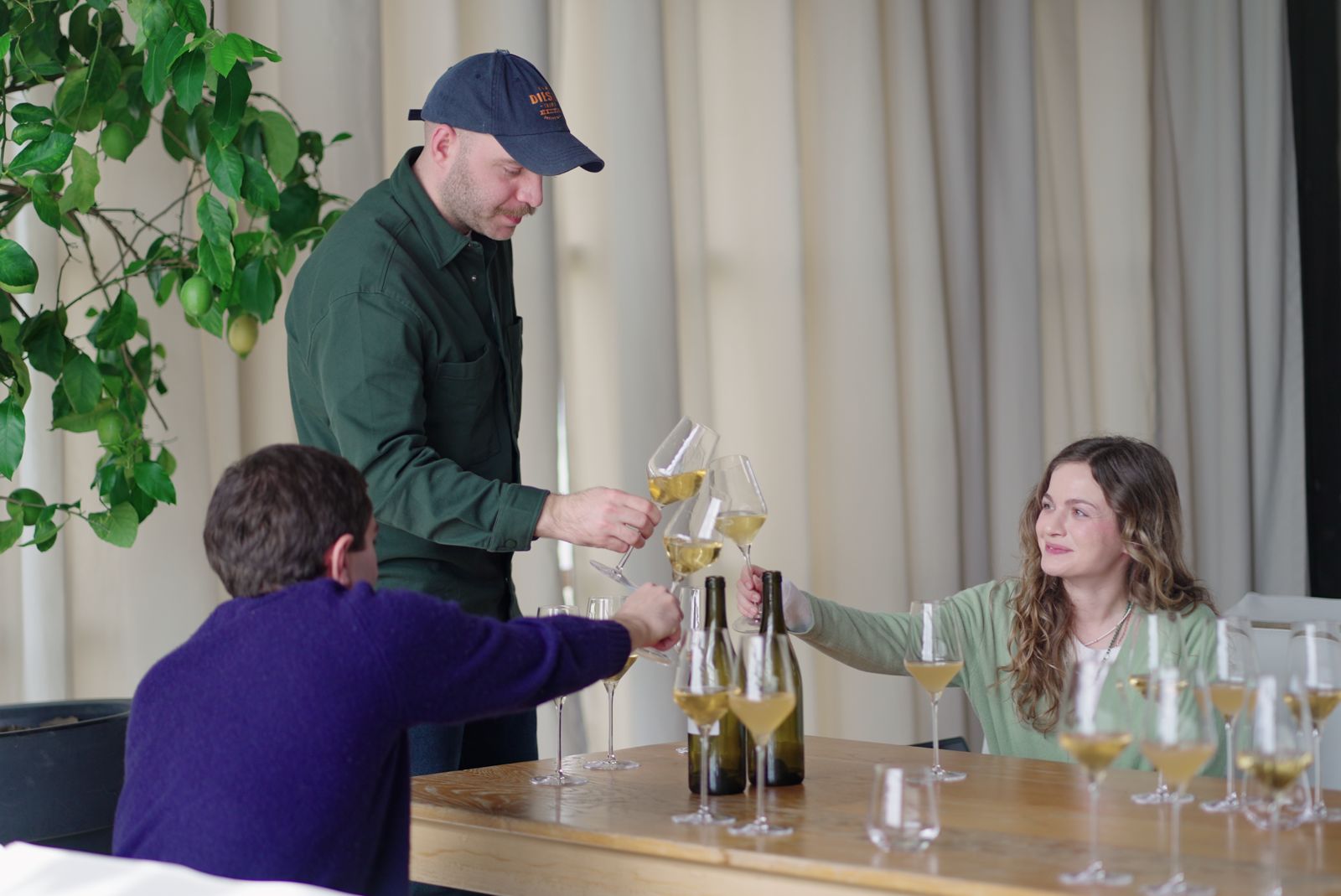
Dea Purtseladze, wine expert and hospitality professional who is the Commercial Manager at Château Buera, and Gabriel Menabde, the estate’s sommelier, guided us from qvevri to barrel, to bottle and talked us through what it takes to carry an 8,000-year-old tradition into a modern brand. Read on to discover more about this incredible winery, its history and how you can experience it too.
Dea, please tell us more about the winery and the vineyard.
It started as part of the resort, but over time, it has grown into its own entity. We no longer just produce a resort wine, but we now have a winery and a wine brand that is building a strong reputation both here in Georgia and abroad. The building, which is home to the winery, was finished in 2018, so this was our first vintage, and we’ve made wine every year since. We’re very proud that the vineyards were certified organic in 2024. We already have two certified-organic wines: an orange, skin-contact wine and a red. From the 2025 vintage, the larger part of our production will be certified organic.
We’re in Napareuli, in Kakheti, which is the main wine region of Georgia, accounting for approx 80% of the country’s wine production. Château Buera currently owns 5 hectares of certified organic vineyards from which we produce our wines; there are some exciting plans to expand the vineyard in the future.
Talk us through the harvest process….
The quality and character of a wine are determined first and foremost in the vineyard. For this reason, meticulous vineyard management and careful attention to grape quality are of utmost importance to us. All grapes undergo a further selection process upon arrival at the winery using our sorting table, ensuring that only the highest-quality fruit is used for winemaking.
The final result depends on the quality of every single grape. We destem rather than ferment with whole bunches, so the fruit goes through a destemmer, and then we begin fermentation with the juice and the skins together, as you do for red and for skin-contact wine.
Also, our vineyards are in close proximity to the winery. As a result, transportation times are very short, allowing the grapes to arrive in optimal condition and preserving their freshness and quality throughout the harvest process.
Do you inoculate, or is it wild fermentation?
It depends. Our winemaker, Vakho Khutsaidze, decides whether to work with native yeasts or inoculate with selected yeasts based on the characteristics of the harvest and the desired wine style. This approach allows us to choose the fermentation method that best expresses the quality of the grapes and the intended character of each wine.”
You use a traditional cellar; tell us about these vessels.
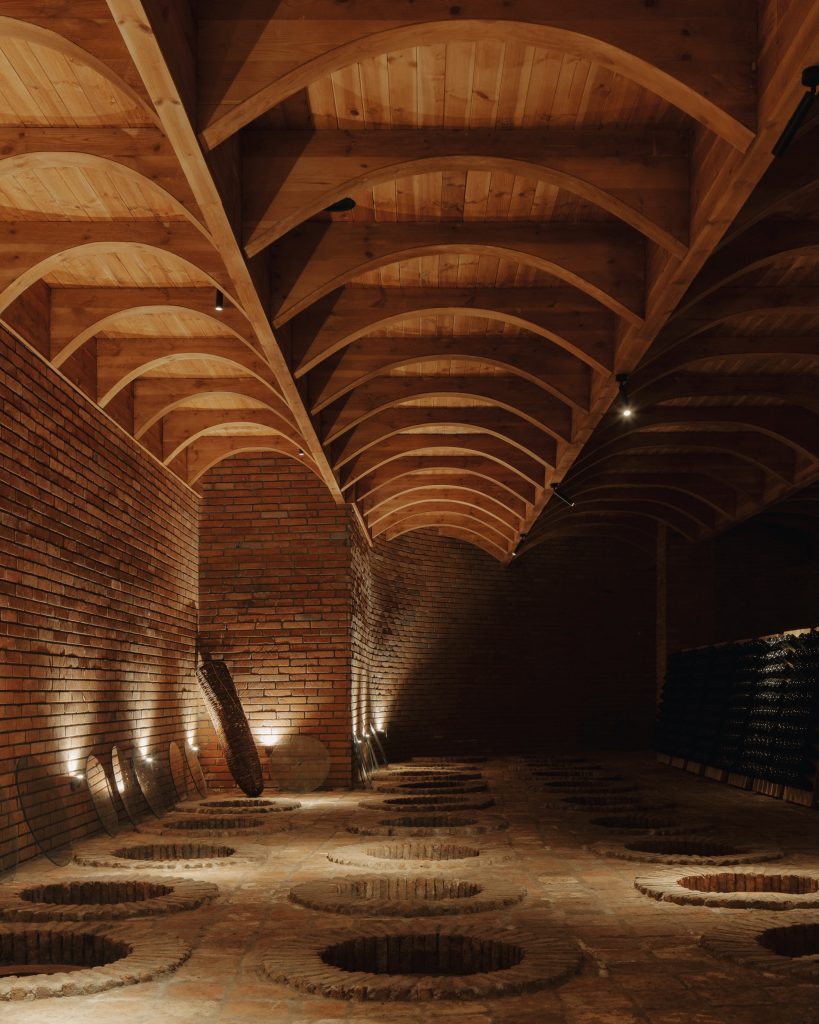
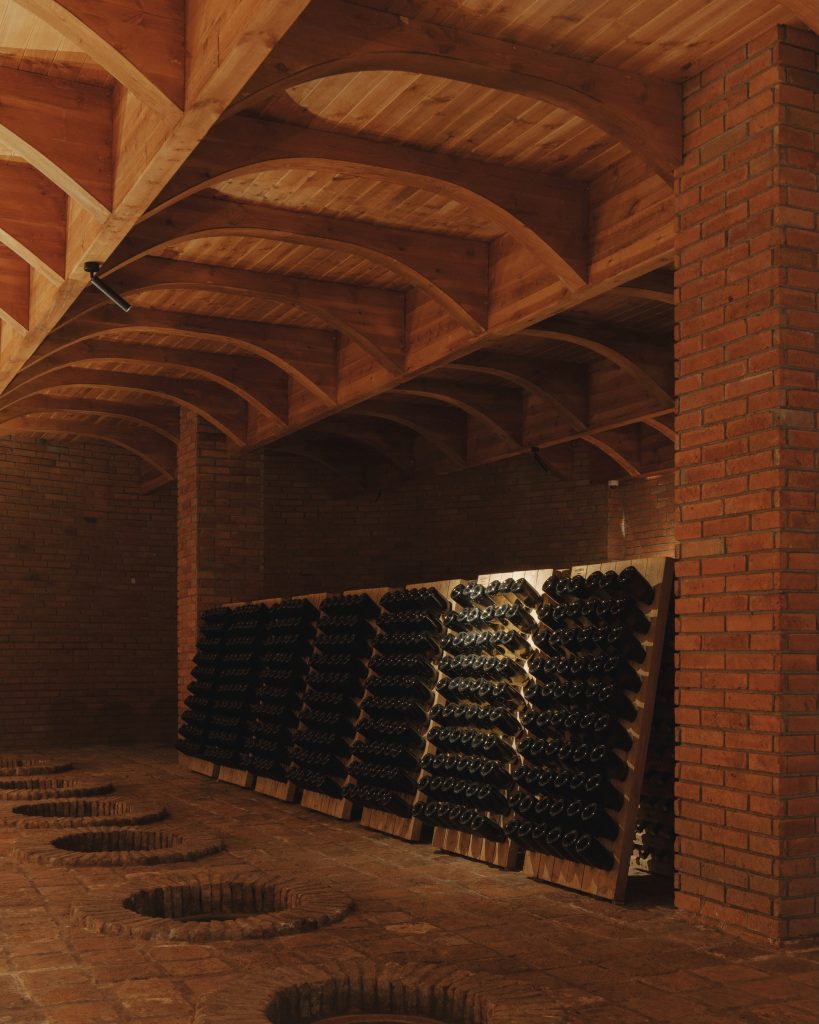
These are terracotta clay jars. In European culture, going back to the Roman Empire, they’d be called amphorae, and you still see clay used in Spain, Portugal, and Italy. But there’s a real difference between an amphora and what we call a qvevri. The amphora was historically used only for transporting wine: before glass bottles existed, people carried wine in amphorae or in animal-skin containers. The qvevri was never mobile. It was always buried underground, and it’s larger; the most comfortable size to work with is usually around 1,000 litres, though some are smaller or larger.
And this is the method UNESCO recognised?
Yes. The ancient Georgian qvevri winemaking method was inscribed by UNESCO as intangible cultural heritage in 2013. Georgia is believed to be one of the oldest winemaking countries in the world. A landmark book on the history of wine, published in 1977, was among the first to point to this region as one of the oldest winemaking lands, based on the evidence here. Then, from the 2000s, serious archaeological research really got going, with teams from several countries, including the American archaeologist Patrick McGovern. They found ancient vessels with the residue of wine inside: tartaric acid, tartrates, the chemical fingerprints of grape wine. Those finds date back about 8,000 years, to roughly 6,000 BC, which makes Georgia the oldest known wine-producing country. We think it’s beautiful that we continue that heritage, still making wine in these same vessels.
Why was the qvevri such an effective vessel?
It’s a very sustainable way of making wine. Today, we also have stainless steel tanks with temperature control, which gives the winemaker flexibility. But there was no temperature control in the past, and the qvevri solved that, because once it’s buried, the soil stabilises the temperature. The ground stays more or less the same, summer and winter, so it’s a perfect place both to ferment and to age the wine. That’s the key difference: the amphora was for transport, the qvevri for the entire winemaking process and the ageing.
The terracotta is porous, like wood. Does it add flavour?
It’s porous like wood, but it doesn’t add any particular flavour of its own, which is exactly why modern winemakers are so interested in it now that many have moved away from new oak. Some people line the outside of the vessel to limit evaporation, but it still allows a small amount of micro-oxygenation through the pores. The wine takes in a tiny bit of oxygen and develops a slightly oxidative style, but you can’t really lose wine through the clay. The real risk is cracking, from an earthquake or careless handling. So, every year, before the new harvest, we fill each qvevri with water and leave it for a week or so. If the level drops, we know there’s a crack, and it needs repair.
How does fermentation actually work in the qvevri?
We never fill it during fermentation because we need space for the carbon dioxide to escape and for the cap. Fermentation is vigorous; in Georgia, we sometimes say the wine is “boiling,” because when you look at it, it really does seem to bubble. The CO₂ pushes the grape skins up to the top into a cap, and we punch that cap down three or four times a day, which also increases maceration and the contact with the skins. Once alcoholic fermentation finishes, the cap slowly begins to sink. The egg shape of the qvevri helps the sedimentation: the skins, the pulp, and the spent yeast all clarify and settle to the bottom.
And then you rack it off?
Exactly. We rack the wine into another qvevri and leave the skins behind. The skins are what we call chacha, and we also make a spirit called chacha, distilled from those grape skins. It’s very close to Italian grappa.
Racking out of a buried vessel sounds difficult.
It used to be. Traditionally, you’d scoop the wine out with a small ladle; they were even made from dried pumpkin. That’s far too much labour now, so we use a pump fitted with a kind of strainer, so only the liquid passes through, and the skins and sediment stay behind.
What happens to those leftovers?
Nothing is wasted. The skins go to distillation for the chacha spirit, and the sediment and lees become part of our organic farming: they’re rich in nitrogen, so we return them to our own land to feed the soil. Spirit on one side, fertiliser on the other.
A question about history, 8,000 years ago, what colour were the wines?
Skin-contact wine was essentially the only kind they made. What we now market as “orange wine” was simply how wine was made: white grapes fermented on their skins. So, in a sense, all the early wines were what we’d call orange today.
You also have stainless steel. What do you think about qvevri versus tank?
The difference is more in the process than in the grape. In the qvevri, there’s very little intervention: low control, a wilder, more microbial environment, with living microbes in the interior of the clay. In stainless steel, everything is more controlled, more or less sterile, and we can manage the fermentation temperature precisely. With qvevri, we only really know the temperature when we measure it; what’s happening minute to minute, we can’t fully see. That unknown is part of the character.
So each qvevri is an individual, like a barrel.
Just like a barrel: take one and the next, and they won’t taste identical. So we taste each one and decide: this one stands on its own, these two go into a blend. Before bottling, we usually assemble the blend in stainless steel, and most of the bottling is done from there.
Where do the fresher and sparkling styles fit?
As a resort with international guests, we want to offer every style of Georgian wine. Fresh, crisp whites are very hard to make in qvevri, even without skins, because you want them at around 12 to 15 degrees. So for those, we use the stainless tanks with cooling, a little electricity to get that “fridge effect,” and that’s also important for stabilisation, for dropping out the tartrates. For sparkling base, the acidity here in Kakheti is usually too low; high acidity is rare, and when you do get it, it often means it was a difficult year. So we buy higher-acid fruit from western Georgia for that.
Tell us about the reserve program and the barrels.
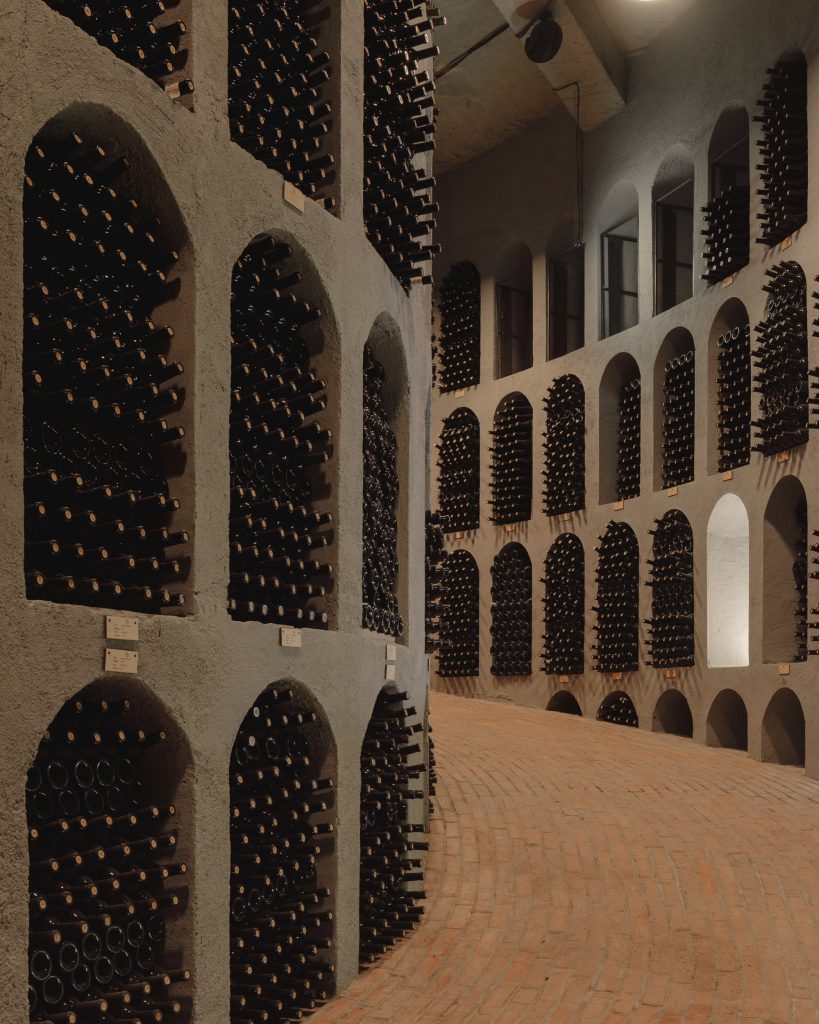
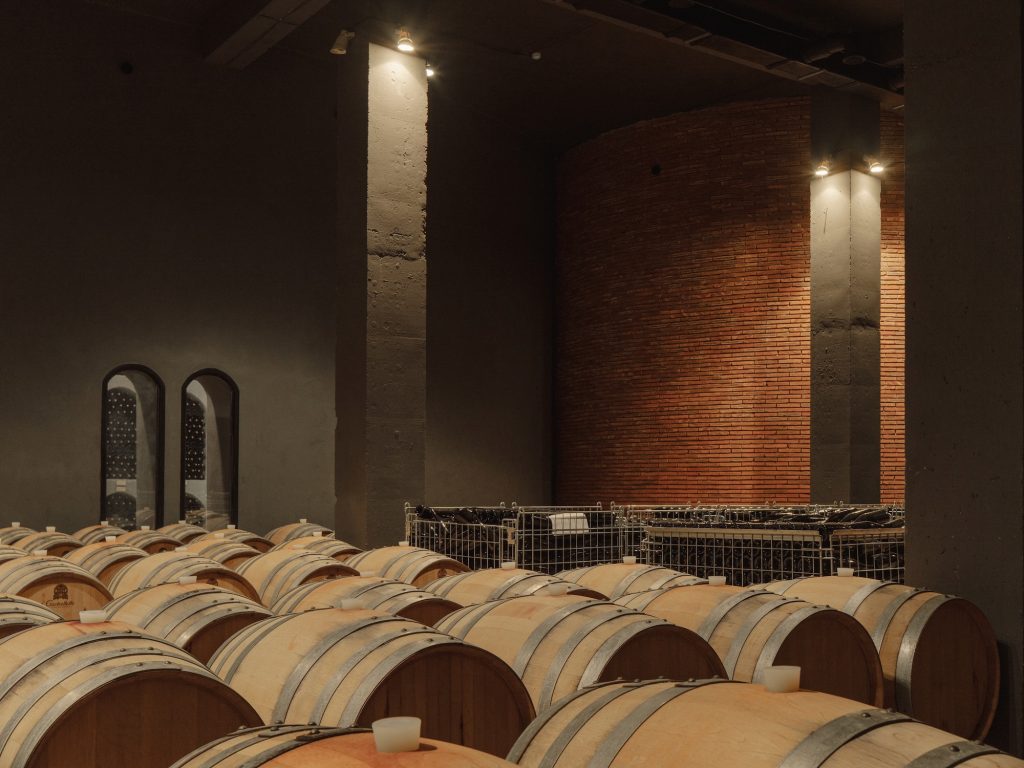
In 2018, we were among the first to plan barrel-aged wines, taking ambers and reds from qvevri into oak. The pattern is roughly six months in qvevri, in the traditional way, then a year in barrel. The oak is French, from the Italian cooperage Garbellotto; we’ve worked with them for seven or eight years and used only their barrels so far. Standard 225-litre barrels. Minimum ageing is one year, maximum two, with the red reserve usually the longest.
You mentioned experimenting beyond oak. Please tell us more.
We reuse barrels for several years, and after seven or eight years, an oak barrel goes neutral, losing its colour and aroma contribution. We know oak well by now, so we’ve started trying cherry and acacia, just to see how they behave. We have a cherry-aged wine that we’re due to taste this July. After the barrel, the reserves get at least one more year in bottle, though in practice, usually much longer.
So there are two ranges?
Two ranges, yes. The Buera wines are the fresher style, meant to be enjoyed young, fermented in stainless or in qvevri, with a fresh character. The reserve selection is everything we’ve just described: barrel and bottle ageing, built to last. But we control every stage. Sometimes we intend to age a wine for one or two years and find it doesn’t have the potential, so we adjust. From experience, our qvevri whites and the reds, with their tannins, age beautifully; only a few of our whites have the structure and acidity for it.
How do you like to present these wines to guests at a tasting event?
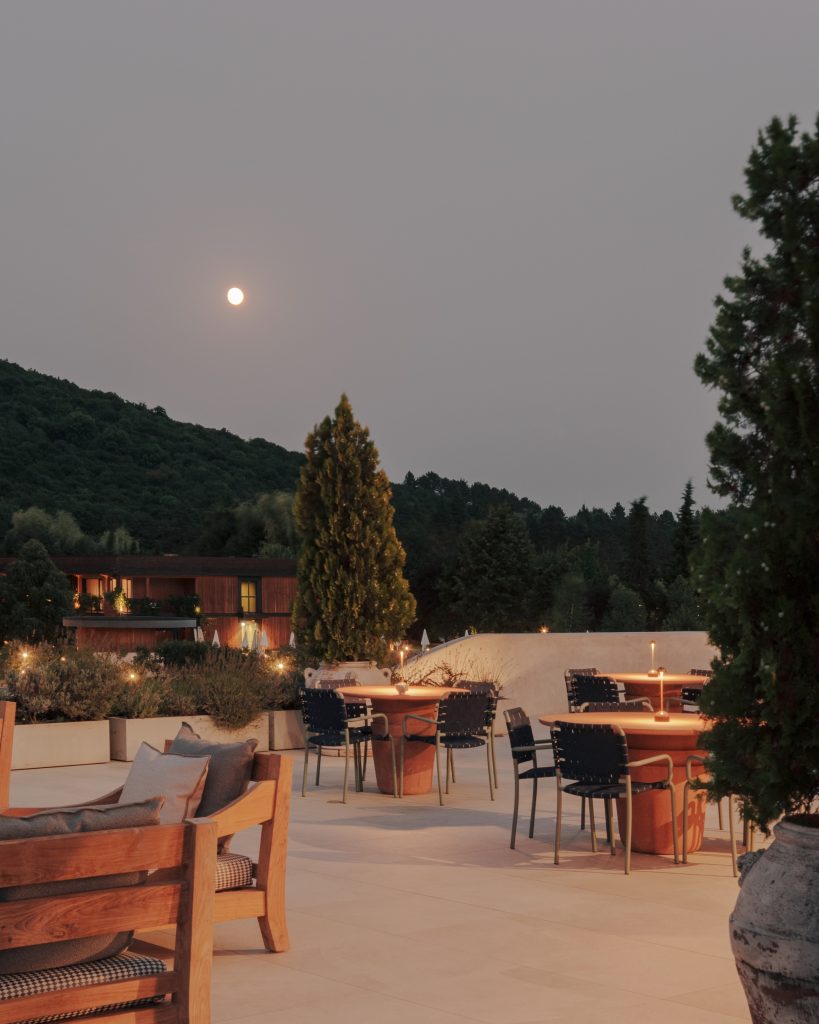
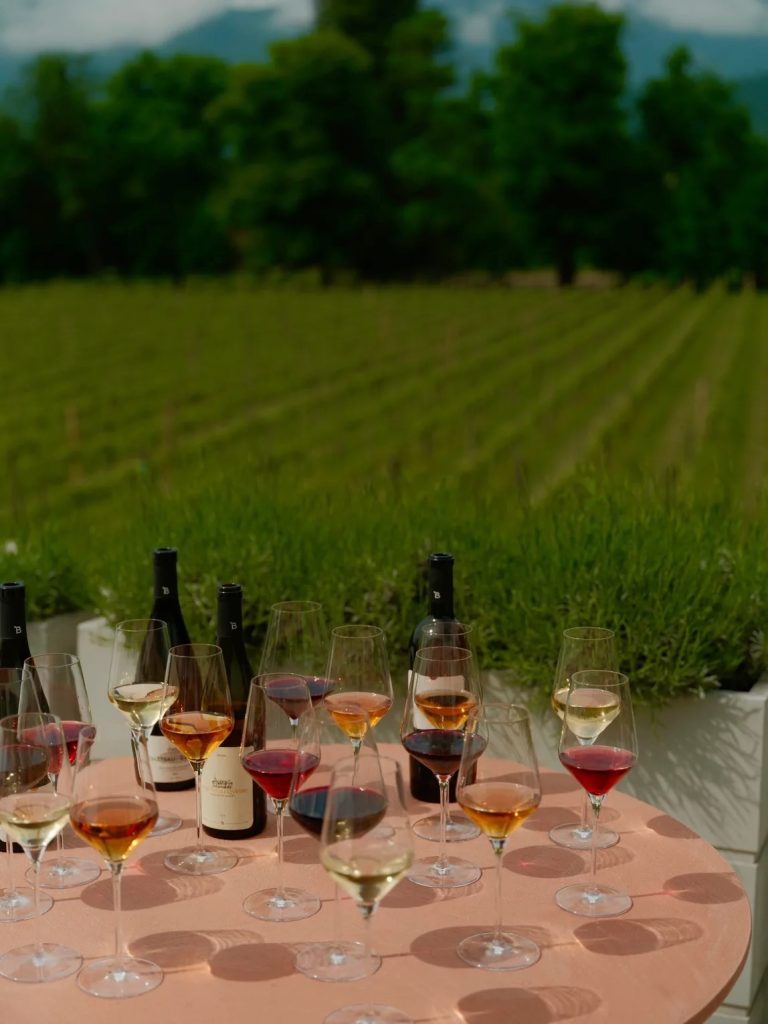
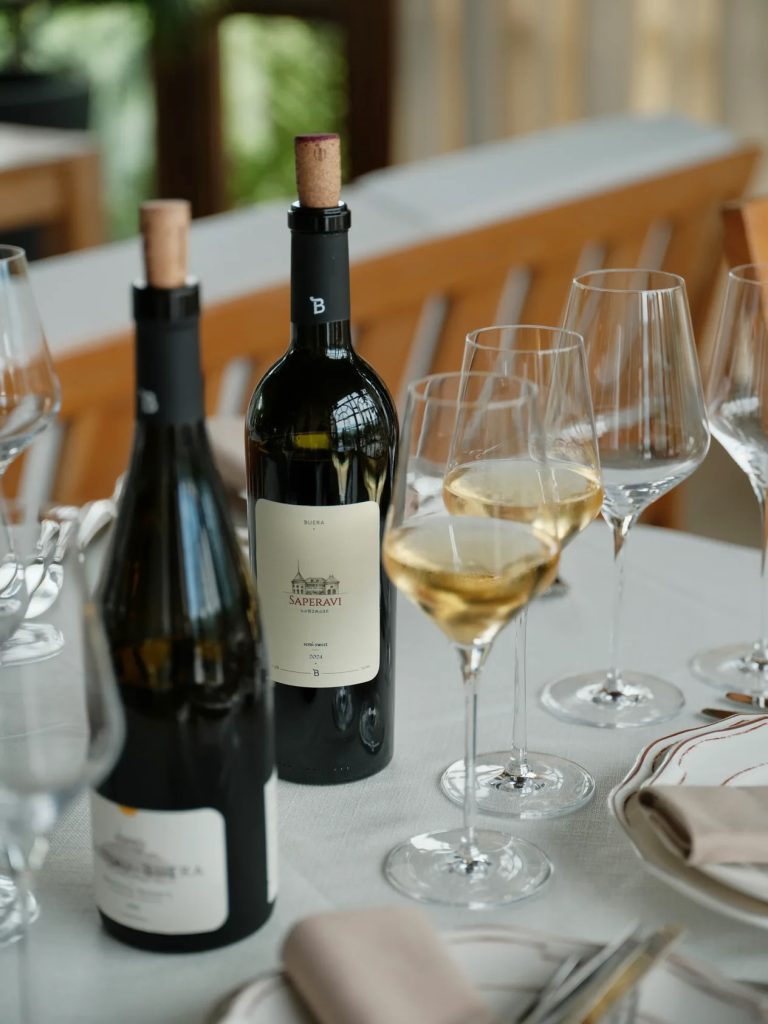
I like to start fresh and work toward depth: open with a Buera white or an orange wine, something bright and immediate, then move into the reserves once people have the shape of the estate in their mind. The wines really come alive at the table, which is one of the advantages of having Chef Meriko’s kitchen directly above the cellar: a skin-contact white with a herb-heavy Georgian dish, a barrel-aged red with something slow-cooked. And the setting does a lot of the work: when guests can taste an amber wine on the terrace with the vineyards and the Caucasus in front of them, the story tells itself.
Last question. After all the science and control you’ve described, what keeps you loyal to qvevri?
There’s always a little uncertainty with it: open a vessel you haven’t tasted in a while and you’re never quite sure what you’ll find. That’s qvevri: a bit wild, never fully under your thumb. But it’s also the thread that ties what’s in the glass on the terrace to something that was made on this land 8,000 years ago. We wouldn’t have it any other way!