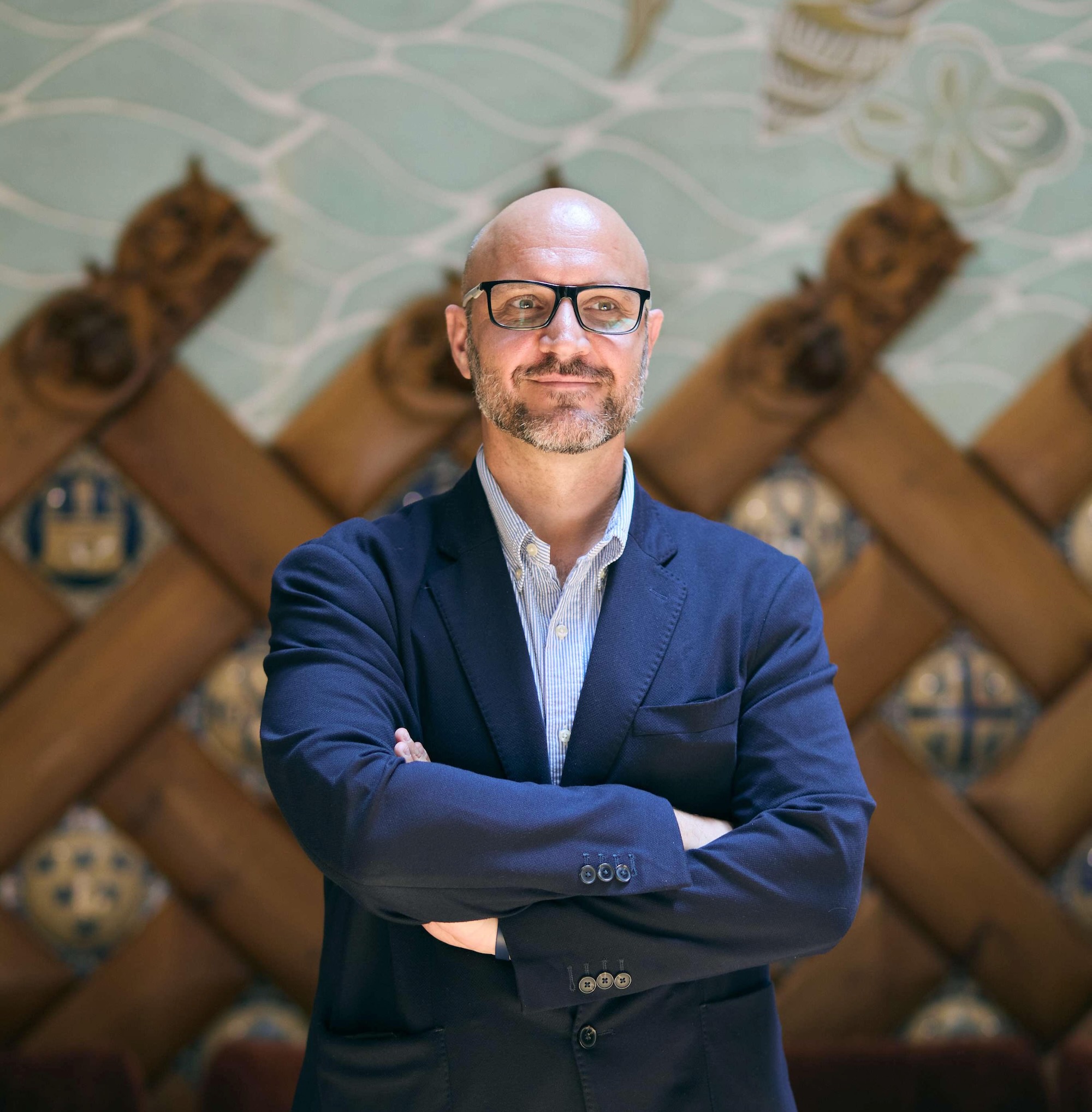
Few hotels in Barcelona can claim to be a work of art in their own right, but Hotel España Ocean Drive carries exactly that distinction. Opened as the Fonda España in 1859 and reborn at the turn of the century under Lluís Domènech i Montaner, one of the fathers of Catalan modernisme, it remains a place where you can breakfast beneath Ramon Casas’ murals and check in beside a five-metre alabaster fireplace by Eusebi Arnau, all a few steps from La Rambla in the heart of the Raval.
Today it is part of OD Hotels, the Ibiza-born group whose young, design-led spirit makes for a unique pairing with a storied setting. We sit down with General Manager Eduard Soler on a recent trip to Barcelona to talk about what it means to be the custodian of a modernista landmark, how he reconciles OD’s contemporary energy with more than a century and a half of history, the hotel’s place in one of the city’s most characterful neighbourhoods, and the long-awaited return of Fonda España under Martín Berasategui.
Eduard, to begin, tell our readers a little about yourself and how your journey in hospitality started.
I grew up within a family business, which is now more than seventy years old. It was a pastry shop, café, and catering company in my hometown. I was always in the kitchen from an early age, starting from age eight or nine, making pastry, helping behind the counter, wrapping parcels, sitting at the till counting the money. So my first real training was in those early years of life, and from there I moved into working in restaurants. I studied restaurant administration at university and then specialised in tourism and hotel management, first with restaurant kitchens, then front of house. This included a Mediterranean restaurant, serving signature, seasonal dishes, near my hometown, which has held a Michelin star for over forty years. I then moved into working within a hotel, in a front desk setting, then into management. I trained at CETT, the University of Barcelona’s hospitality school, which is one of the best-known in the sector here.
By 2009, I knew I wanted to go abroad; it was calling me. Through the University’s placement programme, I came across an opening with one of Central America’s biggest hotel groups, which ran InterContinental, Marriott, and Choice properties across the region, and I thought, that is my calling! I joined as part of a six-month international management programme, specialising in food and beverage, which had been my whole career by that point, and at the end, they offered me a permanent role. I thought I would stay three years, but I ended up staying twelve.

You’ve run hotels across Costa Rica, Honduras, and Colombia. What did those years teach you about hospitality that you couldn’t have learned anywhere else?
They taught me that people are the base of everything in this industry, and you need a good team for a business to flourish. I started in food and beverage in Costa Rica, running five restaurants and catering for a couple of thousand people, and grew from there into general management; my first hotel as a GM won the group’s award for the best Clarion in Central America in 2019, just before COVID arrived and turned into its own crash course in keeping a hotel open and a team calm far away from home.
However, the deepest lesson I learnt was cultural. In Spain, we are direct, sometimes to the point of seeming rude; we will ask for a glass of water without a please or a thank you. In Central America, it is the other way around. People are polite and generous with their emotions. They might take their time bringing you that glass of wine, but they bring it with a sweetness that makes you forgive the wait.
What stayed with me is that within the heart of hospitality service is a genuine emotional connection, the kind that feels real and not rehearsed, and to motivate a team, you first have to understand where they come from. More than ten hotels later across very different countries, I have learnt to stop making decisions because you think you are clever and start making them because you have lived the situation before.
And what was it that brought you back to Barcelona?
In the end, after twelve years, I had built a whole life abroad; I married my wife, Maria, and our child was born in Costa Rica. But I wanted us to grow up close to my parents in Barcelona. I left on the best possible terms, with the door always open. When I got back to Spain, there was an interlude first, then I went to open a five-star hotel in Andorra that had sat finished but empty for years, and we got it running in a matter of months, straight into a hard winter season. However, for all its quality of life, Andorra was too cold for me and too quiet. Then a friend from my CETT days, Antonio, who runs operations for Ocean Drive, called and asked if I wanted to come and work in Barcelona. And that was the way home, and the start of everything we are now building with Ocean Drive here.
You were General Manager at Ocean Drive Barcelona, the group’s first hotel in the city, before taking on a protected modernista landmark a few streets away. With the opening of Hotel España, how has the OD experience here evolved?
I came into the business first at Ocean Drive Barcelona. The hotel had been sold after about a year in operation, the general manager had moved on, and they needed someone quickly; that was when Antonio called me. I started there, and soon after, I was offered the project to renovate Hotel España. I arrived in February 2025, the works began in July, so I had a few months to prepare. The moment I saw Lázaro Rosa-Violán’s renders, knowing OD’s people and its style already, I knew this was where I wanted to be for the next few years. For me, a building like this shows the Ocean Drive brand maturing, carrying the energy it was born with into something that can also hold a century and a half of history.


OD was born in Ibiza, young, design-led, a little hedonistic. España is more than a century and a half old and rather grand. Do these two instincts combine together?
They have more in common than you might expect. What runs through every OD hotel is a love of architecture, design, heritage and an authentic guest experience. For example, OD Madrid sits inside an old cinema, famously the first place in the city to show Star Wars, right opposite the Teatro Real; OD Las Setas in Seville took over a grand old hotel. Hotel España Ocean Drive is the most different of the family, and the grandest, but the thread is the same. A respect for the building and a wish to reconnect it with the city around it. At Ocean Drive we call that the neighbourmood, creating an atmosphere where locals and visitors mix, where the hotel belongs to the barrio rather than being something only tourists enjoy. It is the idea that runs through every OD hotel, and here it simply has more history to work with.
When OD took it on, where were you simply not allowed to touch, and where did you manage to be unmistakably OD?
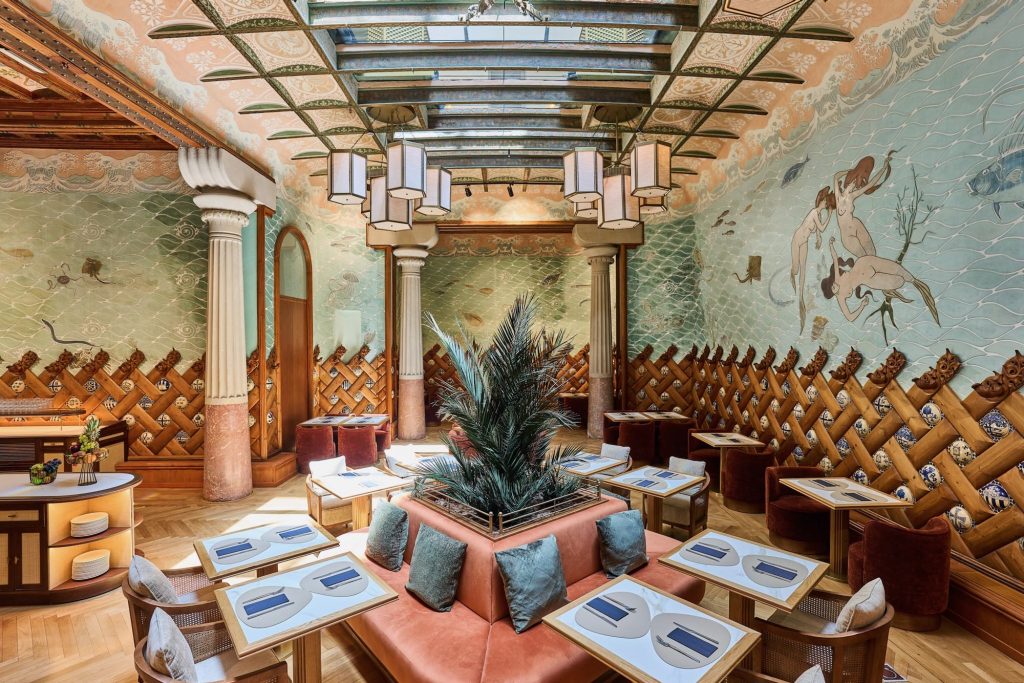
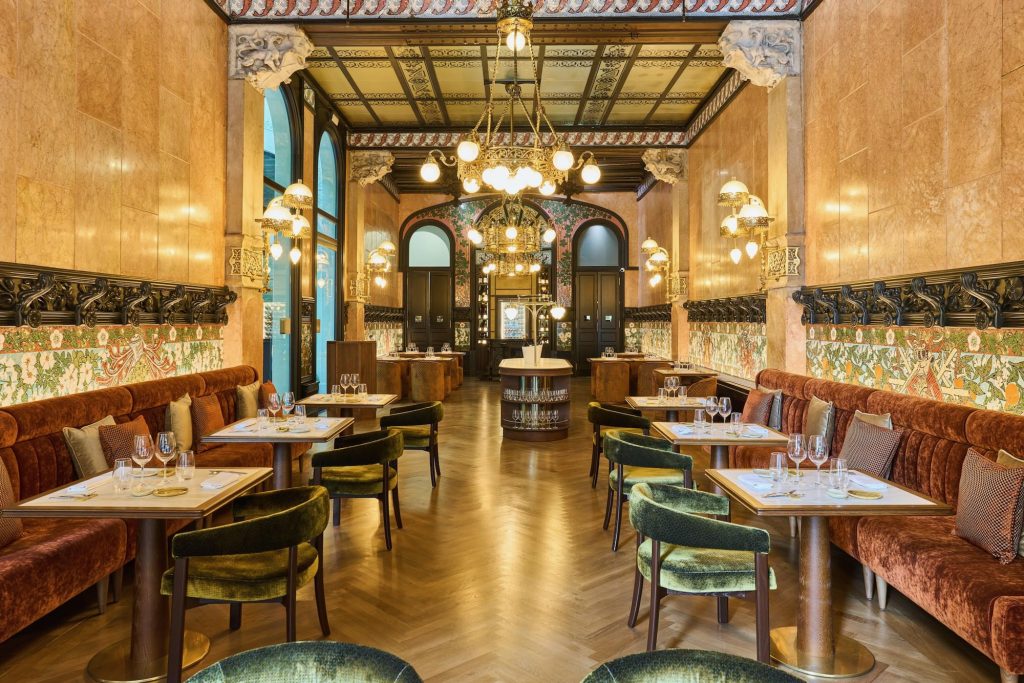
The heritage protections are very strict in Barcelona, and quite rightly so. The Fonda España dining room, one of the most protected spaces within the whole building, we couldn’t touch. During the works, we even clad the walls in protective panels so nothing could be damaged. The only part of that historic room that is not protected is the small central section, and that is where we put the lift to carry furniture up through the building to the bedrooms and rooftop.
Even on the rooftop, when we wanted to lower the level of the skylight roof slightly, we were told no, it is not original, so it stayed as it was. Where we could be ourselves was in the rooms, which are completely renovated, on the rooftop, and in the new spaces like the cocktail bar we were able to inject the OD personality. The rules were simple, conserve everything that carries the value of the hotel, and let OD show only in the parts that were ours to shape.
Why did OD Hotels choose a heritage building?
That one is really for Marc, our CEO of OD Hotels, but I can tell you what I see from my perspective. Marc and his wife, Anna, are art lovers, his father is an architect and his mother a designer, so he has a real feeling for architecture and heritage. He looked at this property and saw an icon. For years, a lot of Barcelonans barely knew it was here. Even now, when I tell friends I work at Hotel España, some of them have no idea what I mean, and then they step inside and say, what is this place? That reaction never changes. The hotel sits beside La Rambla, steps from the Liceu. OD could easily have built a brand-new Ocean Drive Barcelona somewhere else instead. Choosing this was the harder path but ultimately more rewarding, and I think that is exactly why they wanted it. It is Ocean Drive doing what it does best, taking a building with real soul and giving it back to the city, a local and authentic experience rather than something you could find anywhere.
For our readers new to the OD hotel brand, how would you describe the experience in your own words?
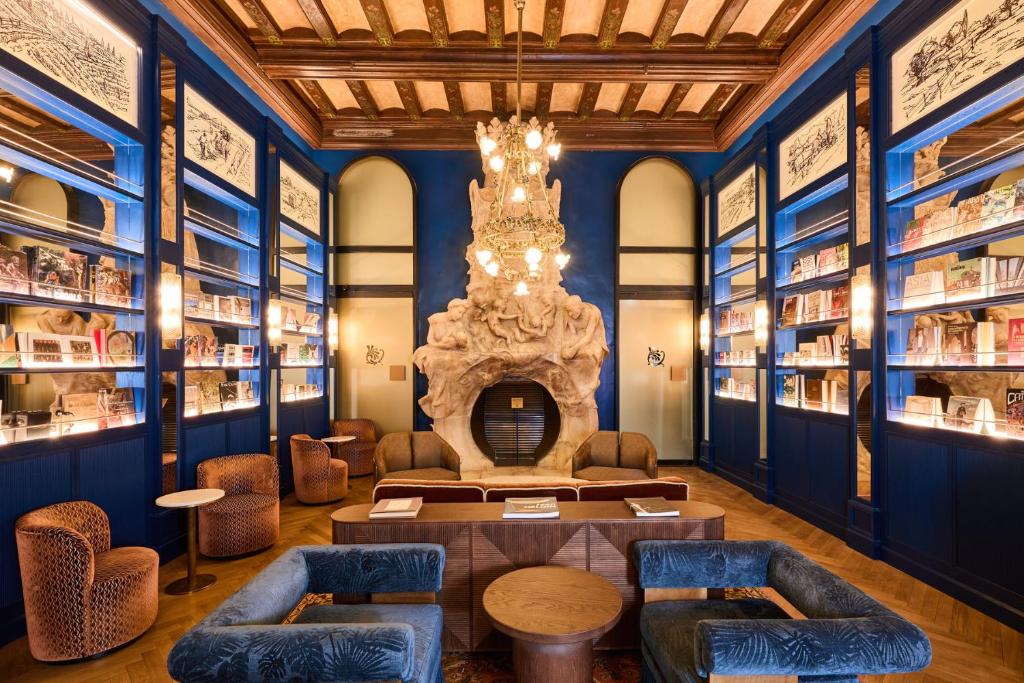
At heart it is about a local, authentic experience, what we call the neighbourmood. Every OD hotel has that, and each one does it in its own way. Here at Hotel España Ocean Drive, it begins with culture, and it begins with the architecture. This is a wonderful example of Catalan modernisme, the work of Domènech i Montaner, one of the fathers of the movement and a peer to Gaudí. The building is protected, and we want to show it off, but it doesn’t stop there. We have a library filled with the key figures who tell Barcelona’s story, and a vinyl corner, with vintage records celebrating great musicians, which feels right with the Liceu as our neighbour. Then there is the cherry on the cake, Fonda España by Martín Berasategui, who holds more Michelin stars than any chef in Spain, serving Catalan cuisine. You experience Barcelona with all your senses. And that is before we have even mentioned the Dorita cocktail bar and the OD Sky Bar, both with an atmosphere all their own. It is quite unique.
The rooftop OD Sky Bar and pool has become an OD signature across the group. What do you feel the Barcelona one adds to the city’s rooftop scene?
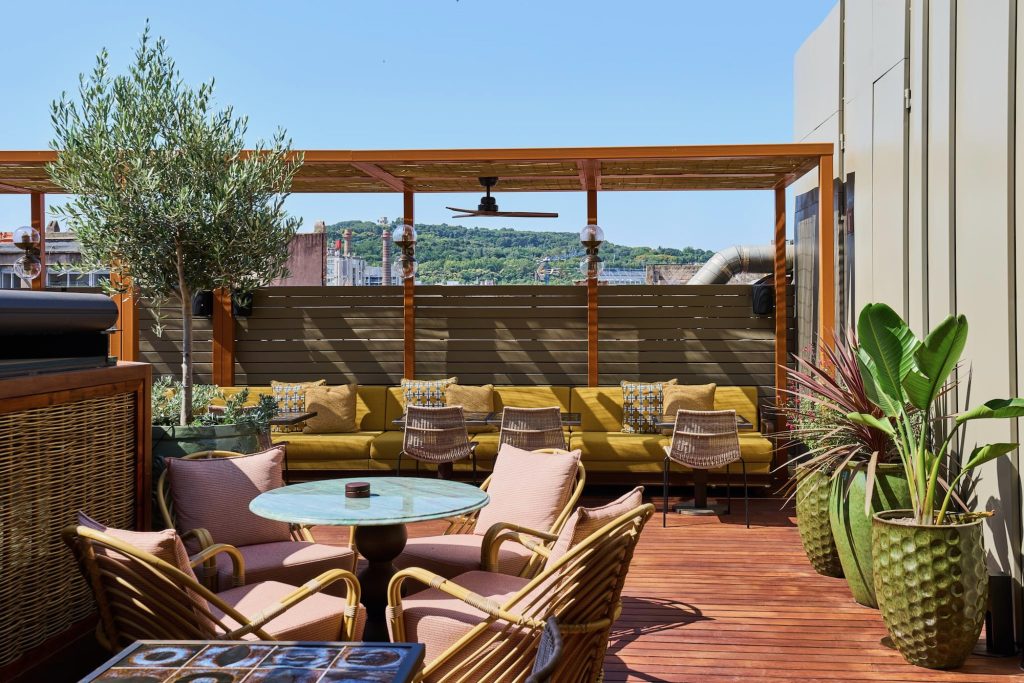
Our rooftop, the OD Sky Bar, is open to Barcelonans and not only to our guests, and that is really the point of it. There is lounge seating and a plunge pool, and at sunset you can watch the light fall behind the Sagrada Família with a drink in your hand. What sets it apart is the programming and the drinks. We collaborate with the teams behind some of Barcelona’s best cocktail bars, and from this May, there are DJ sessions every Friday and Saturday. It is not a rooftop you come to once for the view, it is one the city can keep coming back to.
The group runs its own events all year round. What kind of nights can people look forward to here?
We have an events manager dedicated entirely to cultural programming. Up on the OD Sky Bar, the DJ sessions run every Friday and Saturday from May, and from June, there is live music every Thursday right through the summer. Beyond that, once a month, we host an evening we call All These Stories, where a couple of book presentations meet an art exhibition and live music or a DJ, and we put on things like bossa nova nights and acoustic sets from local collectives, the kind where you only find out the location the night before. It all points the same way: drawing the city into the hotel.
OD often talks about the “neighbourmood”, the hotel as a hub for locals, not only guests. In a barrio as layered as the Raval, what can both guests and locals expect from the property?
Fonda España has been a local institution for generations. People in Barcelona have come here for lunches and celebrations for decades, long before OD arrived, and that has not changed. Within we are building places for the neighbourhood to use: Dorita, our cocktail bar with live music, and Dorita Club, a private event space for up to eighty guests. The whole idea is to keep the hotel in touch with the barrio, so that a local and a visitor can end up at the same table. That is what the neighbourmood means.
Hotel España first opened as the Fonda España in 1859, with interiors later transformed by Domènech i Montaner, including Ramon Casas murals, and a five-metre alabaster fireplace by Arnau. What’s it like to be the custodian of a building like that?
It is a responsibility and a privilege at once. Our job is to conserve, to protect everything that makes this place what it is, because that is its real value. But it is also something you feel every day. When you stand in these rooms, you are looking at history; people have eaten here for a hundred and sixty years, and now we are writing the next chapter of it. The building is full of photographs, films, and memories. We had a receptionist who worked here for more than fifty years. A soap opera was once filmed in these very rooms. You are not just running a hotel; you are looking after a piece of the city’s memory. That is the neighbourmood in its truest form, a place that belongs to Barcelona first, and to Ocean Drive as its custodian.
Fonda España reopened in May under Martín Berasategui, with Edu Rodas leading the kitchen. Berasategui’s brief was a fonda: honest, traditional, unfussy. Tell us more about what guests can expect?
It is Catalan and Spanish cooking, traditional, with the hand of Martín Berasategui behind it; he holds more Michelin stars than any chef in Spain, and he has been overseeing this restaurant for years. The brief for this restaurant was a fonda, so the food stays honest and rooted, updated a little without ever being turned into something it is not. No deconstructions, no fireworks for the sake of it, contemporary but never overworked.
And if you were sitting a guest down tonight, which dish on Edu Rodas’s menu would you point them to first?
My own recommendation would be the grilled artichoke with egg yolk and a vegetable sauce, which is spectacular, and then the stuffed baby squid with pork, its own ink, and crispy rice. Honestly, everything on the menu is good, but those are the two I would put in front of you first.
Barcelona is full of luxury hotels. What makes Hotel España Ocean Drive the one to choose over the obvious names?
Hotel España Ocean Drive is all about location, history, character and the local experience. We are a minute from the middle of La Rambla, next to the Liceu, in the heart of the old city, and you are staying inside a unique, protected modernista building by Domènech i Montaner, one of the fathers of the movement, so you are living the history rather than admiring it from across the street. Add the cooking, the cocktail programme and the art and design throughout, and you have something the obvious names simply cannot copy.
What do you most want a guest to feel by the time they leave?
What they experienced was genuine. That they were looked after by people and not by a system, that someone knew what they needed before they even had to ask for it, and that for a few days they were part of the long story of this place. For me, that is what an authentic, local experience means, and it is what Ocean Drive is really about. If a guest walks out feeling that, then we have done our job.
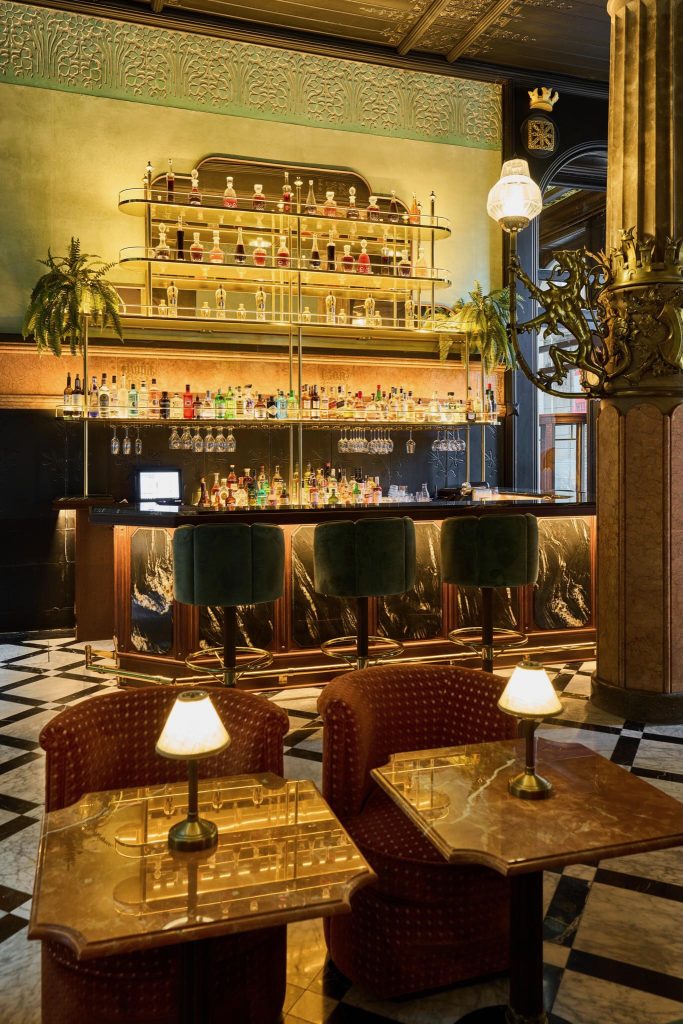
Tell us about Dorita, the new cocktail club. It takes its name from La Bella Dorita and the old cabaret world, “elegance with a bit of mischief.” How far do you push the mischief in a building this revered?
Dorita is our nod to that cabaret world, named after La Bella Dorita herself, and Dorita Club at Hotel España Ocean Drive beside it is our private event space, where guests can book celebrations for up to eighty people. The cocktails are designed by the people behind some of the best bars in the city. But the mischief always has to respect the building. In these protected rooms, we are careful: cocktails, book presentations, intimate evenings, yes, but not big, rowdy parties, because protecting the heritage comes first. So it is elegance with a wink rather than elegance thrown to the floor. The setting is part of the fun, and we are not about to put it at risk.
Luxury means different things to different people. What does it mean to you?
For me, in this industry, luxury is quality in the materials and the spaces, comfort, and above all, a discreet service that senses what you want without smothering you. Not over-service, not staff hovering at your shoulder, but real human contact, which matters more than ever now that everything happens through a phone. It is a service that anticipates your needs and creates good feelings, which comes across as authentic rather than standard. That, to me, is luxury.
And finally, what is your personal motto, if you have one?
Honestly, I don’t have one single motto. What I have instead is a head full of Catalan and Spanish refrains, the old sayings, which I use with my team to sum up a moment or a situation; one good proverb can say more than a long speech. I am also a lover of hip-hop and rap, and I take a lot from that style of contemporary poetry too. One motto that springs to mind is, ‘If you want to change someone, start by changing yourself’. I collect those lines, and they have served me better than any motto ever could!