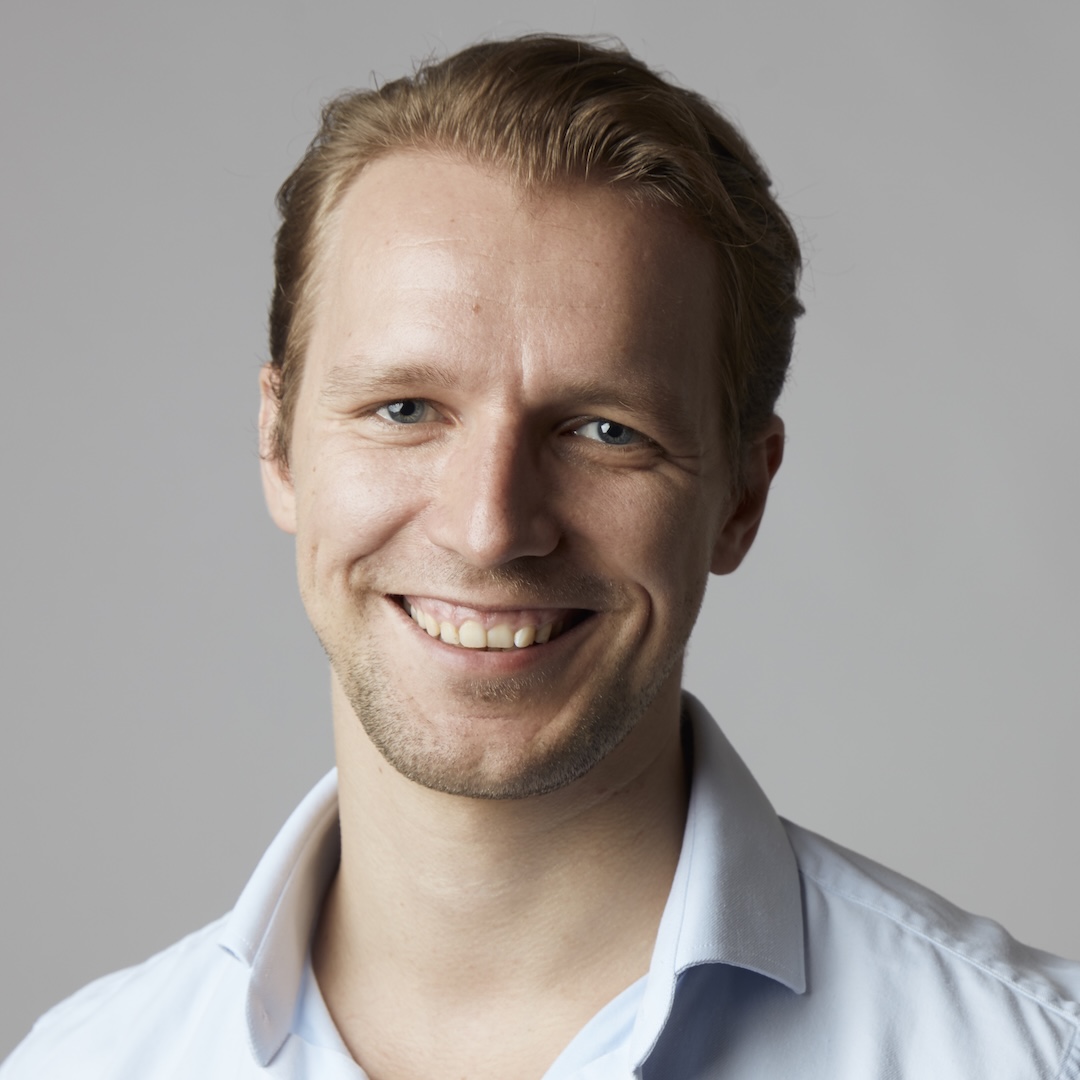
Nikolaus Thomale is Co-Founder at MYNE, a holiday property business based on the managed co-ownership (fractional home ownership) model that’s changing the way people buy and enjoy holiday homes across Europe. Their mission is to ‘give more people the opportunity to fulfil their dream of owning a holiday home’.
As a successful entrepreneur and investor in the technology sector, Nikolaus’s role at MYNE is primarily focused on structuring and platform operations. In this interview today, he shares valuable insights into the world of luxury holiday home ownership. Read on to discover more.
You studied law at Bucerius Law School in Hamburg and Tel Aviv, yet your career has been firmly entrepreneurial. Did you ever intend to practise, or was the law always a foundation for something else?
Law was a passion, but never the destination for me – it was always the foundation. What drew me in, and what has proven far more durable than any intention to practise, is how legal training rewires the way you think: rigorous logic, structured problem-solving, and the discipline to work through complexity without losing sight of the practical outcome.
That foundation turned out to be exactly what MYNE needed. Fractional co-ownership of premium properties spans multiple European jurisdictions, each with its own legal and tax environment, its own mortgage systems, its own regulatory quirks. Our real achievement has been to take that complexity and make it invisible to the customer – to simplify these fragmented legal and tax environments across Europe, structure the co-ownership cleanly, and build in the financing, so that what reaches the customer is a simple, elegant product rather than the legal machinery behind it.
So no, I never intended to practise in the traditional sense. But I use what the law taught me every single day. It gave me the toolkit to build something that would not exist without that foundation.
And what was the pivotal moment that led to establishing MYNE?
MYNE started with a very personal observation.
We were lucky enough to have a holiday home growing up, and many of my favourite memories were made there. At the same time, I realised something that stayed with me: despite the significant investment and effort involved, the property sat empty for most of the year. Like many holiday homes, it was used for only a few weeks at a time, while the costs and responsibilities continued year-round.
That observation shaped how I think about holiday home ownership today. When my co-founder Fabian and I started MYNE in 2021, our goal was to create a smarter model – one that allows people to enjoy the benefits of owning a holiday home without taking on the full cost and complexity alone.
We wanted ownership to be real, tangible, and straightforward. A model where people can own part of an exceptional property, use it regularly, and leave the management, maintenance, and administration to professionals. In short, a model that reflects how people actually use holiday homes today.
Co-ownership still gets confused with timeshare, which carries a lot of baggage. How do you explain the difference to someone encountering the model for the first time?
Timeshare and co-ownership share almost nothing beyond the idea of splitting time in a property.
With a timeshare, you are paying for the right to use a property for a fixed period. There is usually no equity, no asset, and historically, it has been very difficult to exit – the model was built around sales volume, not the ownership experience.
Co-ownership works differently. Owners hold actual equity in their property. As shareholders in the asset itself, they benefit from the property appreciating in value and can sell their shares – and in the past, owners have achieved returns of between 5% and 20%, depending on the holding period. What really sets co-ownership apart is what happens when you are ready to move on: resales typically complete within two to three months, and some shares have sold in as little as 48 hours, thanks to active waitlists for most of our properties.
But the most important factor is that with co-ownership, this is a home. It is furnished to a luxury specification, managed to a standard you set, and the people sharing it with you have chosen and invested in that exact property too. A natural community forms around that shared commitment – owners with the same standards and the same outlook. That is about as far from a timeshare sales room as it is possible to get.
You and your co-founder Fabian Löhmer launched MYNE in 2021 and within a relatively short time you’ve expanded very quickly. Please tell us more about this journey and the most prominent lesson you’ve learned so far.
We did not map all of this out in advance, and growth has outrun our own expectations more than once. We launched in Germany and Austria, expanded into the Mediterranean markets, and raised approximately £34 million (€40 million) in Series A funding – one of the largest proptech rounds in Europe in 2024. We now have over 120 properties across nine countries and around 1,000 co-owners in the network.
The most important lesson has been about trust. Co-ownership asks people to make a significant financial and emotional commitment – shares range from £99,000 to £900,000 – and the model only works if every part of the experience earns that trust, from the legal structure to the app to the people you are sharing with.
Expanding into nine countries in a few years has occasionally meant moving faster than our own internal processes could keep up with – building out local service and compliance infrastructure after entering a market rather than fully before it. We have learned to sequence that differently as we have grown. When we get the trust question right, owners become our most powerful advocates, and that has shaped everything about how we build.
You’ve expanded across Germany, Austria, Italy, Spain, Portugal, France and into Sweden. How do you decide where to go next, and how much does buyer demand versus the right property supply drive that?
Demand and the right supply rarely align on their own, and we do not move until they do.
Demand tells us where buyers want to be, and the data has been very clear. The Housing Price Index rose 13.4% year-on-year in Q4 2025 in the Balearic Islands, according to Spain’s Instituto Nacional de Estadística (INE). This is reinforced by reporting of over 10% annual growth in Mallorca’s premium segment, alongside close to 20% appreciation over the past five years.
The Mediterranean continues to dominate, but we are also seeing genuine appetite for markets that feel less obvious. Sweden is a prime example, where the Stockholm Archipelago has attracted serious interest.
We spent months walking properties in the Stockholm Archipelago before we made a single offer. The data told us where to look, but only being there told us whether a place would work for owners in February as much as July.
We are extremely selective about where we expand. We are looking for properties that meet a quality threshold, have the infrastructure to support year-round use, and sit in locations where buyers will genuinely want to return. Lifestyle appeal, long-term property growth potential, and sustainability all factor in. It is not enough for a destination to be beautiful. It has to work for repeat visits, which is exactly what our owners are looking for.
Which destinations are surprising you right now – places drawing more interest than you’d have expected a few years ago?
Sweden is the answer that surprises most people. The Stockholm Archipelago sits well outside the obvious holiday home map, and yet the interest has been extraordinary – particularly from British buyers who had previously only considered southern Europe.
It is hard to reduce what draws them there to a single thing. It is the landscape, the sense of remoteness while being very close to the city of Stockholm, the quality of light, and a slower rhythm of life that feels genuinely restorative rather than staged. What is interesting is that this appeal is not despite the Archipelago being less obvious – it is partly because of it. Buyers who already own in the Mediterranean are looking for a second dimension to their portfolio, somewhere that offers a different kind of escape.
It has widened our own thinking about what a desirable destination actually looks like, and I expect it will not be the last unexpected market we move into.
One of MYNE’s founding insights is that most holiday homes sit empty for up to 40 weeks a year, which is staggering. Beyond your own model, what does that inefficiency tell us about how the luxury second-home market has traditionally worked?
The market was built around aspiration rather than use – and the numbers make that hard to ignore. For decades, the status of owning a holiday home mattered more than whether the home actually made sense for its owner. People bought, maintained, and worried about properties they visited a handful of times a year, and the industry around them had little incentive to point that out.
The numbers are striking. 35% of consumers are now actively concerned about properties sitting empty for much of the year, and 56% support government action to address it. There is a real social cost to underused homes in popular destinations, from pressure on local housing markets to seasonal strain on infrastructure and businesses that cannot sustain themselves outside peak months.
MYNE properties are occupied up to 85% of the year. Even in the off-season, occupancy runs at 60 to 70%. That is what happens when you match owners whose lifestyles genuinely complement each other, so the home is in use across the calendar rather than clustered around the same two weeks in August.
The luxury traveller increasingly wants to enjoy more authentic experiences and are also looking for new ways to experience familiar destinations, please give us your insights into these demands, if it has changed your own client profile and how it is impacting the luxury travel market.
The change is real, and it has reshaped who buys from us. Our report found that 61% of Brits now prefer returning to the same destinations rather than constantly seeking out new ones, and 47% want a regular base abroad – a fundamental shift. The most discerning buyers now want depth, not breadth: the best table on a Tuesday in September, the walk that nobody else takes, the local market that does not cater to tourists. That kind of knowledge only comes with return visits.
The definition of luxury is shifting alongside it: 59% of consumers now define it as a hassle-free, turnkey experience rather than sheer opulence.
Our client profile has evolved accordingly. We are attracting buyers who are very clear about what they want: a home that feels genuinely theirs, in a destination they know well and want to know better. The appeal is spreading well beyond the traditional second-home buyer, too – younger, asset-aware buyers who understand the investment case, remote workers who want a well-managed base in Europe, families who want consistency for their children.
Please tell us more about MYNE’s Holiday Swap programme which offers access to premium European homes across multiple destinations.
The exchange programme is one of the features our owners value most, and it emerged directly from listening to how they actually use their properties.
A one-eighth share gives you approximately 6.5 weeks of usage per year, and with Holiday Swap, those weeks do not have to be spent exclusively in your own home. Through the owner app, co-owners can arrange stays in other properties across the network – someone with a share in Mallorca spending a week in Lake Como, or swapping a summer week for a week of skiing in the Austrian Alps. It adds real flexibility to an already flexible model, and it deepens the sense of community among owners, who are not just connected to the people sharing their own home, but part of a wider network built on the same commitment.
Is there a holiday home or a place from your own life that shaped how you think about what a holiday home should feel like?
Yes – and it was less about the house itself than about watching my father never quite relax there. We had a holiday home in Sweden growing up, and many of my best memories are tied to it. But my father spent much of every trip maintaining the property. There was always something that needed fixing, repairing, or organising.
Looking back, it often took him several days to truly relax. Instead of immediately enjoying his holiday, he first had to deal with the responsibilities that came with owning one.
That experience shaped my view of what a holiday home should be: a place where you can arrive and instantly switch off. That is one of the reasons we built MYNE – to combine the benefits of ownership with a professional service that removes the operational burden, so owners can focus on enjoying their time away.
If you look five to ten years ahead, how do you think the way affluent people own and use holiday homes will differ most from today, if at all?
The shift we are already seeing will accelerate considerably. Co-ownership is going to move from an interesting alternative to the default model for a significant portion of the market. The economic argument alone is clear: why carry the full cost and administrative burden of a property alone, when you can own a share of something better, in a better location, with none of the operational headache?
Beyond that, the relationship between ownership and usage will keep evolving. Ownership will increasingly mean holding shares in multiple properties rather than one, and owners will expect seamless and convenient experiences for bookings, maintenance, and exchanges – treating a holiday home as part of a broader lifestyle portfolio rather than a single asset.
We did not fully anticipate how much of this would be emotional rather than economic. The pitch that gets someone to look at co-ownership is almost always financial – the maths of shared cost versus sole ownership is easy to make. What keeps someone in it, and what we underestimated early on, is the community and the sense of belonging to a place through the people who share it. We are still building for that as much as for the numbers. We are already building for that future, and I think we are still in the early chapters of how this market will look.
For someone considering a holiday home for the first time, whether through co-ownership or buying outright, what’s the single most useful piece of advice you’d give them?
My advice would be to separate the emotional decision from the practical one.
The emotional part is easy: finding a place where you can imagine spending time creating lasting memories with family and friends for years to come. The practical part is understanding how much space, time, and responsibility you actually need to make that dream a reality. Many people assume that more ownership automatically means more value.
In my experience, what matters most is having enough access to enjoy the property the way you want to, without taking on unnecessary complexity. The best ownership decision is the one that maximises enjoyment, not responsibility.
Luxury is highly subjective. What does it mean to you personally?
For me, the greatest luxury is peace of mind – the freedom to spend time where and how you want, without carrying anything you have not chosen to carry.
Some of my favourite moments are the simplest ones: friends around a large dining table in the evening, a few days completely disconnected from daily routines. Luxury, in the end, is about being bothered less. It is arriving at a beautiful home and feeling at ease immediately, rather than working through everything that needs fixing, organising, or managed before you can actually relax.
That belief has shaped MYNE as much as it has shaped how I live. We think less about ownership itself and more about access, flexibility, and the quality of the experience around it. Being able to enjoy exceptional homes in remarkable places while keeping life simple – that peace of mind is, to me, the greatest luxury there is.
Discover more about MYNE here.